Sit down for five minutes and observe what your mind is up to. Pretty restless, isn't it? That's exactly where meditation comes in, and that's exactly why I'm showing you the most important meditation techniques here in an overview, practical and entirely without incense-stick romance. Meditation is not an esoteric gimmick, but a trainable skill that measurably changes your nervous system. The ancient yogis called it the search for the silent observer within you, modern brain research calls it altered activity in the prefrontal cortex. Both are true at the same time.
The exciting question is not which technique is the right one, but which one suits you. Breath-based practice, mantra, body scan, silent sitting: each method addresses a different part of the nervous system. What I'm showing you here are not commandments, but a shelf of tools. You try, you feel into it, you keep what works.
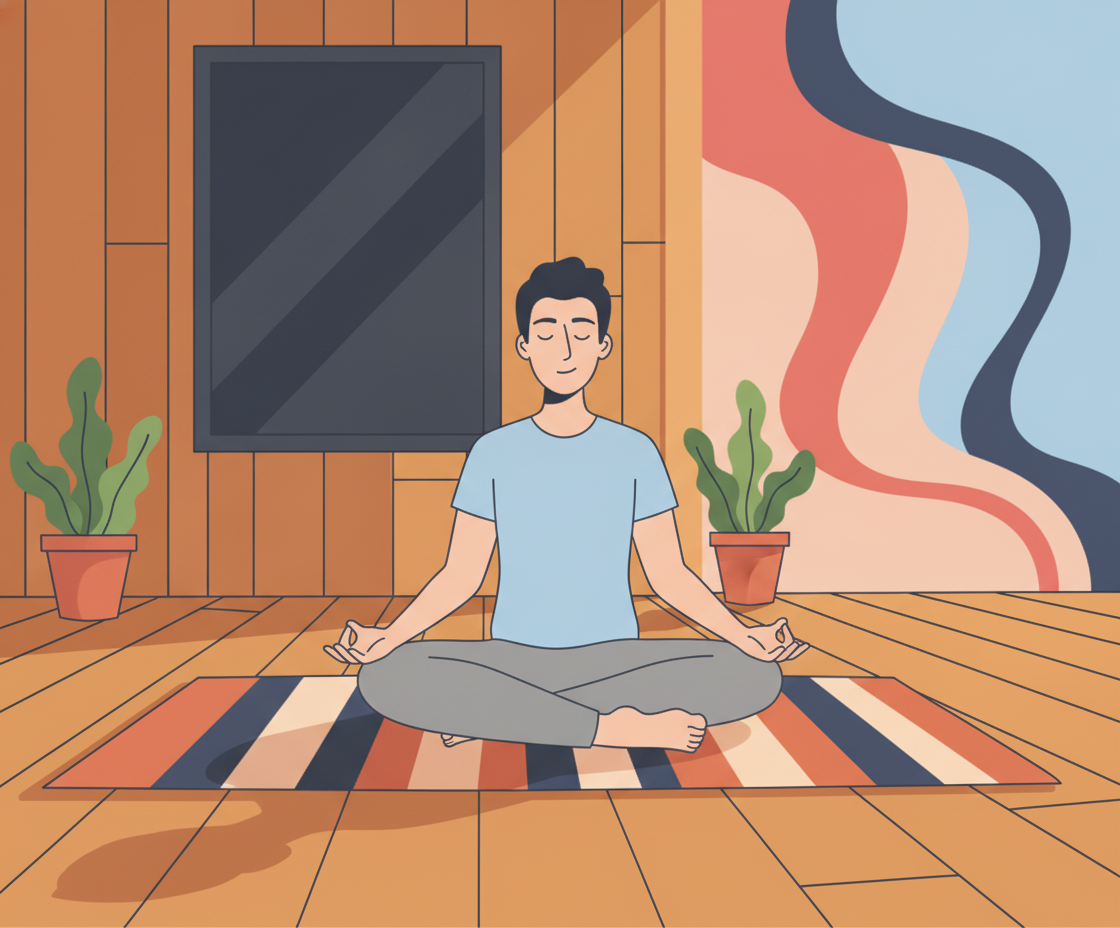
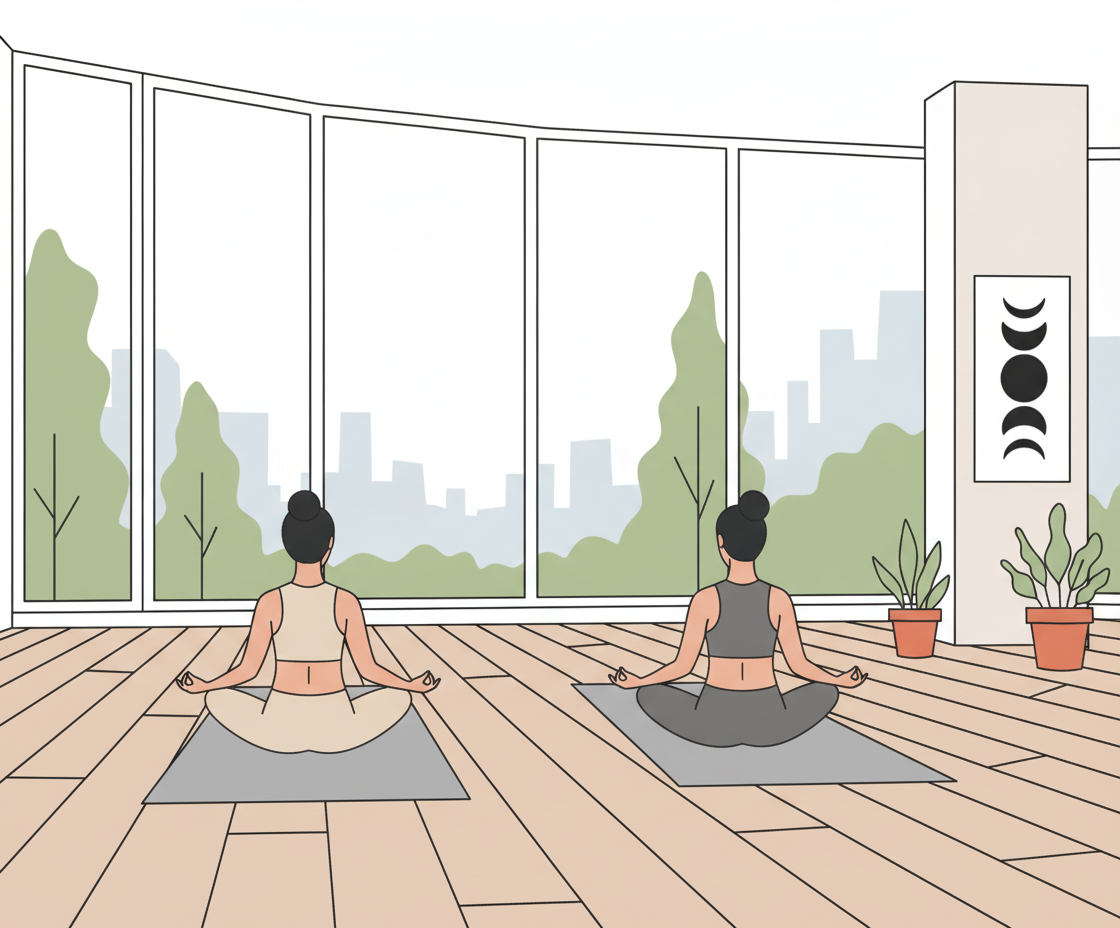
A person practices mindfulness meditation in an upright seated posture
What are meditation techniques and how do they work?
Let's start with the experience before we go into detail. Imagine two days. On one, you rush from appointment to appointment, your breath stays up in your chest, thoughts jump back and forth, and in the evening you don't even notice how tense your shoulders have been the whole time. On the other day, you sat still for ten minutes in the morning. Nothing spectacular happened, but somehow something is different. The breath goes deeper, into the belly instead of the chest. Between one thought and the next there is suddenly a tiny gap that you never noticed before. It is precisely in this gap that freedom of choice arises instead of reflex. That is meditation in practice, not a spiritual set of rules that you have to work through flawlessly, but a trained method of consciously directing your attention, instead of letting it be dragged through the day by the carousel of thoughts. Whether you watch the breath, repeat a mantra or simply sit and observe, the goal remains the same: the mind comes to rest. Different meditation techniques are therefore different doors to the same room, and over time you will sense which door opens most easily for you.
Five approaches to meditation
Yoga Vidya describes five classic approaches that have proven themselves for centuries: mindfulness training, in which you simply perceive thoughts and sensations without judging them. Energy direction, in which you guide your attention deliberately through the body or along the chakras. Mantra repetition, in which a sound or word focuses the mind. Abstraction, in which you detach from forms and thoughts and immerse yourself in the formless. And heartfelt devotion, in which Bhakti, i.e. love and reverence, carries you. This overview of meditation techniques shows: there is not one right method, but a whole toolbox that suits different characters and daily states. Some of my students feel restless during silent sitting and only blossom with mantra, others need the movement of energy direction to come to rest at all. It's worth trying several approaches instead of fixating on the first one that doesn't fit right away.
Anyone who wants to learn these approaches in a structured way rather than just read about them will find established points of contact in Germany. Sivananda Yoga Berlin, for example, offers clear course series on meditation techniques, mantra singing and beginner courses, in which you can feel your way step by step through several approaches instead of guessing alone in your living room. For all those who need the space between the trees to clear their heads, the Waldhaus am Laacher See is an address that has been combining meditation, mindfulness and Buddhist teachings in a quiet natural setting for over 40 years. The Vimaladhatu meditation house also offers retreats and seminars year-round for different experience levels and age groups, a good example of the fact that the five approaches are not a rigid scheme, but can be adapted to you.
What used to be regarded as pure introspection can be traced in the laboratory today. According to DFME Achtsamkeit, modern neuroscience confirms the healing effects of meditation on body and mind quite concretely: stress hormones fall, certain brain areas measurably become denser, and even the immune system responds more strongly. A decisive part in this scientific recognition belongs to Jon Kabat-Zinn, the molecular biologist who developed the MBSR program in the 1970s, an eight-week mindfulness training for stress reduction and pain treatment that is now standardized worldwide and taught at universities. You'll also find exactly this format here in Germany, for example at the Achtsamkeits-Retreat München, which specializes in MBSR courses, meditation evenings and mindfulness seminars and shows how concretely meditation techniques are used today for stress management in everyday life.
This is the point at which learning meditation for beginners stops being esotericism and becomes a comprehensible exercise. Your nervous system literally re-learns when you practice regularly, no matter which of the five approaches you choose. It is precisely this re-learning that you feel on the second day from our example: the deeper breath, the clearer head, the calm that keeps having an effect even when you're long back in the middle of everyday life.
Mindfulness Meditation: The Western Classic
Mindfulness meditation is the gateway drug among meditation techniques, and I mean that as a compliment. No incense-stick compulsion, no mantras that feel strange when you're just starting out. Just you and the ability to perceive the present moment without immediately judging it. This very non-judgment is the trick. Your mind constantly wants to sort: good, bad, do I want more, do I want less. Mindfulness simply says: first just look.
Principles and entry points
The philosophy behind it stems from Buddhist roots, but was stripped down in the West and repackaged therapeutically. At its core is the detachment from chains of thought. A thought appears, you don't cling to it, it moves on like a cloud. For practical application, two tools are entirely sufficient: watching the breath and the body scan. When watching the breath you memorize nothing, you only feel how the air flows in and out. In the body scan you mentally wander from the toes to the crown and register what is there, tension, tingling, nothing. That is the whole meditation-techniques guide for beginners, no more is needed.
Effect on everyday life and the psyche
Here it gets exciting for everyone learning meditation as a beginner who wants to know whether this is more than wellness talk. A study published on PubMed shows measurable neuroscientific effects of mindfulness practice on stress processing and emotional regulation. DFME Achtsamkeit also confirms that modern neuroscience scientifically underpins the healing effects on body and mind. In everyday life this means: fewer rumination loops, more distance from mounting anxious thoughts, and a nervous system that winds down faster after a burned-out end of the workday. I've experienced students who were on the verge of burnout and managed to make the jump via mindfulness meditation, not as a miracle cure, but as a daily regulation tool. It is precisely this that makes it one of the best meditation practices worldwide.
Body-Centered Meditation Techniques: Seated Postures and Their Function
When it comes to an overview of meditation techniques, many first think of breath or thoughts. In doing so, people readily forget the body, which is actually chiming in the whole time. How you sit determines how your nervous system assesses the situation. A slumped posture signals exhaustion or retreat to the body, a stable posture signals alertness without tension. That's why the choice of seated posture is not a marginal detail, but the starting point of every meditation-techniques guide that really works.
Easy Pose and Upright Stability
Easy Pose (Sukhasana) is the classic basis for beginners learning meditation. The crossed legs provide a broad base, the pelvis tilts slightly forward, the spine almost stacks itself. I always tell my students: let the shoulders sink, don't pull them up. Many confuse upright with tense. Yet inner clarity arises precisely when the back carries without the head fighting along. This stable but soft uprightness is the reason why Sukhasana appears in almost every overview of the various meditation techniques.
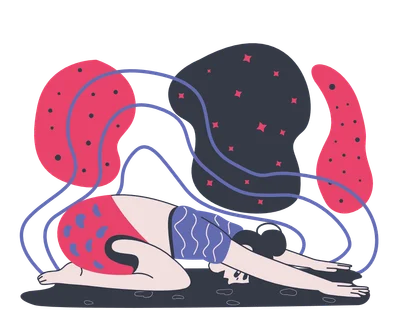
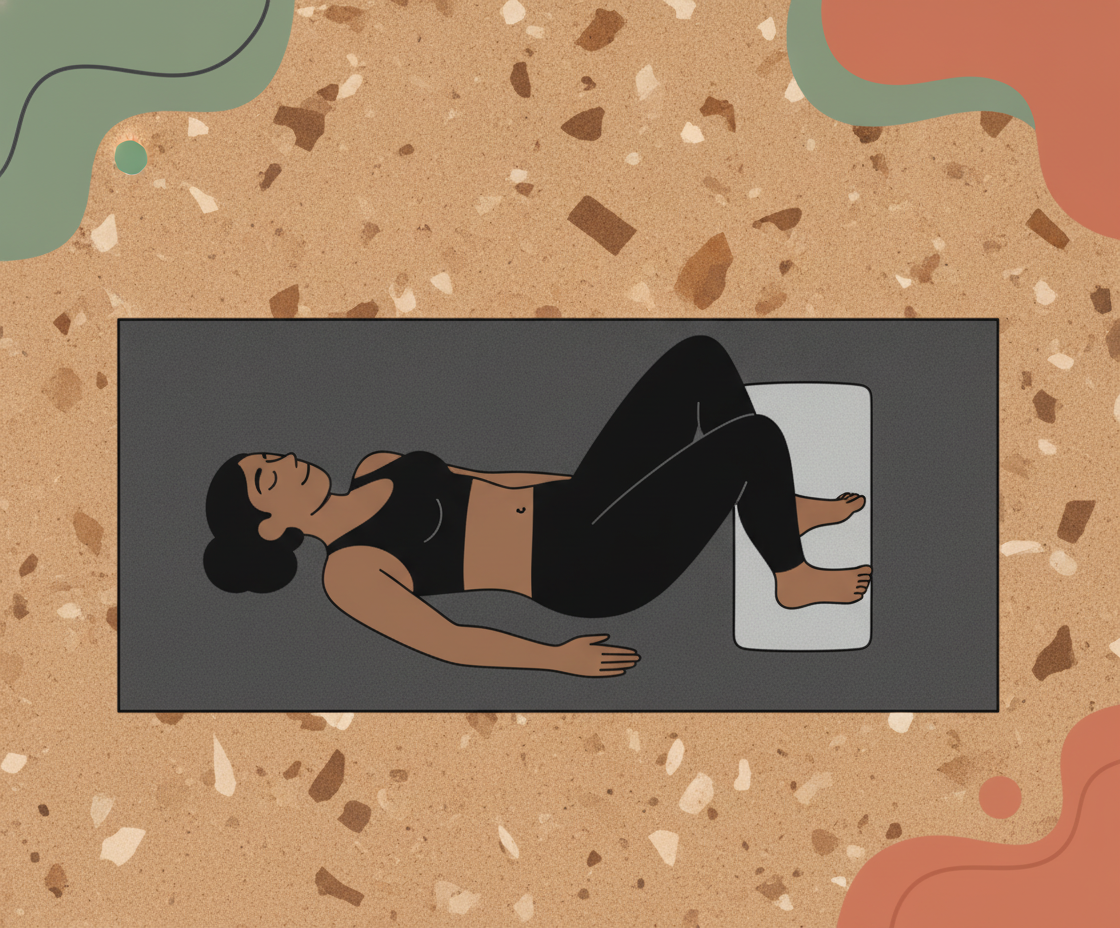
Not every moment of practice demands uprightness. Sometimes the nervous system first needs safety before it comes to rest. Child's Pose (Balasana) does exactly that. The forehead on the floor, the knees open or closed, the breath automatically sinks deeper into the back. The body gets the signal: there is nothing to defend here. This activates the parasympathetic nervous system, i.e. the part of your nervous system responsible for recovery. Anyone who starts with mindfulness meditation and feels overwhelmed at first finds an honest reset in Balasana.
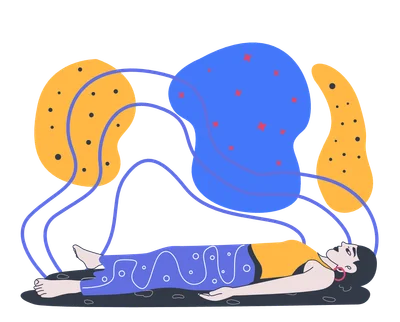
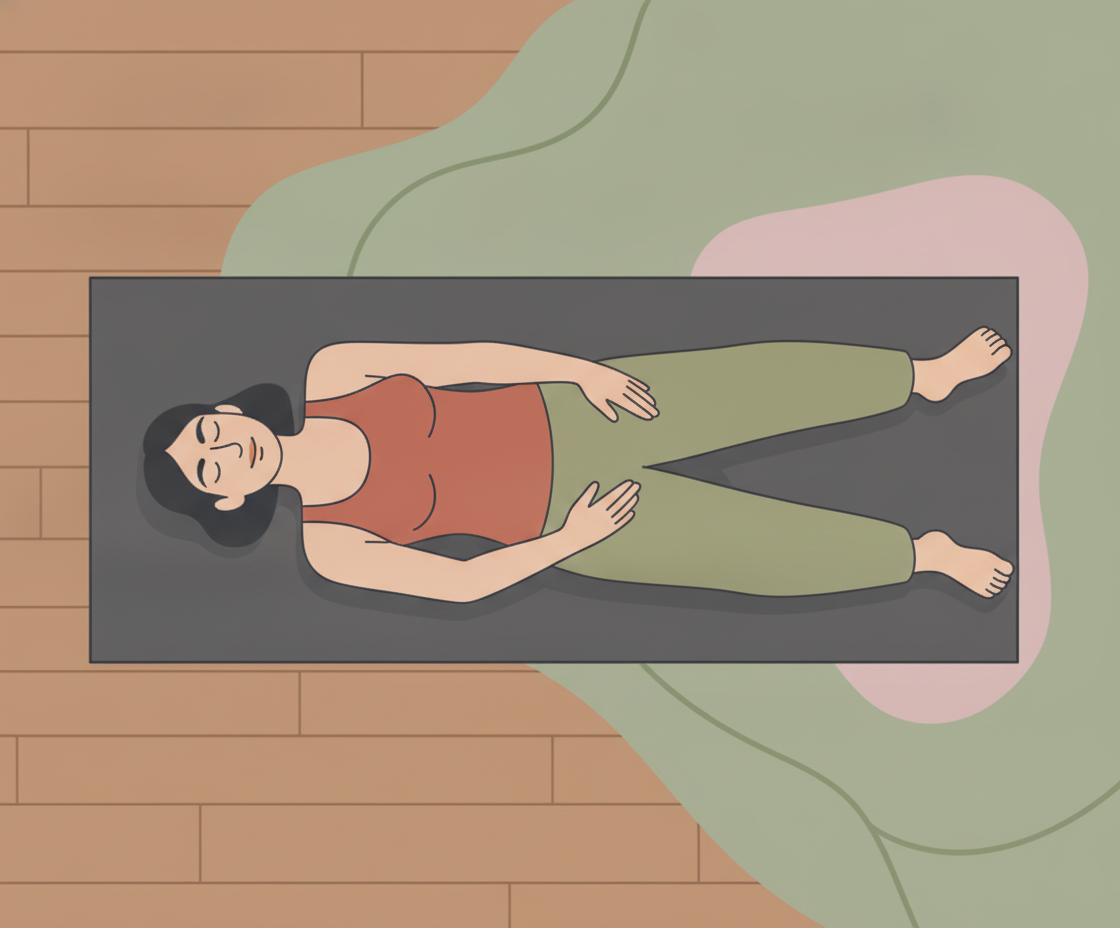
At the end there is almost always Corpse Pose (Savasana), flat on the floor, arms loose beside the body, palms open facing up. It seems simple, but is the most demanding posture of all, because here there really is nothing left to do. This very non-activity deepens the meditative state through progressive relaxation, muscle group by muscle group lets go. The body here becomes not an obstacle, but a gateway. Anyone who has felt this once understands why Savasana has its fixed place in every serious meditation-techniques guide.
Savasana (Corpse Pose) – the classic closing position for deep relaxation
Mantra and Energy-Direction Meditations: Deeper Approaches
Now it's going to vibrate. Besides the silent observation you practice in mindfulness meditation, there is a completely different approach: you work actively with sound, breath and intention. Yoga Vidya describes meditation techniques as a diverse field that, alongside mindfulness training, also includes energy direction, mantra repetition, abstraction and heartfelt devotion. Anyone who knows only the intellect track misses a whole dimension of the practice that goes beyond the head and involves the entire body.
Mantra Repetition and Vibration
Om or Om Namah Shivaya are not empty syllables. When you repeat them out loud, you feel a vibration in the chest, in the skull, sometimes all the way to the fingertips. This is no esoteric coincidence: the resonance of the deep tones influences your nervous system via the vagus nerve, similar to how a slow humming lowers the heart rate. Psychologically, the repetition binds your wandering mind to an anchor point, physically the tissue vibrates along. Many of my students report that this mantra repetition in particular comes more easily to them than pure sitting in silence, because the sound gives them something to do.
This very vibrating, this feeling of sound in the body, is the core of Om Namah Shivaya: a mantra for letting go, transformation and the connection to your true nature. As a daily reminder of this, there is our Shiva shirt, so that you carry this attitude visibly with you even off the mat.
Here you connect the idea of prana, the life energy, with targeted breath guidance. You deliberately direct the breath to specific body regions, the chakras, and work with imagination and pranayama together. In modern terms: you train interoception, the perception of inner body signals, and through it you actively regulate your autonomic nervous system instead of only passively observing.
Difference from Cognitive Techniques
Cognitive, mindfulness-based techniques observe thoughts from the outside, almost like a spectator. Mantra and energy work, on the other hand, actively generates a new inner state through sound, breath and intention. Both paths belong in a good overview of meditation techniques, yet for beginners who want to learn meditation, the physical, vibrating approach can often be easier to grasp than pure silent observation.
Yoga Nidra: Meditation in Sleep for Deep Healing
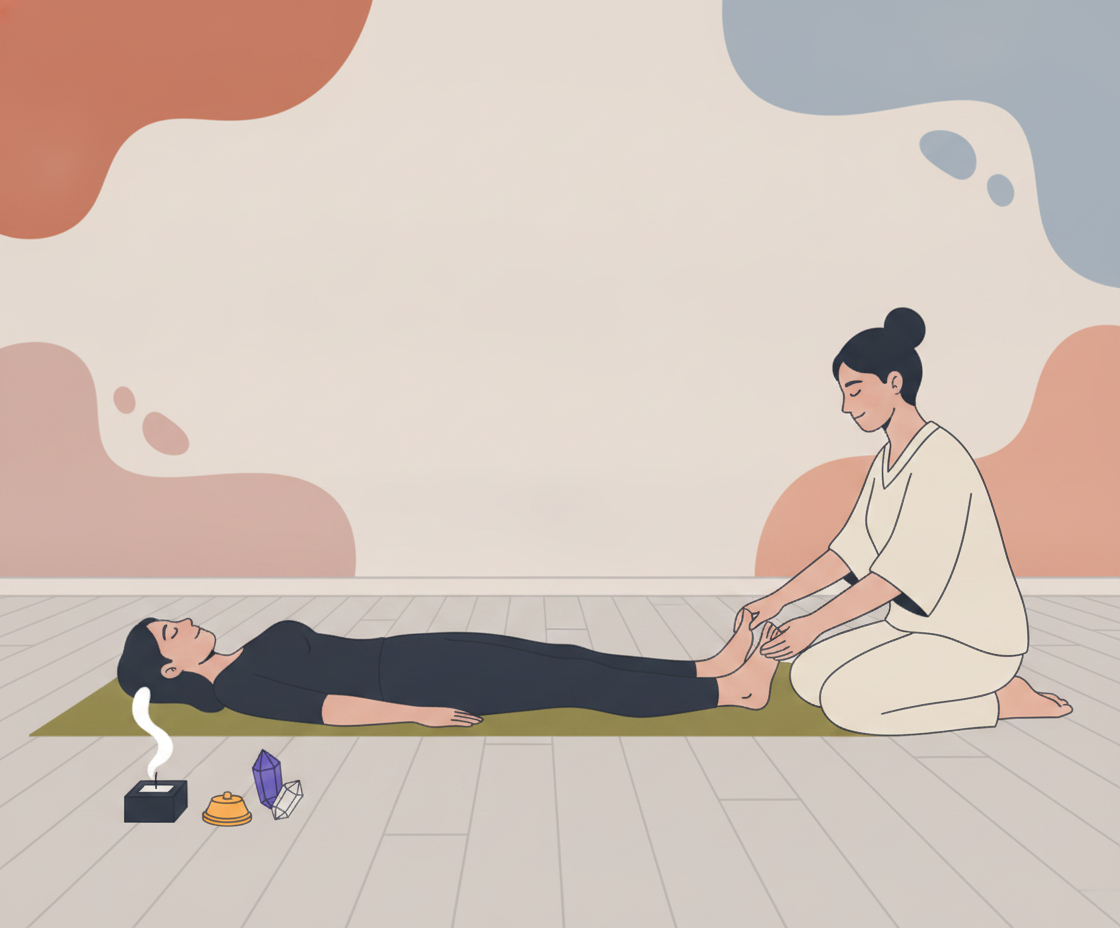
Among the various meditation techniques, Yoga Nidra is the one where you have to do the least and yet the most happens. You lie flat on your back, eyes closed, and a teacher guides you with their voice through body awareness, breath counting and inner images. No sitting, no balancing, no muscle that has to hold anything. It is precisely this absence of physical effort that is the trick. The mind can no longer distract itself via the body posture and therefore often slips faster into depths that more strenuous practices only release after years.
Brain Waves and Therapeutic Effects
Neurologically, in Yoga Nidra you move between wakefulness and sleep, in a so-called hypnagogic state: the brief transitional window just before falling asleep, in which the brain switches from fast beta and alpha waves to slower theta waves. The prefrontal cortex, i.e. the area responsible for planning, evaluating and inner commentary, noticeably winds down during this phase. This is exactly what explains why the constant mental cinema becomes quieter. At the same time the arousal level, i.e. the general nervous excitation, decreases, while parasympathetic processes ramp up. This is the part of your nervous system responsible for regeneration, not for fight or flight. A study by Athene Forschung UniBw published on PubMed examined this in 362 participants and proved the effectiveness of Yoga Nidra on stress, sleep quality and well-being. Interesting here: the access to unconscious patterns that often arises in this dampened prefrontal state is something that pure concentration techniques rarely reach.
Application for Sleep Disorders and Stress
In my practice I most often see Yoga Nidra used by people whose nervous system is chronically running at full speed and who simply can't wind down at night. Twenty to forty minutes are often enough to tip that. Important for beginners: you don't have to stay awake and you don't have to fall asleep either, both are allowed. As an entry into various meditation techniques, Yoga Nidra is therefore especially rewarding, because success doesn't depend on the ability to concentrate, but simply on allowing.
Yoga Nidra enables deep healing through guided relaxation in the borderline state between waking and sleep
Conclusion: Find the Right Meditation Technique for You and Begin
If you want a really honest answer: there is no best meditation technique, there is only the one that suits you. In my courses I've seen analysts blossom with mindfulness meditation, because they want to observe the mind instead of fighting it. And I've experienced stressed managers who only came to rest with Yoga Nidra, because there no one had to achieve anything anymore. Fit beats perfection, always.
Personality and Type of Approach
Are you more the head type who likes to understand what is happening in the nervous system right now? Then mindfulness meditation is your approach, it gives you the observer role that your mind loves. Do you prefer to move rather than sit still? Then body postures and moving practice lead you into stillness faster than any sitting still. Anyone who is musically inclined finds through mantra recitation a rhythm that captures the mind on its own. And anyone who is simply exhausted, worn out by everyday life, should start with Yoga Nidra, because there nothing has to be worked for. Look honestly at where you recognize yourself, that is your starting point among the various meditation techniques.
Your Next Step
Theory is worthless without practice. Choose a technique from this overview and try it for twenty-one days, a little every day, without any claim to perfect concentration. Learning meditation as a beginner means above all: stick with it, even when the mind wanders. And at the very end there is something greater behind it than technique. Meditation is the letting go of control, including control over how well you meditate. That is exactly where the real practice begins.