The first minutes after waking up decide more than you are aware of. If you reach for the phone right away, the nervous system takes over the autopilot, and the day runs after you instead of starting off with you. This is exactly where a conscious morning practice comes in: before the thoughts drift off, before the first appointment creates pressure, you briefly get back the contact with yourself.
I know both versions of myself. The rushed morning with coffee while standing and a mind on cinema mode, and the calm one in which I sit, breathe and feel that I am still here before everyday life demands me. The difference is physically noticeable: less tightness in the chest, a clearer head, a feeling of ground under the feet. It is exactly this feeling that you can get fresh again every morning with a few minutes of quiet practice.
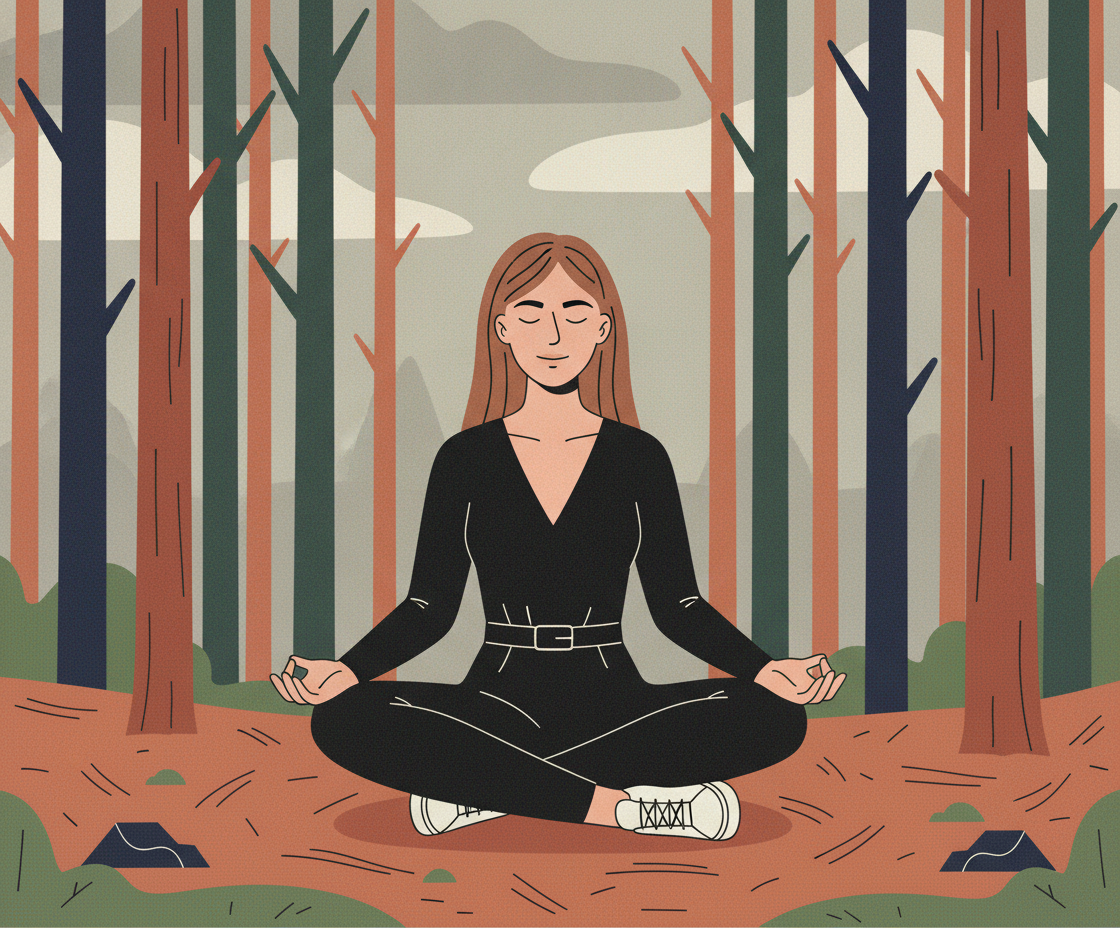
A conscious start to the day through quiet morning meditation
Morning Meditation: Why the First Action Shapes Your Whole Day
The first minutes after waking up are not a neutral point in time. Your brain is still in a transition state between sleep and full waking consciousness, and it is exactly this window that is especially malleable. Psychologists call this a window of neuroplasticity: your nervous system is not yet caught in the accustomed stimulus patterns of the day and can be more easily guided in one direction. What you do in this moment, whether you reach for the phone or sit still and breathe, sets a kind of keynote that often continues to resonate until the evening.
A morning-routine study from the University of Wuppertal shows that a short meditation in the morning strengthens self-regulation and shapes the entire working day positively, because employees thereby get through stressful phases noticeably calmer and more focused. The Leibniz Institute for Neurobiology Magdeburg additionally proves that meditation causes local functional changes of the brain and demonstrably fosters self-regulation, not only for the hour right after. And the Max Planck Society was able to show in a meditation study that even eight weeks of regular meditation training significantly reduce stress, measurable via hair analyses. This matches what I observe again and again with students: anyone who sits still for five minutes in the morning reacts more calmly at noon to the things that otherwise trigger stress immediately.
Philosophically considered, this is about something quite fundamental: consciousness as freedom of decision. Without this moment of pausing, you simply react, to the first message, the first thought, the first stimulus from outside. With meditation, you decide. Reactivity and intentionality are two very different starting points for the same day, and the difference lies exactly in these first minutes.
That is why a good morning-meditation guide is not an esoteric accessory but a solid tool for mental clarity. Anyone looking for a guided morning meditation finds in Insight Timer an app with over 290,000 guided meditations and 17,000 teachers, which was rated by Wirecutter, the product-test portal of the New York Times, as the best overall meditation app in 2026. Anyone who prefers to start with simple, evidence-based breathing exercises is well served by Headspace, which is especially suitable for beginners. Whether as a guided meditation via app, as a silent meditation to wake up or embedded in a fixed morning routine, the effect stays the same: you take the lead before the day takes it out of your hands.
The Anatomy of Conscious Waking: Body, Breath, Mind
From Sleep to Presence: The Transition Process
The moment of waking is a threshold, not a switch. You are not suddenly awake, you surface, layer by layer, like a diver slowly rising to the surface. This state between dream and reality has a name: liminality, the space of the in-between. In the old yoga scriptures this transition is hardly mentioned, but anyone who meditates knows it exactly: the consciousness is soft, malleable, not yet hardened into thoughts and plans.
This is exactly what makes morning meditation so powerful. You intervene in a process that otherwise runs automatically. Instead of the first glance at the phone activating the autopilot, you stay in this soft zone. I observe the same thing again and again with my students: anyone who consciously shapes these first minutes instead of falling immediately into brooding or scrolling carries a different quality through the whole day.
Breath as an Anchor Between the Unconscious and the Conscious
The breath is your most reliable tool here, because it is the only body process that is controlled both unconsciously and consciously. You come in exactly at this interface. A resource-rich guide like Mindful Morning describes how you gain calm, focus and new energy for the day with yoga and meditation in the morning, and the breath is the central lever in this.
Slow, deep breathing calms the limbic system, the emotional part of your brain, which often stays on alert at night. At the same time, you activate the prefrontal cortex, responsible for clarity and decisions. Without a complicated technique, often this is enough: three conscious breaths before the feet touch the floor. That is meditation for concentration in its simplest form, right at the transition into the day.
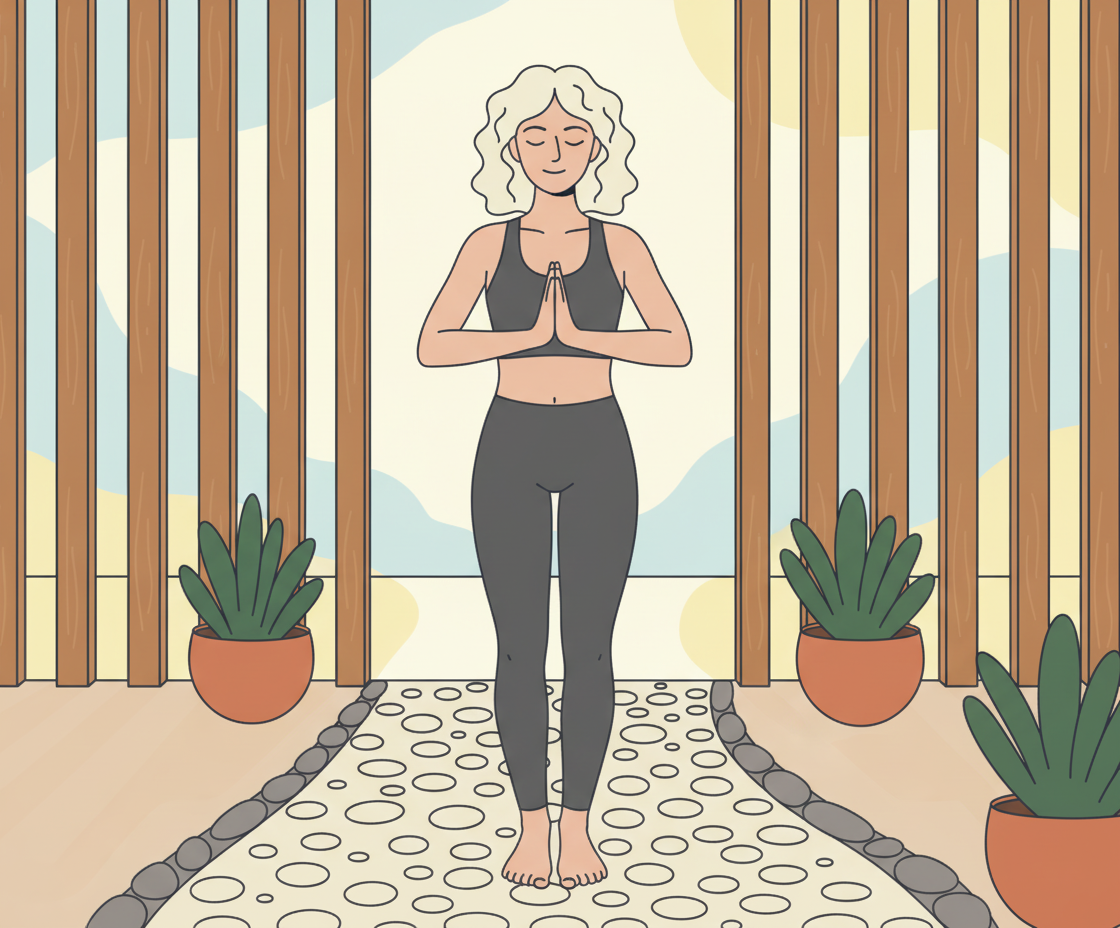
Tadasana: the mountain pose as a grounding pose for conscious presence
Practical Morning Meditation: A Simple 10-Minute Structure With Asanas
Enough theory, now it gets concrete. I'll give you a guide that you can roll out right next to the bed. A mat is not strictly necessary, a carpet does the job too. Ten minutes, three postures, a clear movement from the outside inward. This structure is not a yoga choreography to tick off but a small journey through three states of consciousness: waking up, going inward, arriving.
Step 1: Grounding in the Mountain Pose (Tadasana)
You simply stand. Feet hip-width, weight evenly on both soles, knees not locked. The mountain pose, Tadasana, is the basis for mindful standing and centers you energetically before the day. That is exactly what you need in the morning, before anything from outside reaches you. Psychologically, this is about steadfastness: you feel that the floor carries you, no matter what the day brings. Close the eyes if it feels good, and let three deep breaths run through the whole body. That is waking up in its purest form, no distraction, only presence in your own feet.
Step 2: Turning Inward in the Child's Pose (Balasana)
From top to bottom, from standing into kneeling. Child's pose, Balasana, fosters inner calm and a turning inward. It literally brings you into a posture of withdrawal, perfect for the meditative morning practice. Forehead to the floor, arms either extended forward or loosely next to the body, sitting bones toward the heels. Here it is about trust: you give up your weight without controlling. Many initially hold the shoulders up unconsciously, let them sink. Stay for five to six breaths, feel how the breath flows into the back.
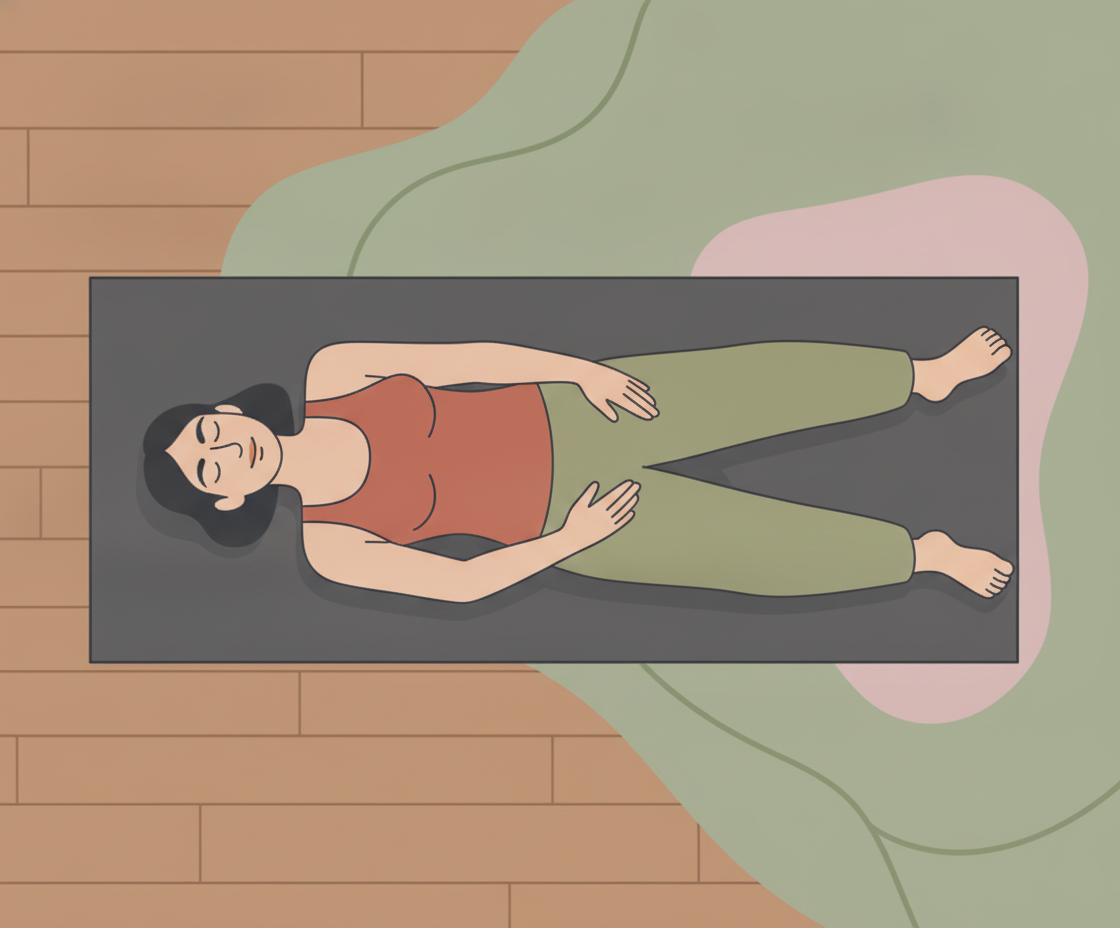
Lie down, arms next to the body, palms facing up. The corpse pose, Savasana, enables deep relaxation and conscious presence, the final anchor for a clear start to the day. Here it is about letting go, doing nothing, wanting to achieve nothing. A quiet focus on the breath for two, three minutes is already enough. Mindful Morning, your yoga morning routine, puts it in a nutshell: with yoga and meditation in the morning, you reach calm, focus and new energy for your day, entirely without haste.
The Inner Attitude: Beginning Meditatively Instead of Performance-Oriented
Before we come to the morning-meditation guide, I have to talk to you about something fundamental. Most people fail not at the technique but at the attitude with which they sit down. If you meditate in order to wake up faster, be more productive or "optimize" your day, you are in have-mode. You want to achieve something, grab a result. That is exactly what kills the effect.
Be-mode means: you sit there without anything having to happen. No goal, no performance curve. It sounds like a contradiction when talking about a meditation for concentration, but it is not one. Concentration arises as a by-product of presence, not as a forced result. Your nervous system notices the difference immediately: pressure triggers cortisol, real acceptance of the moment fosters a calmer release of dopamine and serotonin. No kick, but a background hum of contentment.
The optimization mania that currently sells every morning-routine meditation as a productivity hack completely misses the point. Meditation is not self-manipulation. You don't polish yourself up like a car before the sale. You accept what is here right now, tired, restless, whiny in the head. That is radical, because it contradicts the ego, which constantly wants to improve something.
Letting go while seated physically feels like an exhalation that you have been holding back for a long time. The shoulders sink, the jaw becomes soft, the belly is allowed to move again. Many of my students only then notice how tense they actually started into the day. Take that as your measure, not performance, but softness.
It is exactly this letting go, which you feel physically while seated, that is also contained in the mantra Om Namah Shivaya: it stands for devotion instead of control, stillness instead of resistance and transformation instead of standstill. As a daily reminder of this, there is our Shiva shirt, so that you carry this attitude of letting go on your body even after the meditation.
Integration Tips: Transitioning From Meditation Into Everyday Life
The moment in which you get up from the meditation is the actual test. It is not the quiet sitting that is difficult but the transition afterward. Many of my students report the same: five minutes after getting up, the calm is as if wiped away, the phone lights up, the first email screams for attention. This is exactly where it is decided whether your morning meditation stays a nice island or really carries your day.
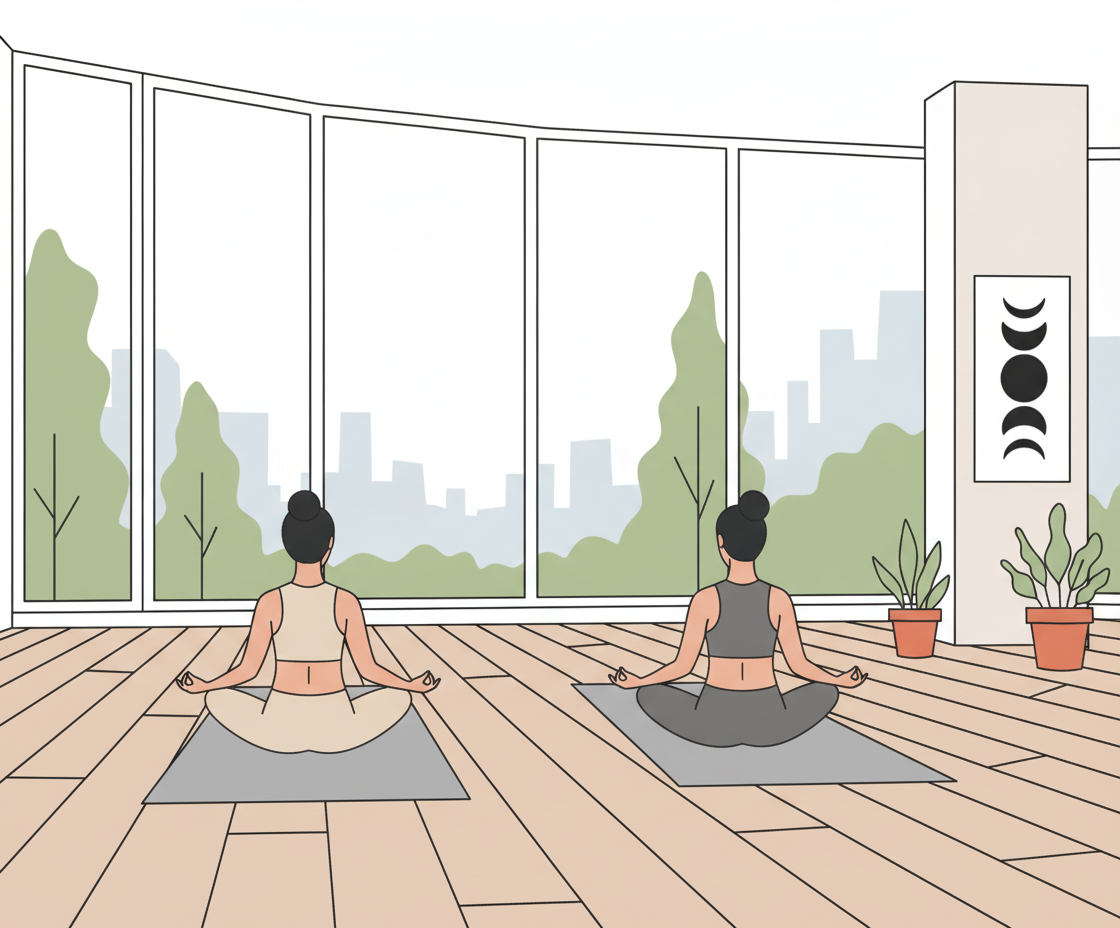
The transition: from relaxation to active presence in everyday life
A simple anchor helps you with this: the body feeling from the mountain pose. Remember briefly how your sole contact to the floor felt, how your back was long and your breath calm. When stress boils up later, a deadline, a heated conversation, then often a split second of returning to this feeling is enough to ground you. That is not a technique from the textbook, that is lived practice that takes hold automatically over time.
Small rituals extend the effect of your meditation to wake up astonishingly effectively. Simply let the phone lie for the first twenty minutes. Drink your water or your tea consciously, feel the warmth in the hands, really taste it. That sounds trivial, but neurologically it is a signal to your nervous system: we stay in the calm mode a bit longer before the day picks up speed.
The philosophy behind it is simple and old at the same time: your morning routine with meditation builds an inner stability that balances outer storms. Outside, the day rages with appointments and stimuli; inside, a calm core remains that does not swing along with every storm. That is not isolation but a root that holds you while the branches are allowed to move in the wind.
Conclusion: Morning Meditation as the Foundation of Your Daily Autonomy
The first minutes after waking up are like damp clay: malleable, receptive, not yet hardened by the day's business. What you put into it during this time often shapes more than three coffees and a full calendar combined. That is why morning meditation is not another point on your to-do list but a decision that you make anew every day: do I want to react or do I want to be present?
Forget complicated morning-routine meditation concepts with twenty steps. Stand tomorrow, right after waking up, for five minutes in the mountain pose, Tadasana, and breathe consciously. Feet firmly in the floor, spine long, gaze soft forward. Nothing more is needed to wake up without tipping into haste. That is meditation to wake up in its most honest form: not a ritual, but an attitude.
I have experienced students who tell after weeks that their whole day feels different, calmer, clearer, less externally controlled. That is not magic but what happens when the nervous system gets used to a new starting point. Practice by practice, morning by morning, something forms that hardly makes itself noticeable at first and at some point carries like a second backbone.
So, no pressure. No perfect guided morning meditation, no perfect sequence. Only you, your breath, a few minutes of stillness before the world demands you. Consider it a gift to yourself, not a duty. The rest, the concentration, the calm, the clarity, comes all by itself if you stay true to this one moment in the morning.