Energetic Anatomy, Everything About Prana, Chakras and Vayus
Yoga is a fascinating world of balance, energy and depth that goes far beyond what we experience on the mat. This guide takes you into the fundamentals of the energetic anatomy of Hatha Yoga and sheds light on the symbolic meaning of its core concepts.
You take with you:
- A deep understanding of the energetic anatomy in yoga, including the meaning of Prana, Chakras and Nadis, and how these elements influence physical and mental health.
- Practical knowledge of Pranayama and Asanas that can be used in a targeted way to harmonise the Prana Vayus and promote energetic balance in the body.
- Insight into the intersection between modern science and yoga, with an understanding of how scientific findings support and expand traditional yogic concepts.
This might interest you: The Ultimate Chakra Guide
Definition of Hatha Yoga
Hatha Yoga, a term often used in the yoga world as a broad label for the practice of physical exercises (asanas), actually stands for much more. "Hatha" is a combination of "Ha" for sun and "Tha" for moon. These two words represent the polar energies that flow through the universe and through each of us. Hatha Yoga is therefore not just a collection of physical exercises, it is a profound practice that aims to harmonise and unite these opposing forces within us.
The symbolic meaning of sun (Ha) and moon (Tha)
The concepts of sun (Ha) and moon (Tha) in Hatha Yoga are central pillars that shape both the philosophical and the practical basis of yoga. These two energies represent the fundamental duality that exists in nature, in the universe and within our own being. The sun symbolises fire and energy, the active, dynamic principle. The moon, on the other hand, embodies coolness and stillness, the passive, receiving principle. In the practice of Hatha Yoga, we strive for balance between these opposing forces in order to achieve harmony in body, mind and soul.
A deeper exploration of this subject can be found in the classical scriptures of yoga, such as the "Hatha Yoga Pradipika", a foundational text written in the fifteenth century. This work emphasises the importance of uniting the solar and lunar energies as a path to enlightenment and to the healing of body and mind.
For a scientific perspective on the effects of yoga and the significance of energetic balance, studies in modern psychoneuroimmunology point to the positive effects of yoga on stress reduction and emotional balance. One such study, published in the "Journal of Alternative and Complementary Medicine", shows how the practice of Hatha Yoga contributes to the regulation of stress hormones and balances the autonomic nervous system.
The sun, or "Ha", stands for fire and energy, for activity and the Yang principle in Chinese philosophy. It symbolises our ability to act outwardly, our outward expressive power and our vital energy. Solar energy promotes strength, warmth and light. It is the driving force that pushes us to reach our goals and to actively shape our path in life.

The moon, or "Tha", on the other hand, embodies coolness, stillness and the Yin element. It stands for the inner world, intuition, receiving and reflection. Lunar energy supports recovery, healing and inner reflection. It helps us come into alignment with our deeper needs and our intuition.
In the practice of Hatha Yoga, we seek the balance between these two energies. It is a dance between activity and stillness, between giving and receiving. Through asanas and pranayama, we work to harmonise the flow of these energies in our body. The balance of "Ha" and "Tha" leads us to a state of inner stability and equilibrium, where mind, body and soul come into alignment.
This harmonisation is essential for our health and wellbeing. Too much solar energy can lead to overheating, overactivity and stress, while an excess of lunar energy can lead to sluggishness, passivity and a lack of drive. Hatha Yoga teaches us to regulate these energies so that we achieve an optimal balance, a key aspect for the development of our personal practice and for the attainment of physical and mental wellbeing.
This profound connection between sun and moon in Hatha Yoga is reflected throughout the practice and offers us a framework for finding and nurturing our own centre. By learning to work with these energies, we open ourselves to a richer, more complete experience of our being and of the universe around us.
Tantra: Die Grundlage der energetischen Anatomie
Tantra, oft missverstanden und auf seine erotisch-spirituellen Aspekte reduziert, ist in Wahrheit eine tiefgründige philosophische Tradition, die eine zentrale Rolle in der Entwicklung der energetischen Anatomie des Yoga spielt. Dieses Kapitel beleuchtet die Bedeutung und Weltsicht des Tantra sowie seine Verbindung zum Hatha Yoga und zur Entfaltung des Kundalini.
Bedeutung und Weltsicht des Tantra
Tantra, ein Begriff, der aus dem Sanskrit stammt und wörtlich „Gewebe", „Netz" oder „System" bedeutet, bezieht sich auf eine umfassende Sicht des Universums und des menschlichen Seins. Es lehrt, dass die materielle Welt und die spirituelle Realität untrennbar miteinander verwoben sind und dass jede Handlung, jeder Gedanke und jedes Gefühl Teil eines göttlichen Gewebes ist. Im Tantra wird die Welt nicht als Illusion (Maya) betrachtet, wie in einigen anderen yogischen Philosophien, sondern als Ausdruck des Göttlichen.
Ein zentraler Aspekt des Tantra ist die Verehrung der Shakti, der weiblichen Urkraft oder Göttin, die als dynamische Energie betrachtet wird, die allem Leben zugrunde liegt. Diese Energie, die auch in jedem Individuum als Kundalini vorhanden ist, kann durch spezifische Praktiken geweckt und nach oben durch die Chakras bis zur ultimativen Vereinigung mit Shiva, dem Bewusstsein, geführt werden.
Linkshändiger und rechtshändiger Tantra
In der tantrischen Tradition gibt es zwei Hauptströmungen: das linkshändige (Vama Marga) und das rechtshändige Tantra (Dakshina Marga). Während das linkshändige Tantra für seine provokativen Rituale bekannt ist, einschließlich der Verwendung von sexuellen Praktiken als Teil des spirituellen Weges, fokussiert sich das rechtshändige Tantra mehr auf meditative Praktiken, Mantras, Yantras und Rituale, die eine subtilere Annäherung an die spirituelle Entwicklung darstellen.
Hatha Yoga, eng verbunden mit dem rechtshändigen Tantra, nutzt die Körperhaltungen (Asanas), Atemtechniken (Pranayama) und Meditation, um die Energiekanäle (Nadis) zu reinigen und die Kundalini-Energie zu erwecken. Durch diese Praktiken zielt Hatha Yoga darauf ab, die Balance zwischen den körperlichen und energetischen Systemen zu fördern und so einen Zustand höheren Bewusstseins zu erreichen.
Die Verbindung zwischen Tantra, Hatha Yoga und der Entfaltung des Kundalini
Die Lehren des Tantra bieten einen tiefen Einblick in die energetische Anatomie des Menschen und erklären, wie durch die Praxis von Hatha Yoga ein direkter Einfluss auf die Entfaltung der Kundalini genommen werden kann. Die Aktivierung und das Aufsteigen der Kundalini durch die Chakras wird als Weg zur spirituellen Erleuchtung gesehen, wobei jeder Aspekt der Praxis, von den körperlichen Haltungen bis zu den Atemtechniken, darauf ausgerichtet ist, dieses Ziel zu unterstützen.
Die tantrische Perspektive erweitert unser Verständnis von Yoga über die physische Dimension hinaus und öffnet den Blick für die tiefe Verbindung zwischen unserem energetischen Körper und unserer spirituellen Entwicklung. Es ist diese holistische Sichtweise, die Tantra zu einem unverzichtbaren Bestandteil der yogischen Praxis macht, indem sie uns lehrt, über unsere Grenzen hinaus zu wachsen und das volle Potenzial unseres Seins zu entfalten.
Energetische Anatomie und Prana: Das Atem des Lebens
Im Herzen der yogischen Praxis steht Prana, die Lebenskraft, die alles durchströmt, was existiert. Dieses Kapitel taucht tief in das Konzept von Prana ein, erkundet seine Bedeutung im Yoga und wie wir lernen können, diese kraftvolle Energie zu kultivieren und zu lenken.
Was ist Prana?
Prana ist mehr als nur Atem; es ist die vitale Energie, die in jedem Atemzug, in jedem Sonnenstrahl und in jedem Blatt, das sich im Wind wiegt, vorhanden ist. Im Yoga wird Prana als die universelle Lebenskraft verstanden, die nicht nur unseren Körper belebt, sondern auch die gesamte Natur durchdringt. Es ist die Bindung zwischen dem physischen und dem energetischen Universum, die Essenz, die alles zusammenhält und belebt.
In der traditionellen indischen Medizin, dem Ayurveda, wird Prana als einer der fünf Lebenswinde (Vayus) angesehen, die verschiedene Funktionen im Körper regeln. Diese Ansicht unterstreicht die Bedeutung von Prana für unsere Gesundheit und unser Wohlbefinden.

Das könnte dich auch interessieren: Dein ultimativer Prana Guide zu Vitalität & Lebenskraft
Pranas Rolle im physischen und psychischen Wohlbefinden
Die Steuerung und Regulierung von Prana durch yogische Praktiken wie Pranayama (Atemübungen), Asanas und Meditation hat tiefgreifende Auswirkungen auf unser physisches, emotionales und spirituelles Wohlbefinden. Durch die bewusste Lenkung von Prana können wir unser Energieniveau erhöhen, Stress und Angst reduzieren und sogar zur Heilung physischer und psychischer Beschwerden beitragen.
Wait, I need to actually translate this to English.Tantra: The Foundation of Energetic Anatomy
Tantra, often misunderstood and reduced to its erotic-spiritual aspects, is in truth a profound philosophical tradition that plays a central role in the development of yoga's energetic anatomy. This chapter sheds light on the meaning and worldview of Tantra as well as its connection to Hatha Yoga and the unfolding of Kundalini.
The Meaning and Worldview of Tantra
Tantra, a term that comes from Sanskrit and literally means "weave", "web" or "system", refers to a comprehensive view of the universe and human existence. It teaches that the material world and spiritual reality are inseparably woven together, and that every action, every thought and every feeling is part of a divine fabric. In Tantra, the world is not seen as illusion (Maya), as in some other yogic philosophies, but as an expression of the divine.
A central aspect of Tantra is the veneration of Shakti, the feminine primal force or goddess, who is seen as the dynamic energy underlying all life. This energy, which is also present in every individual as Kundalini, can be awakened through specific practices and guided upward through the chakras to the ultimate union with Shiva, consciousness itself.
Left Hand and Right Hand Tantra
In the tantric tradition there are two main streams: the left hand path (Vama Marga) and the right hand path (Dakshina Marga). While left hand Tantra is known for its provocative rituals, including the use of sexual practices as part of the spiritual path, right hand Tantra focuses more on meditative practices, mantras, yantras and rituals, representing a subtler approach to spiritual development.
Hatha Yoga, closely connected to right hand Tantra, uses postures (asanas), breathing techniques (pranayama) and meditation to purify the energy channels (nadis) and awaken Kundalini energy. Through these practices, Hatha Yoga aims to foster balance between the physical and energetic systems, thereby reaching a state of higher consciousness.
The Connection Between Tantra, Hatha Yoga and the Unfolding of Kundalini
The teachings of Tantra offer a deep insight into the energetic anatomy of the human being and explain how the practice of Hatha Yoga can directly influence the unfolding of Kundalini. The activation and rising of Kundalini through the chakras is seen as a path to spiritual enlightenment, with every aspect of the practice, from physical postures to breathing techniques, aimed at supporting this goal.
The tantric perspective expands our understanding of yoga beyond the physical dimension and opens our eyes to the deep connection between our energetic body and our spiritual development. It is this holistic view that makes Tantra an indispensable part of yogic practice, teaching us to grow beyond our limits and unfold the full potential of our being.
Energetic Anatomy and Prana: The Breath of Life
At the heart of yogic practice stands Prana, the life force that flows through everything that exists. This chapter dives deep into the concept of prana, explores its significance in yoga, and shows how we can learn to cultivate and direct this powerful energy.
What Is Prana?
Prana is more than mere breath: it is the vital energy present in every breath, in every ray of sunlight and in every leaf swaying in the wind. In yoga, prana is understood as the universal life force, which not only animates our body but also permeates all of nature. It is the bond between the physical and the energetic universe, the essence that holds everything together and brings it to life.
In traditional Indian medicine, Ayurveda, prana is regarded as one of the five vital winds (vayus) that govern various functions in the body. This view underscores the importance of prana for our health and wellbeing.
This might also interest you: Your Ultimate Prana Guide to Vitality & Life Force
Prana's Role in Physical and Psychological Wellbeing
Controlling and regulating prana through yogic practices such as pranayama (breathing exercises), asanas and meditation has profound effects on our physical, emotional and spiritual wellbeing. Through the conscious direction of prana, we can raise our energy levels, reduce stress and anxiety, and even contribute to the healing of physical and psychological ailments.
Pranayama, insbesondere, ist eine Schlüsseltechnik zur Kontrolle von Prana. Durch verschiedene Atemtechniken wird der Fluss von Prana im Körper optimiert, was zu einer verbesserten Sauerstoffversorgung, zur Entgiftung und zur Stärkung des Nervensystems führt. Diese Praktiken helfen, den Geist zu beruhigen und bereiten ihn auf tiefe meditative Zustände vor.
Die Omnipräsenz von Prana in der Natur und im menschlichen Körper
Prana umgibt uns nicht nur, es durchdringt uns und verbindet uns mit der Welt und dem Universum. Die alten Texte lehren, dass Prana in der Luft, die wir atmen, im Wasser, das wir trinken, und in der Nahrung, die wir essen, vorhanden ist. Durch die bewusste Verbindung mit diesen Prana-Quellen können Sie Ihre Lebenskraft nähren und stärken.
Die yogische Sichtweise betrachtet den menschlichen Körper als einen Mikrokosmos des Universums, durchzogen von Nadis (energetischen Kanälen), durch die Prana fließt. Eine ausgewogene und freie Zirkulation von Prana ist entscheidend für Ihre Vitalität und Gesundheit. Blockaden in diesem Fluss können zu körperlichen und emotionalen Ungleichgewichten führen. Yoga bietet Methoden, diese Blockaden zu lösen und den freien Fluss von Prana wiederherzustellen.
Prana, die Essenz des Lebens, steht im Mittelpunkt der yogischen Praxis. Die Arbeit mit Prana ermöglicht es Ihnen nicht nur, Ihre eigene Gesundheit und Ihr Wohlbefinden zu verbessern, sondern auch eine tiefere Verbindung zum Leben selbst zu entwickeln. Durch die bewusste Kultivierung und Lenkung dieser vitalen Energie können Sie ein reicheres, erfüllteres Leben führen und einen Zustand inneren Friedens und spiritueller Erleuchtung erreichen.
Pranayama: Die Kunst der Energiekontrolle
Pranayama, das Herzstück der Yogapraxis, dient als Brücke zwischen dem Geistigen und dem Physischen, indem es den Atem als Werkzeug nutzt, um die vitale Energie, Prana, zu lenken und zu kontrollieren. Dieses Kapitel erforscht die Facetten von Pranayama, seine Bedeutung für die Gesundheit und wie es zur Meisterung des Energieflusses beiträgt.
Einführung in Pranayama
Pranayama besteht aus den Wurzeln „Prana" (Lebensenergie) und „Ayama" (Kontrolle oder Erweiterung). Es ist die Wissenschaft der Atemkontrolle, die darauf abzielt, den Prana-Fluss im Körper zu regulieren. Durch bewusste Veränderung des Atemmusters können Sie den Geist beruhigen, das Nervensystem ausbalancieren und den energetischen Körper reinigen. Pranayama-Techniken reichen von einfachen Atemübungen, die sich auf die Verlängerung des Atems konzentrieren, bis hin zu fortgeschrittenen Techniken, die eine tiefgreifende energetische Reinigung bewirken.
Die Wirkung von Pranayama auf das physische und psychische Wohlbefinden
Die tiefgreifende Wirkung von Pranayama auf Gesundheit und Wohlbefinden ist sowohl in der yogischen Tradition als auch durch moderne wissenschaftliche Forschung gut dokumentiert. Pranayama-Techniken sind nicht nur Atemübungen: sie sind vielmehr ein Mittel zur Verbesserung der Lebensqualität, zur Steigerung der mentalen Klarheit und zur Förderung der emotionalen Stabilität.
Physische Gesundheit: Auf der physischen Ebene verbessert Pranayama die Funktion des respiratorischen Systems, erhöht die Lungenkapazität und fördert die Effizienz des Sauerstoffaustausches. Eine Studie, veröffentlicht im Journal of Pulmonary Medicine, hat gezeigt, dass regelmäßige Pranayama-Praxis zur Linderung von Symptomen bei chronisch-obstruktiver Lungenerkrankung (COPD) beitragen kann, indem sie die Atemeffizienz verbessert und die Atemwegsresistenz verringert.
Psychisches Wohlbefinden: Auf psychischer Ebene hat Pranayama einen starken beruhigenden Effekt auf das Nervensystem, was zu einer Reduktion von Stress, Angstzuständen und Depressionen führen kann. Eine Meta-Analyse, die in der International Journal of Yoga Therapy veröffentlicht wurde, zeigt, dass Pranayama die Konzentration von Stresshormonen im Körper senkt und die Aktivität des parasympathischen Nervensystems erhöht, was eine tiefe Entspannung und ein Gefühl des inneren Friedens fördert.
Emotionale Balance: Darüber hinaus unterstützt Pranayama die emotionale Regulation und das Gleichgewicht. Durch die bewusste Kontrolle des Atems können Sie lernen, Ihre Emotionen besser zu steuern und auf Herausforderungen mit größerer Gelassenheit zu reagieren. Forschungen im Bereich der Neurowissenschaften, wie in der Journal of Neurophysiological Sciences dargelegt, haben aufgezeigt, dass Pranayama die Hirnwellenmuster beeinflussen kann, was zu einer Verbesserung der emotionalen Stabilität und erhöhter mentaler Klarheit führt.
Spirituelle Entwicklung: Nicht zuletzt hat Pranayama auch eine signifikante Wirkung auf die spirituelle Entwicklung. Die Erhöhung des Prana-Flusses und die Reinigung der Nadis schaffen die Voraussetzungen für tiefere meditative Erfahrungen und die Erweckung spiritueller Energie. Dieser Aspekt, obwohl schwer quantifizierbar, ist ein zentraler Punkt in vielen traditionellen Texten und wird von Praktizierenden weltweit berichtet.
Pranayama und die Regulation von Prana
Durch Pranayama wird der Fluss von Prana im Körper nicht nur verstärkt, sondern auch bewusst gesteuert. Verschiedene Techniken zielen darauf ab, spezifische Energiebahnen (Nadis) und Chakras (Energiezentren) zu aktivieren, um Blockaden zu lösen und den energetischen Körper auszugleichen. Die bewusste Lenkung von Prana beeinflusst Ihre Lebenskraft und Ihr spirituelles Wachstum, indem sie die Basis für höhere Bewusstseinszustände schafft.

Practices and their applications
Some fundamental pranayama techniques include:
- Anulom Vilom (alternate nostril breathing): Promotes balance between the two hemispheres of the brain and harmonizes the energy channels Ida and Pingala.
- Kapalabhati (fire breath): Cleanses the airways, strengthens the abdominal muscles and increases energy.
- Bhramari (bee breath): Calms the mind, improves concentration and reduces stress.
Chakras and nadis: the energy structures of the body
Understanding the energetic anatomy is essential for your yoga practice. This chapter takes a deep dive into the concepts of chakras and nadis, the central elements that direct and influence the flow of prana in the body.
Introduction to the chakras
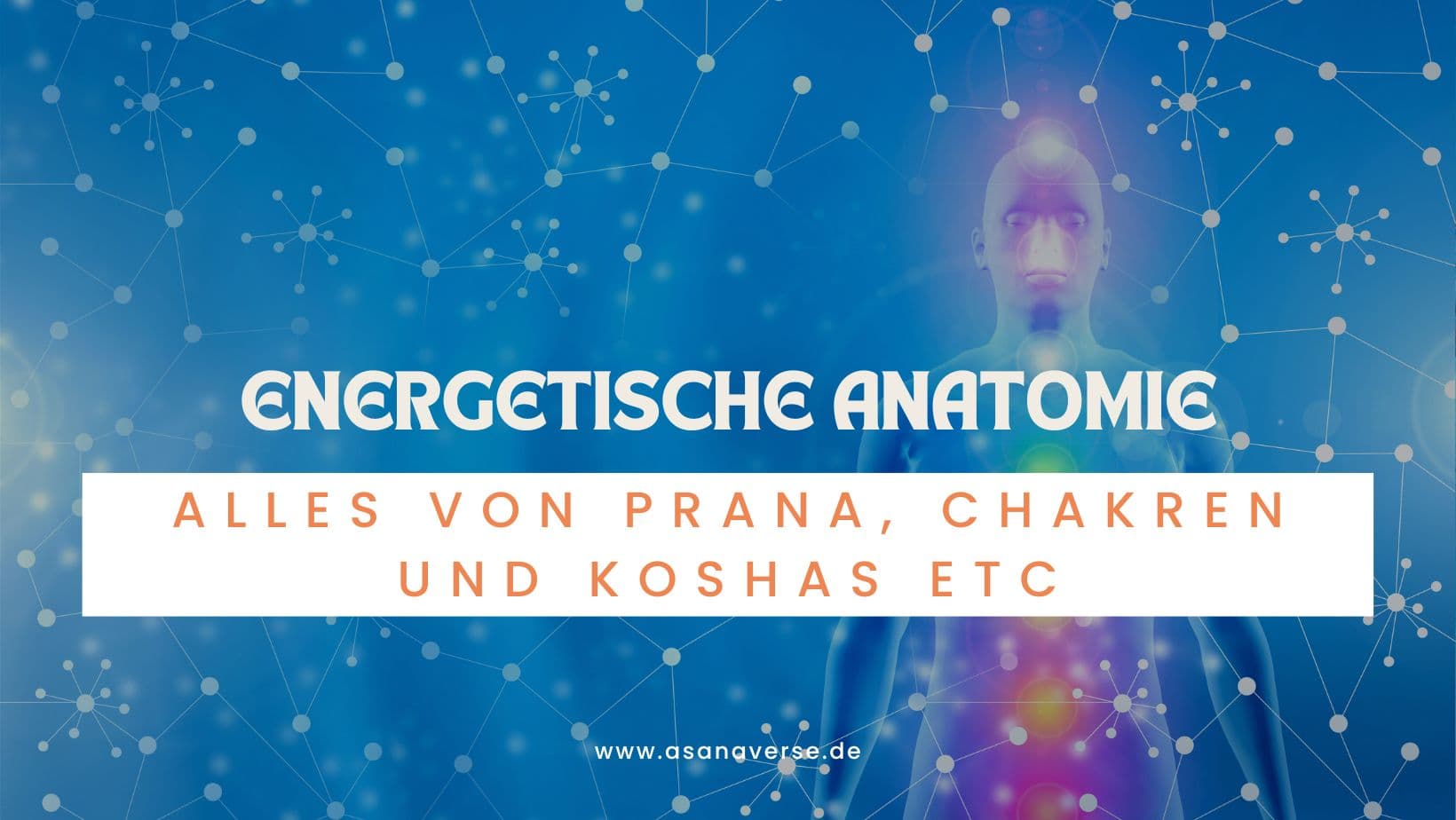
Chakras are energetic centers in the body, understood as vortices of prana (life energy). Traditionally, there are seven main chakras arranged along the Sushumna Nadi, a central energy channel that runs along the spine. Each chakra corresponds to certain physical, emotional and spiritual aspects of our being:
- Muladhara (root chakra): Located at the base of the spine, it stands for basic needs, security and stability.
- Svadhisthana (sacral chakra): Located in the lower abdomen, it represents creativity, sexuality and emotions.
- Manipura (solar plexus chakra): Located in the stomach area, it symbolizes willpower, self-esteem and energy.
- Anahata (heart chakra): Located in the heart, it stands for love, compassion and connection.
- Vishuddha (throat chakra): Located in the throat, it represents communication and self-expression.
- Ajna (third eye or brow chakra): Located between the eyebrows, it stands for intuition and mental clarity.
- Sahasrara (crown chakra): Located at the top of the head, it represents spiritual connection and enlightenment.
Harmonizing and activating the chakras can lead to a balanced flow of energy in the body, which improves overall well-being and creates the foundation for spiritual growth.
The nadis: energetic pathways
At the heart of yogic energetics are the nadis, the subtle channels through which prana, the life energy, flows. These energetic pathways form a complex network that connects the physical body with the subtle energetic body, creating a bridge between our material being and our spiritual consciousness.
It is believed that there are 72,000 nadis in total running through the body, with three main nadis, Ida, Pingala and Sushumna, being of particular importance. These main nadis serve as the primary pathways for the flow of prana and are directly connected to the function of the chakras and the process of spiritual awakening.
- Ida Nadi, also known as the moon nadi, represents the cooling, feminine principle. It is connected to the right hemisphere of the brain and governs the mental processes and receptivity. Ida originates at the Muladhara Chakra (root chakra) and ends at the left nostril. It regulates the refreshing energy in the body and is associated with feelings of calm and intuition.
- Pingala Nadi, the sun nadi, symbolizes the warming, masculine principle. It is connected to the left hemisphere of the brain and controls the vital life processes and activity. Pingala also begins at the Muladhara Chakra and ends at the right nostril. It promotes the energizing power in the body and is connected with logical thinking and physical energy.
- Sushumna Nadi is the central channel and runs along the spine from the Muladhara to the Sahasrara Chakra (crown chakra). Sushumna is the main pathway for the kundalini energy, the dormant spiritual force that rests at the lower end of the spine. The awakening of the kundalini and its ascent through Sushumna leads to higher states of consciousness and spiritual enlightenment. The activation of Sushumna requires a balance between Ida and Pingala, since it is only when these two nadis are balanced that energy can flow freely through Sushumna.
The practice of Pranayama, especially techniques such as Nadi Shodhana (alternate nostril breathing), aims to purify the nadis and harmonize the flow of energy. A purified Sushumna allows the spiritual energy to rise unimpeded, which leads to an expansion of consciousness and to the experience of deep inner peace and unity.
Working with the nadis offers a deep insight into the energetic aspects of yoga and enables a targeted transformation on all levels of being. By consciously directing prana along these paths, practitioners can release energetic blockages, increase their well-being, and lay the foundation for spiritual growth.
Integrating chakras and nadis into your yoga practice
The conscious work with