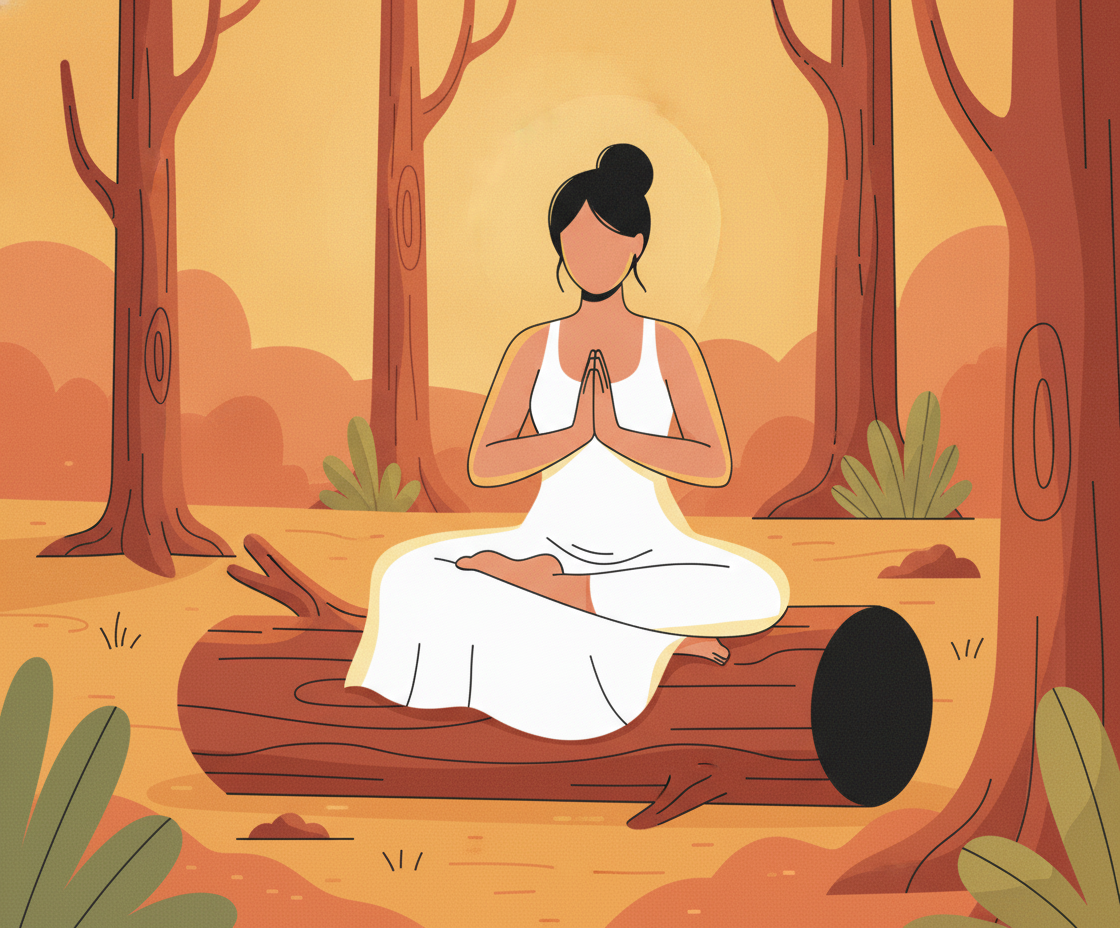
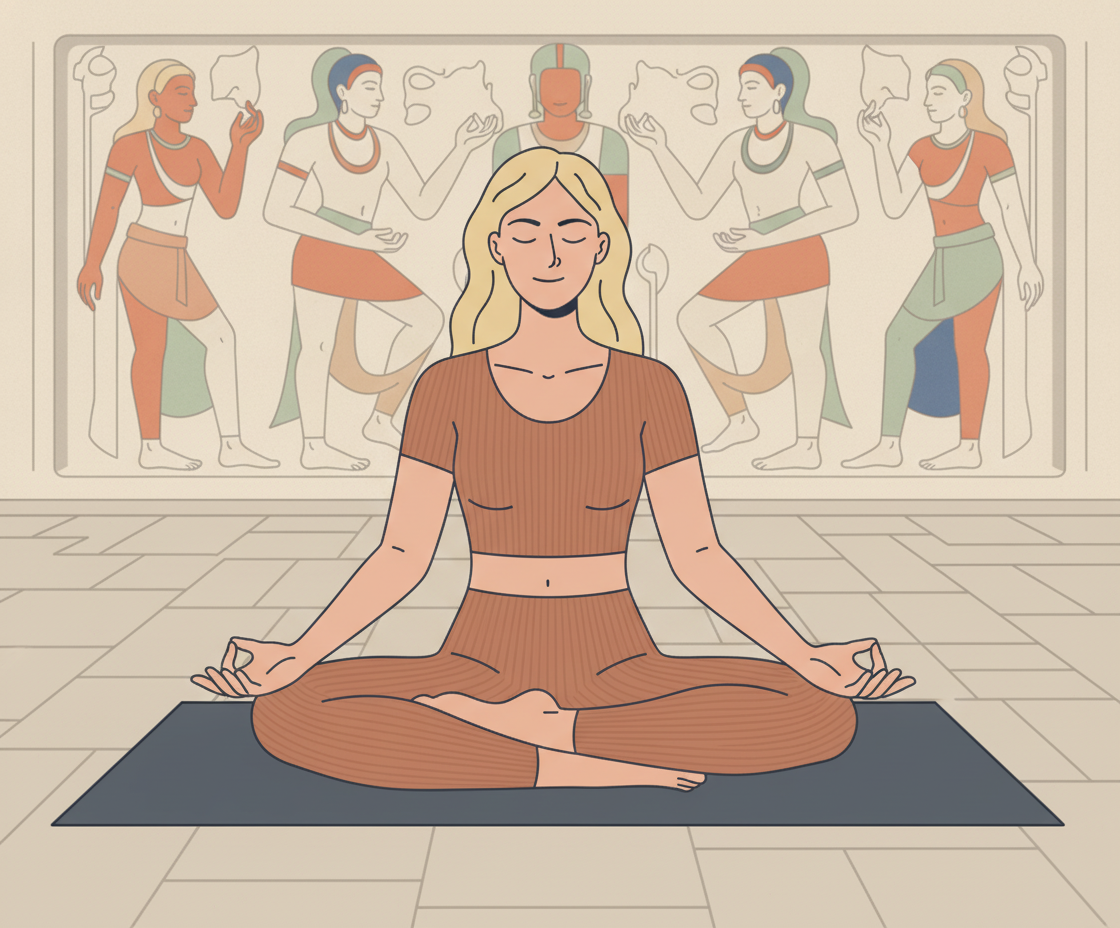
Picture three people on the same ordinary Tuesday. One sits cross-legged before sunrise, eyes closed, chasing nothing but the quiet hum underneath her thoughts. Another walks into a packed hall, sings words she didn't write, and feels held by everyone around her. A third sits alone with a battered copy of Plato, arguing with a man who's been dead for over two thousand years, trying to figure out what a good life even means. Ask any of them what they're doing and you might get the same answer: searching for truth, or meaning, or something bigger than their own head.
That overlap is exactly why these three ways of knowing get mashed together so easily, and why the boundaries between them blur so fast in casual conversation. Spirituality, religion, and philosophy get treated as interchangeable, or worse, as competing teams you have to pick between. They're not the same door to the same room. They're three separate doors, built differently, opening onto different views.
Here's what's actually going on: each path has its own origin, its own internal structure, its own idea of what success even looks like. One is felt in the body before it's ever named. One is built and carried by a community across generations. One runs on argument, logic, and the discipline of asking better questions. By the end of this guide, you'll have a clean working definition of all three, and a real sense of how they talk to each other instead of just competing for the same territory in your mind.
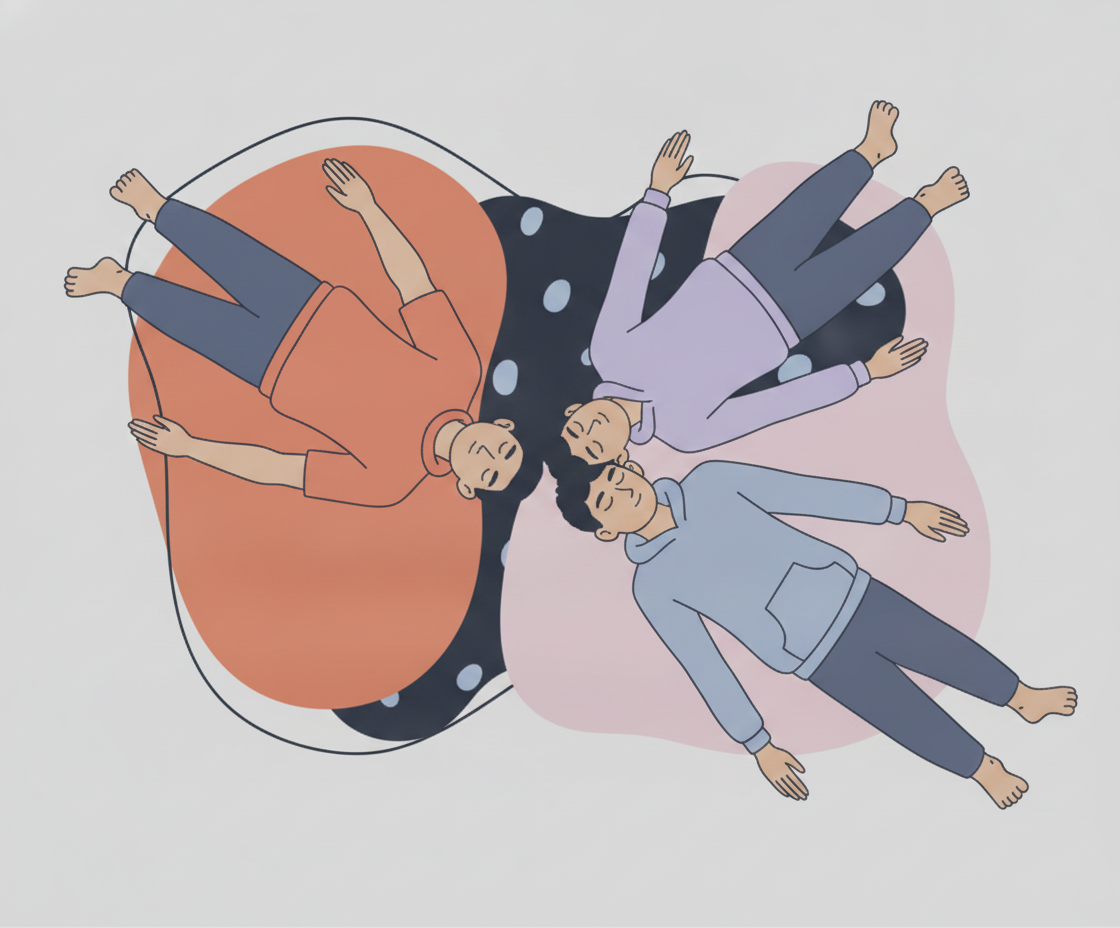
Drei Menschen, drei Wege: Spiritualität, Religion und Philosophie in ihrer visuellen Essenz
What Is Spirituality? The Direct Experience of the Sacred
Let's start with what spirituality actually feels like, because that's the whole point. I've had students close their eyes in Savasana for the hundredth time and suddenly get quiet in a way that has nothing to do with relaxation. Something opens. There's no text they're following, no creed they're reciting. Just a direct, felt sense of being part of something larger than the to-do list running their week. That's spirituality in its rawest form: not a belief you hold, but an experience you have.
Spirituality as personal connection to transcendence
As Yogawiki defines it, spirituality is a holistic orientation of life toward experiencing a higher reality and a higher purpose. Notice what's missing from that definition: no church, no council, no required text. You don't need permission to feel connected to something bigger than yourself, and you don't need to prove it to anyone. That's the part students find most disarming when they first hear it. Spirituality doesn't ask you to believe something, it asks you to notice something.
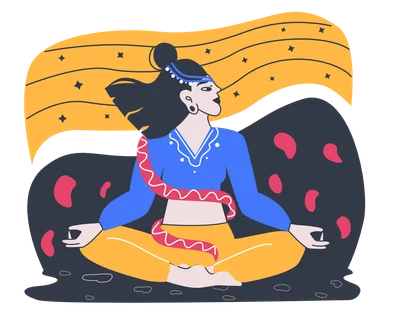
This is where Padmasana, the Lotus Pose, earns its reputation beyond just being a nice shape for photos. The folded legs, the long spine, the stillness of the hands resting on the knees: all of it points the body toward one thing, inward centeredness. I've watched beginners fidget through it for weeks and then one day just settle, and something in their face changes. That settling is the physical rehearsal of what spiritual experience feels like when it lands.
Ask ten practitioners what happened during a deep meditation and you'll get ten different, oddly precise descriptions: warmth in the chest, a dropping sensation, tears with no sadness attached. None of them read that in a manual. This is the real difference between spirituality vs religion as most people experience the split: spirituality trusts the body and the moment as valid sources of knowing, no doctrine required to make it legitimate.
Whether it happens through breathwork, silent meditation, standing under trees, or serving someone without expecting anything back, the mechanism is the same. Direct contact with the sacred, unmediated by institution. That's the essence of spiritual practice as a definition you can actually use, and it's exactly why the next question, what religion adds on top of it, becomes so interesting.
Religion: The Collective Container of Belief, Ritual, and Community
Here's the thing religion actually does that raw spiritual experience can't: it survives you. A mystic's insight, however profound, dies with them unless someone builds a vessel to carry it forward. That's what religion is. Not a watered down version of spirituality, but its packaging for transmission across centuries. Think of the Upanishads, foundational Sanskrit texts of Indian philosophy, later organized into systems, commentaries, and lineages of teaching. The raw insight was spiritual. The organizing was religion.
Structure, doctrine, and institutional authority
Religion codifies. It takes something as slippery as an inner realization and turns it into doctrine, a stated belief you can hand to a child or a stranger. It builds hierarchies, priests, gurus, councils, who decide what the tradition means and who gets to teach it. This is the trade religion makes: it exchanges the ambiguity of personal insight for the stability of shared, defensible belief. In yogic tradition, this shows up as sampradaya, the lineage structure through which a teaching is authenticated and passed from teacher to student, generation after generation, so the practice does not drift into whatever anyone feels like believing.
The role of faith, scripture, and shared practice
Scripture is memory made durable. Where spiritual insight is felt in a moment, scripture holds it in words so it can outlast the person who first felt it. Faith, in this context, isn't blind submission, it's trust extended toward a tradition you haven't personally verified yet, the way a student trusts a teacher before understanding why the posture works. Shared ritual, chanting, fixed prayer times, communal fasting, does something spirituality alone rarely achieves: it synchronizes hundreds of people into the same gesture at the same moment, building a collective identity spiritual solitude can't replicate.
None of this makes religion superior or inferior to spirituality, just structurally different. A person can recite every prayer correctly and belong fully to the community while feeling nothing sacred at all, and another can feel the sacred constantly while never once setting foot in an institution. That gap, between belonging to a container and feeling what the container was built to hold, is precisely where the next comparison becomes worth exploring.
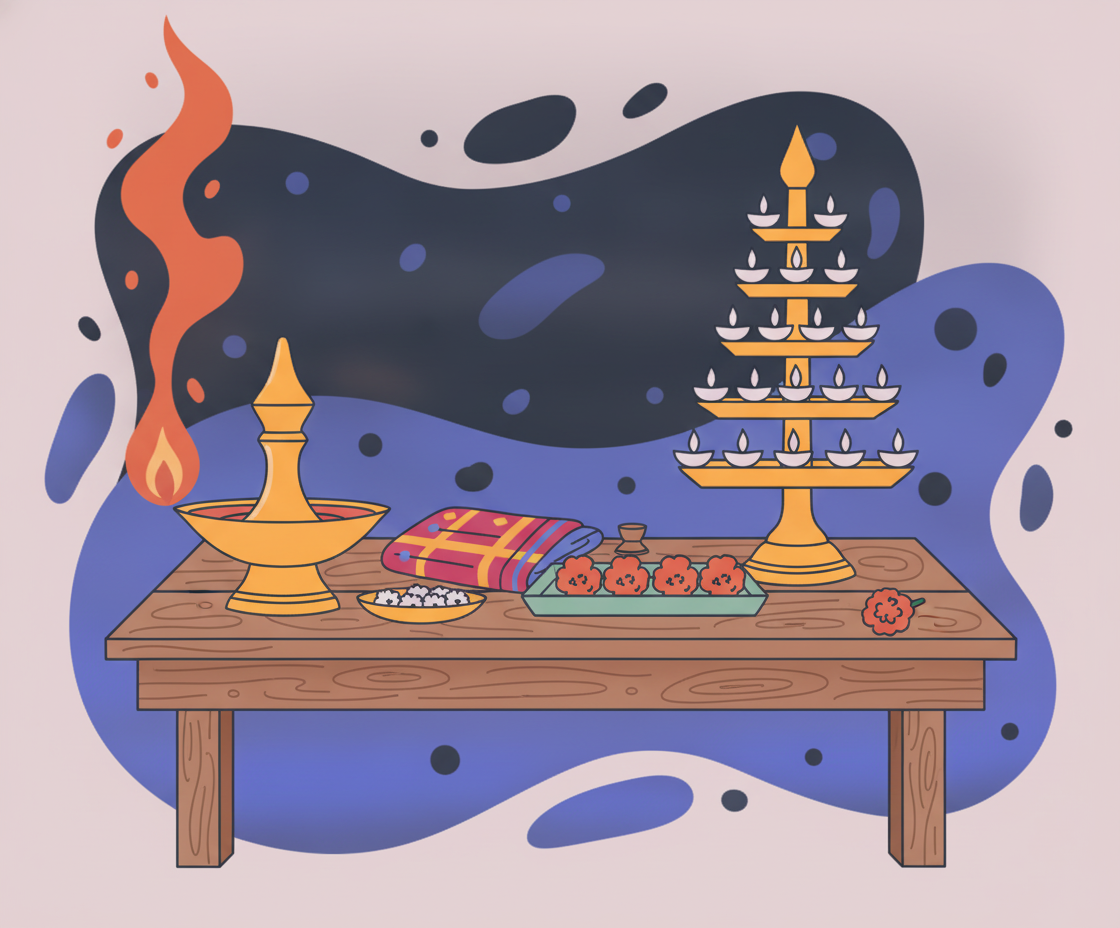
Religiöse Objekte und Rituale: Die sichtbare Form gelebter Tradition
Philosophy: The Rational Inquiry Into Meaning, Being, and Ethics
Philosophy walks in through a different door entirely. Where spirituality trusts a feeling in the chest and religion trusts a text handed down through generations, philosophy trusts an argument. The word itself, from the Greek philosophia, means love of wisdom, and that love expresses itself as a discipline: you make a claim, you give reasons for it, and you stay open to those reasons being torn apart. This is less about what you feel and more about whether your thinking actually holds together under pressure.
Love of wisdom through questioning and logic
A philosopher's basic move is the question that refuses to stop. Why do you believe this? What would count as evidence against it? Is there a hidden contradiction in how you're using that word? This is what cognitive scientists call metacognition, thinking about your own thinking, and it's a demanding mental habit. Most of us run on inherited assumptions most of the day. Philosophy asks you to catch yourself mid-assumption and check the wiring.
That checking is uncomfortable on purpose. Research on cognitive dissonance shows that holding two conflicting beliefs creates real psychological tension, and the nervous system often resolves it fast, by quietly dropping whichever belief is less convenient. Philosophy interrupts that shortcut. It sits with the discomfort long enough to actually examine which belief deserves to survive, rather than which one is easier to keep.
The primacy of reason and conceptual clarity
Philosophy doesn't need you to feel anything in particular, and it doesn't ask you to trust anyone's authority. It asks for a valid argument. That's a genuinely different cognitive mode from the one spirituality and religion draw on, less limbic, more prefrontal, more about conceptual precision than emotional resonance or communal belonging. A philosophical claim about ethics or the nature of the self has to survive scrutiny from someone who shares none of your background and none of your inner experience.
This is also why philosophy makes an excellent outside observer of the other two paths. It can ask whether a religious claim is internally consistent, or whether a spiritual experience is being over-interpreted as proof of something it can't actually prove. That skepticism isn't hostility. It's the same rigor turned toward every claim, including the philosopher's own, which is exactly why it never quite settles into permanent answers the way religion or spirituality can.
Untangling spirituality, religion, and philosophy takes real clarity, the kind of discernment Saraswati has always presided over. The mantra Om Aim Saraswatyai Namaha stands for clarity of mind, love of learning, and the courage to keep asking sharper questions, and wearing our Saraswati shirt means you carry her with you as a daily reminder to seek understanding, not just answers.
Spirituality Versus Religion: Why Personal Experience and Institutional Authority Diverge
Picture a woman on the subway, thirty minutes before work, eyes closed, doing box breathing with her phone timer running. Two stops later she passes a church where a small congregation is filing in for morning mass, incense already drifting through the open doors. Same city, same hour, two completely different relationships to the sacred. She would probably never call herself religious. She might not even flinch at that word feeling foreign to her. But ask if she's spiritual, and she'll say yes without hesitation.
The modern rise of 'spiritual but not religious'
That split is historically strange. For most of human history, spiritual seekers didn't get to choose a la carte. A Christian monk pursued union with God inside monastic vows and a fixed liturgical calendar. A Sufi mystic practiced dhikr, the remembrance of the divine, within an established order and a living teacher's guidance. A Hindu yogi trained under a guru inside a lineage with centuries of accumulated technique behind it. Spirituality vs religion wasn't really a distinction people made, because the inner journey happened *through* the institution, not around it.
Now millions describe themselves as spiritual but not religious, meaning they want the inner development, the sense of connection to something larger, without signing on to a specific creed, clergy, or membership. This isn't laziness or a watered-down substitute for real religion, it's a genuinely different way of relating to meaning. Someone can meditate daily, read the Dhammapada, and still reject Buddhism as an institution with its own hierarchies and doctrinal disputes. The practice stays. The allegiance doesn't.
Autonomy, innovation, and institutional limits
What actually happened, culturally, is a shift in where people locate authority. For centuries, truth about the sacred came from outside you: scripture, clergy, tradition. Over the last century, especially in the West, that authority migrated inward. People started trusting their own felt experience over an institution's interpretation of it. Add rising skepticism toward hierarchical power, easier access to Buddhist, Sufi, and Vedantic texts once locked inside specific cultures, and you get a population equipped to build individualized spiritual practice from parts.
This is the real distinction underneath spirituality and religion: autonomy versus obligation. Spirituality answers to your own direct experience. Religion, at its core, answers to something outside you, doctrine, clergy, communal expectation, even when it produces genuine transcendence. Someone can attend church every week out of loyalty or habit and feel nothing stir inside. Neither posture is lesser. One offers freedom and innovation, the other offers structure and continuity, and most people need some mixture of both at different points in their lives.
Can Philosophy Be a Spiritual Practice? The Boundary Between Thinking and Transcendence
I have watched a hundred students sit down to think about a hard question, jaw clenched, brow tight, shoulders climbing toward the ears, and it looks nothing like contemplation. It looks like an argument the body is having with itself. Real philosophical inquiry, the kind the Stoics or the Daoist sages practiced, was never meant to feel like that. It was meant to loosen you, not tighten you.
Philosophy as contemplative inquiry in ancient and Eastern traditions
Sit in Sukhasana, Easy Pose, cross legged, spine easy but alive, and ask yourself a real question, not a clever one. What am I actually afraid of right now. Something shifts. The breath slows on its own. This is what philosophy looked like before universities got hold of it: not analysis performed at a desk, but inquiry performed with the whole body seated in stillness. Jnana Yoga, the path of knowledge, follows this same spirit, though its method is intellectual rather than physical. It pursues understanding through sustained questioning, through discriminating the real from the unreal, not through posture or breath. Thinking, in this tradition, is still the vehicle. What changes is the stillness the thinker sits in while doing it.
But here is where I have to be honest with my students, and with you. Somewhere in that stillness, the question itself starts to dissolve, and thinking has nothing left to grab onto. Sensations arrive that no argument produced: a warmth in the chest, a sudden dropping of effort, a sense of space where the questioner used to be. That moment is not philosophy anymore. It is the leap logic cannot make. As one discussion of whether philosophy counts as spiritual practice puts it, the real difference is that spirituality is reasonable, yet it moves beyond reasoning.
This is the boundary worth naming clearly. Philosophy, even at its most contemplative, still runs on concepts: definitions, distinctions, the careful placing of one idea next to another. It can walk you to the exact edge of understanding, patient, rigorous, honest. But the step across, the felt collapse of the gap between knower and known, is not something argument produces. It is something argument can only point toward. Students often tell me the exact instant it happened: not a conclusion, but a quiet giving up of the need for one.
So can thinking be spiritual practice? Yes, when it stops trying to win and starts letting go. That is the whole answer to the boundary question, and it is worth sitting with before reaching for how these paths might work together, which is a question for later in this guide.
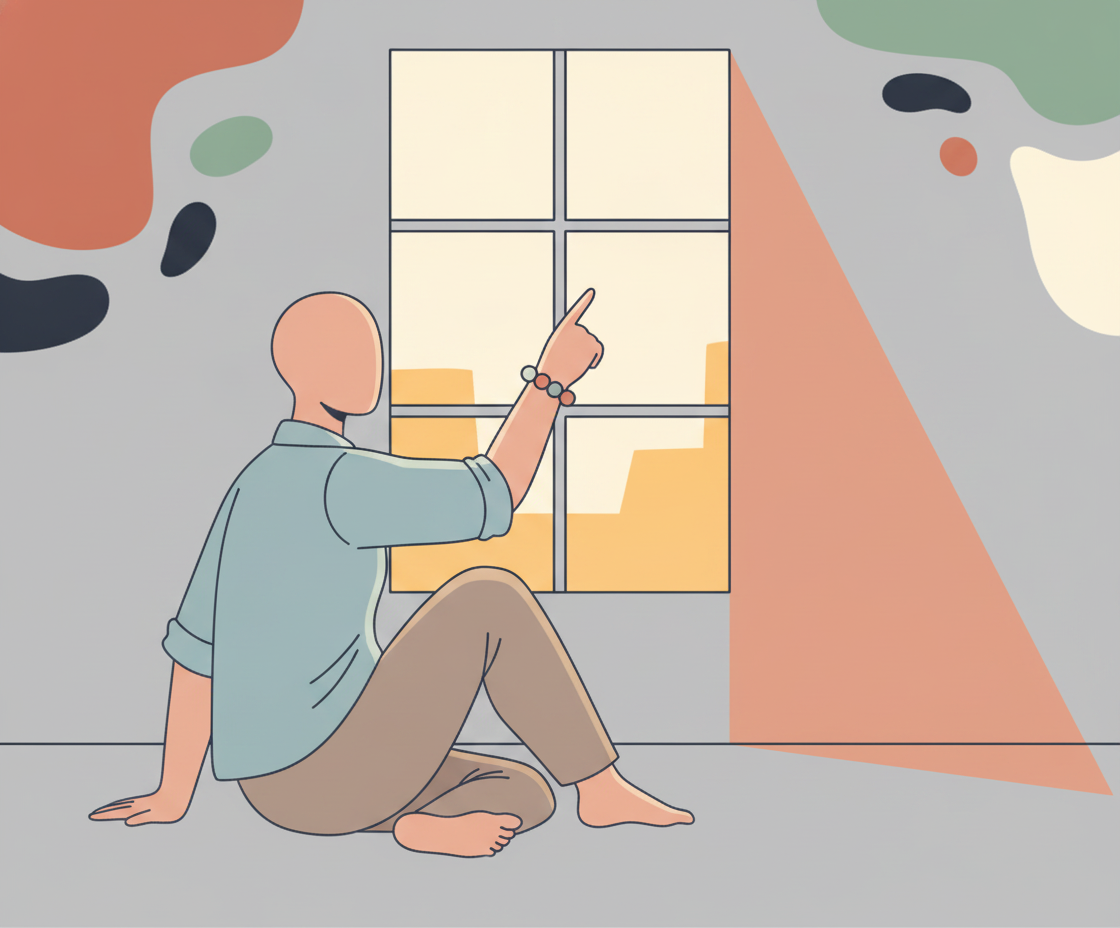
Philosophische Kontemplation: Wo rationales Denken zur inneren Erkundung wird
Three Paths, One Quest: How Spirituality, Religion, and Philosophy Work Together
Here's the thing nobody tells you in Philosophy 101 or in your first meditation class: you don't have to pick a lane. The Yoga Sutras of Patanjali, the closest thing classical yoga has to a philosophical backbone, sit right next to Samkhya metaphysics, a whole system explaining consciousness and matter as separate realities. That's rigorous philosophy. But the same tradition has chanting, temple worship, guru lineages, community ritual. That's religion, structurally speaking. And underneath all of it is the actual sitting, the actual breath, the direct felt experience on the mat. That's spirituality. One tradition, three modes, running simultaneously.
Integration in lived practice: the yoga example
A student reads the sutras to understand why the practice exists, philosophy sharpening the mind. She shows up to a weekly satsang, a gathering for shared teaching and chanting, because doing this alone gets lonely and community keeps her honest, religion providing stability and transmission. Then she closes her eyes in savasana and something shifts that no book explained, spirituality delivering the transformation itself. None of these three cancels the others out. I'd even say Legs Up the Wall, Viparita Karani, is a small physical rehearsal of what this integration asks of you: literally inverting your usual orientation, letting old certainties drain out through the soles of your feet, making room to reconsider a belief you inherited without ever examining it.
Recognizing your own relationship to each tradition
Some of you reading this are philosophers by temperament: you need the argument to make sense before your body will trust it. Others need the room full of people chanting the same words, the religious container, before anything sinks in. Others just need to sit down and shut up and let the practice do what thinking never could. None of these starting points is more advanced than the others. What matters is knowing, in any given moment, which mode you're actually in. Are you thinking right now, or believing, or practicing, or simply experiencing? Conflating them is where confusion and even conflict tend to start, both inside a person and between traditions. Naming the mode you're in, quietly, honestly, is what turns three separate paths into one coherent life.
Conclusion: Choose Your Path, Understand All Three
Here's what nobody tells you at the start of this search: you're not trying to figure out which of the three is right. There's no final exam where philosophy, religion, and spirituality get ranked and one wins. Once you actually know what each mode offers, and just as importantly, what each one demands of you, you stop wandering and start choosing. You stop mistaking one for another by accident, and start moving between them on purpose.
That accidental mistaking is where most people get stuck. You read enough philosophy to feel like you understand suffering, and you assume that means you've transformed your relationship to it. You show up every week to a religious community and mistake the warmth of belonging for the harder, quieter work of facing yourself. You have one powerful meditation experience alone in your room and treat it as wisdom, without ever testing it against a teacher, a text, or a tradition that's been refined over centuries. Each of these is a real gift. None of them is a substitute for the other two.
Your Next Step
Take an honest look at your own life right now. Which of these three modes, spiritual practice, religious belonging, or philosophical inquiry, feels strongest? Which one feels thin, or missing entirely? If your understanding lives mostly in your head, all concept and no practice, you probably feel abstract, a little untethered. Add something embodied. If your inner life feels rich but isolated, find people, teachers, or texts to hold it steady. If your religious life feels hollow, you're likely craving direct experience again, not more doctrine.
You don't need to master all three equally, and you don't need to force them into some tidy synthesis. Some people will always lean toward the contemplative, some toward community, some toward the intellect, and that's fine. What matters is knowing which door you're walking through at any given moment, and trusting that the other two are still there, waiting, whenever you need what only they can give you. The differences between spirituality, religion, and philosophy were never obstacles blocking you from some unified truth. They're invitations to clarity, and clarity is what lets you finally choose.

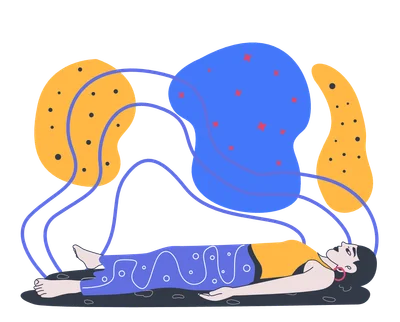 AsanaTotenstellungSavasanaZur Asana →
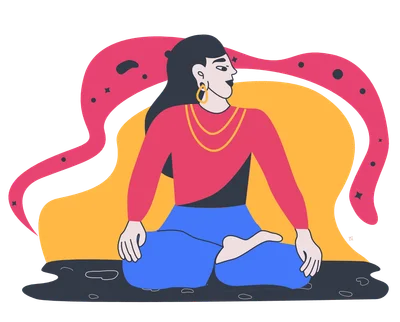 AsanaLotussitzPadmasanaZur Asana →