Let me start with something honest: the guy who glides effortlessly into Scorpion at the studio was once also the one who trembled in Downward-Facing Dog. These postures for every level, from the first sun salutation to the advanced inversion, are not an exclusive club with a bouncer. They are a path that begins with you, exactly where your body stands today. In my classes I've seen sixty-year-olds who managed their first forward bend, and well-trained athletes who failed at a simple balance exercise because they lacked patience. That is not irony, that is yoga. The asanas, i.e. the body postures, are only the visible surface. Beneath it runs something far more exciting: a training in self-awareness, in ego-letting-go, in genuine presence. Anyone who is newly starting needs courage to show themselves imperfect. Anyone who has practiced for a long time needs humility to start from zero again and again. Both lead to the same place.
From beginner to pro yoga positions: Understanding the progressive asana system
Let me begin with a Sanskrit term that holds the whole system together: Sthira Sukham, strength and ease at the same time. In the Yoga Sutras, Patanjali describes exactly this as the quality of an asana, not the depth of the stretch, not the complexity of the form.
A progressive system from yoga beginner positions to advanced variations therefore does not exist so that you climb levels as in a video game. It exists because your nervous system and your connective tissue need time to truly understand this balance of stability and softness. Advanced yoga exercises are no proof of worth, they are simply a different access to the same experience.
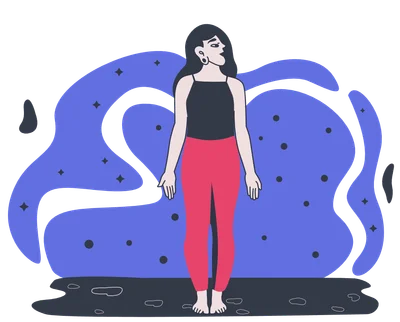
Mountain Pose (Tadasana) forms the foundation of all standing asanas
Why the progression principle is decisive
Your body has its own intelligence, and it ignores ambition completely. I've taught enough students who forced themselves into the handstand before shoulders and trunk had the necessary supporting strength. The result was rarely progress, mostly a forced break. Structured yoga positions step by step exist for exactly this reason: they give joints, fascia and breathing patterns the chance to adapt organically. Simple yoga positions are therefore not a compromise, they are the foundation on which every later opening becomes safely possible in the first place.
How seriously traditional schools take this principle is shown at the dvipada Studio Köln. Heike Katharina Schmidt, a trained yoga teacher since 2007, teaches authentic Ashtanga Yoga there, a practice that consistently builds on a fixed series. No one is shown the second series there before the first one sits. It is precisely this patience that is the core of the progression principle.
The three levels: beginner, intermediate, advanced
Structured yoga exercises for beginners, intermediate and advanced practitioners with progressive Hatha variations show: each level works on the same inner question, only with different outer means. Beginner exercises build up body awareness, often over five to eight calm breaths in a simple posture. The intermediate level extends the dwell time to ten to fifteen breaths and refines the alignment. Advanced yoga exercises play with balance, inversions or deeper backbends, yet the goal remains identical: calm breath despite intensity.
Studios that take this tiered system seriously can now be found in every larger city. At Yoga Vidya the retreats are clearly graded by levels, including their own breathing courses and a pranayama course specifically for the intermediate level. Jivamukti Glockenbach in Munich also works with clearly named levels from Open Level to Level III, so that students know exactly where they currently stand, instead of overtaxing themselves in a class actually intended for advanced practitioners.
A balanced yoga class incorporates postures from all asana categories in order to stretch and strengthen the body holistically, regardless of level. At Yoga39° in Cologne, located right on Richard-Wagner-Straße, you experience this in the hot yoga format: beginners and advanced practitioners often practice in the same room, only the depth of the variation differs. Anyone who prefers to practice from home will find at YogaEasy an online studio with a broad course offering across all levels and styles, practical when the nearest studio is too far away or the schedule doesn't allow a fixed class time.
A good yoga workout for all levels deliberately mixes these categories instead of sorting them by difficulty. The asana difficulty level is in the end only an outer label, inwardly everyone practices the same thing: staying with yourself when it gets uncomfortable.
Yoga beginner positions: Safe entry points into your practice
Before we talk about handstands and backbends, one thing must be clear: the yoga beginner positions are not a waiting room that you want to leave as quickly as possible. They are the actual school. Anyone who is sloppy here builds all their later practice on shaky ground. I always tell my students the simple yoga positions are meditations in movement, not a warm-up exercise you tick off before the exciting part comes.
Mountain Pose (Tadasana), The Fundamental One
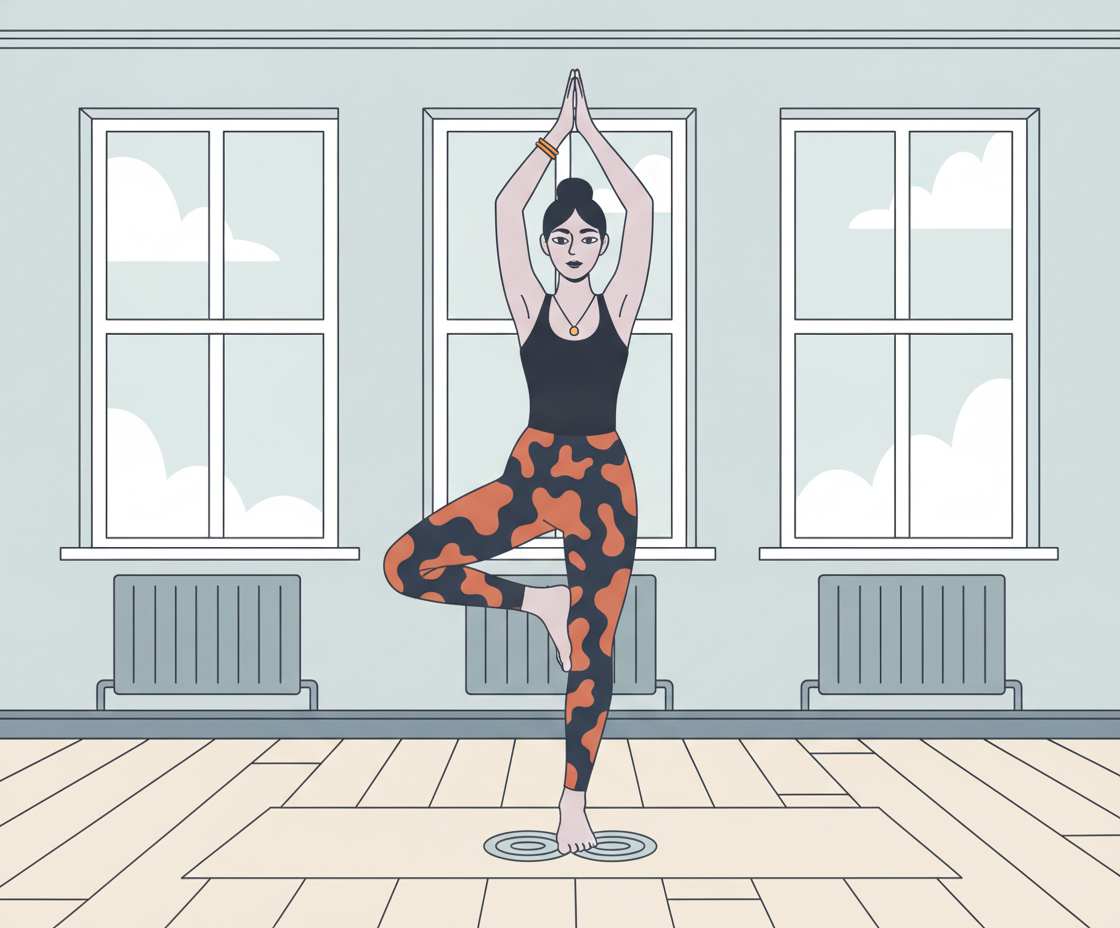
Mountain Pose (Tadasana) looks as if you were simply standing. That's exactly where the trap lies. In truth Tadasana is the fundamental basic position for beginners and the basis of all standing asanas, because it teaches you how real grounding feels. Feet hip-width apart, weight evenly distributed over both soles, knees slightly active instead of locked. What is trained here is proprioception, i.e. your body's ability to sense where it stands in space without looking. Most people notice only here how unevenly they actually stand. Consciously let the shoulders sink, that is the reflex almost everyone has to suppress at first.
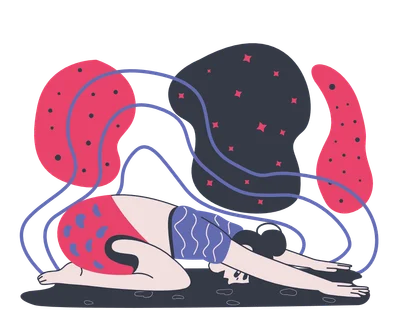
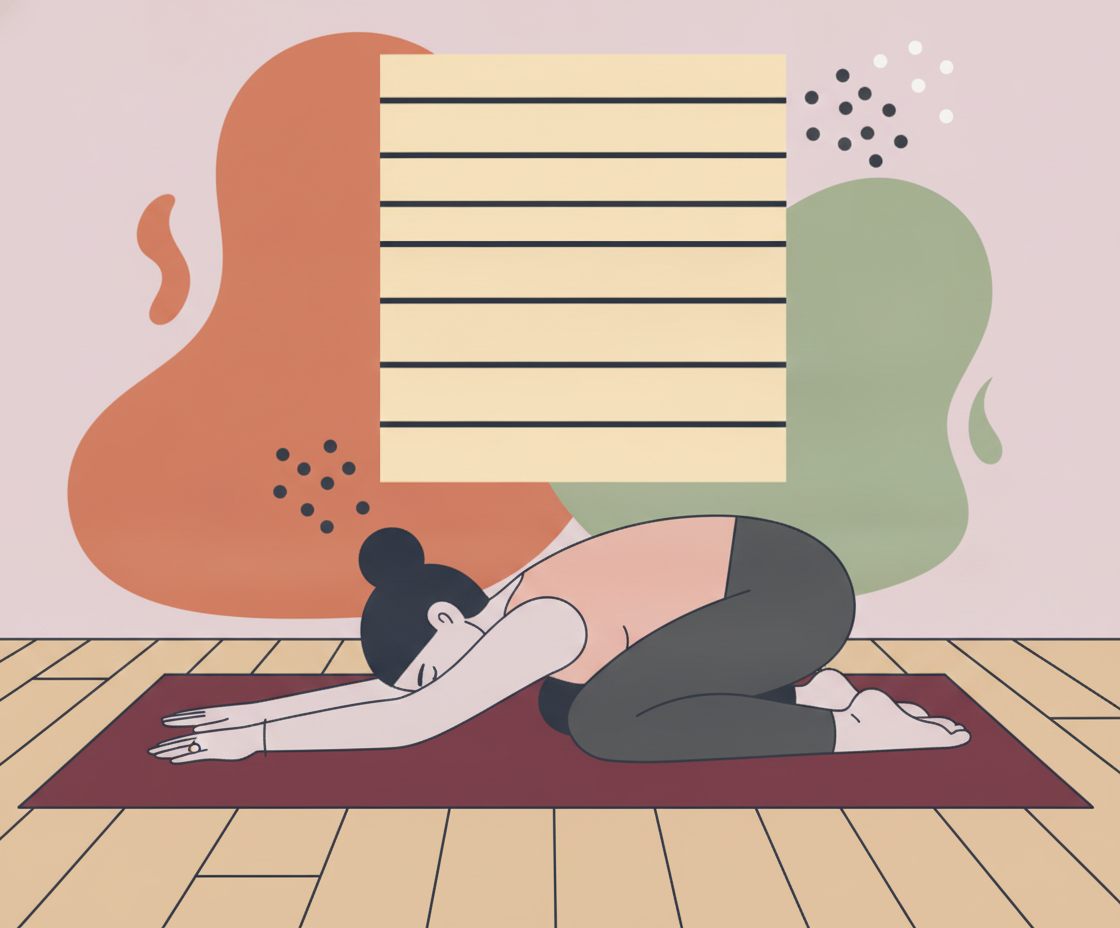
Child's Pose (Balasana) is a calming, beginner-friendly posture that promotes regeneration and mindfulness, and it is also your emergency exit when a yoga class becomes too much. That is not weakness, that is self-regulation of the nervous system in its purest form. The knees open wide when the belly presses, or a cushion goes under the forehead when the back is not yet so flexible. With limited mobility in the knees, a rolled-up blanket in the hollow of the knee helps.
With yoga for beginners exercises it's about body experience first, not flexibility. An overview of the best yoga poses for beginners shows simplified variations next to the full versions for each pose, and that's exactly how you should approach your first weeks too: yoga positions step by step, with blocks, straps or against the wall. No one later asks how deep you were on the first day.
Intermediate yoga: Integrating strength and balance
As soon as the basics sit, the game shifts. At the intermediate level it's no longer only about getting safely into a posture, but about working within it. Strength and balance become a duo that you consciously steer. And this is exactly where the actual yoga practice begins: you learn to build tension where it's needed, and to let it go everywhere else again. That is no side matter, that is half the battle.
Transitional asanas: Downward-Facing Dog as a master program
Downward-Facing Dog (Adhomukha Shvanasana) accompanies you from day one, but at the intermediate level it shows its true face. Now it is no longer a pure stretching asana, but a tool for pranayama, the yogic breath control, and for mental centeredness. You begin to consciously direct the breath into the ribs while arms and legs work actively. Structured yoga exercises for all levels show exactly these progressive Hatha variations: sometimes with a lifted heel, sometimes with an extended exhale. Anyone who practices patience here quickly notices how frustration transforms into focus.
Standing postures for inner stability
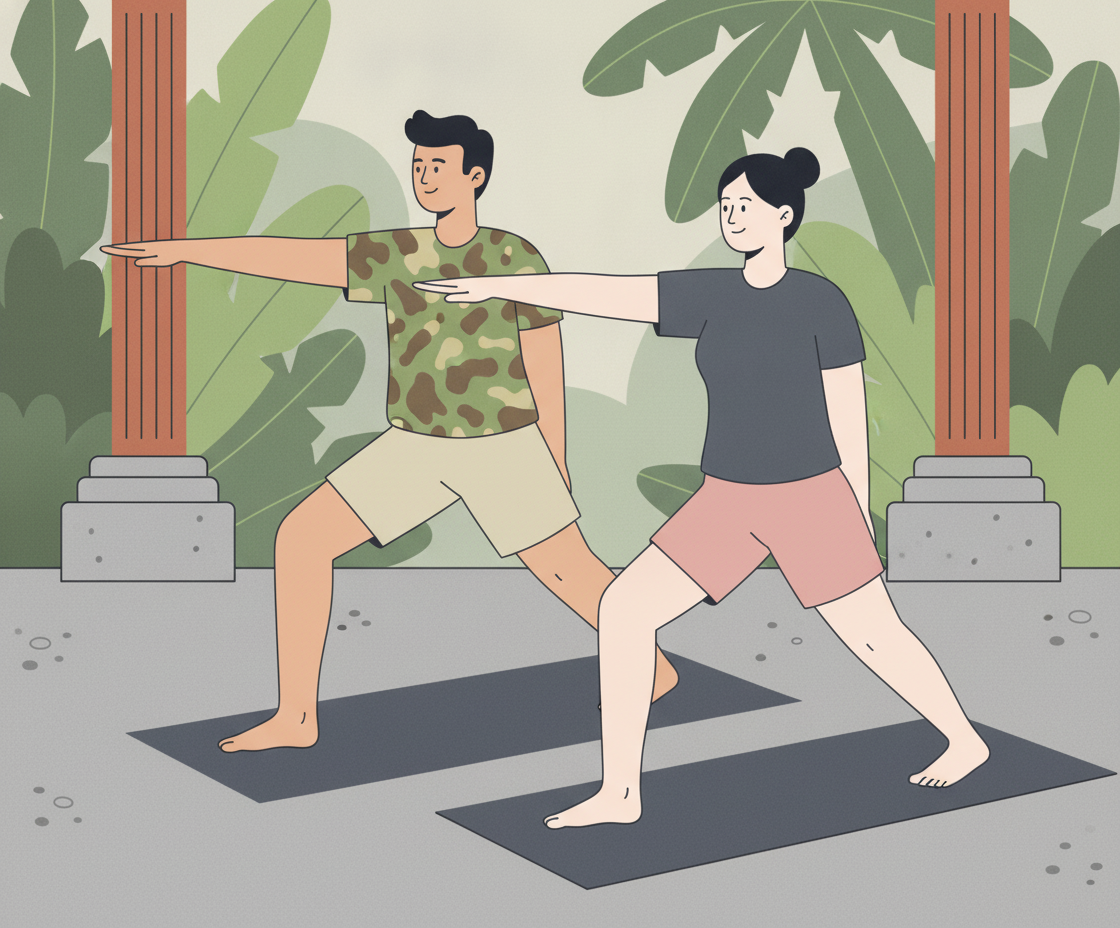
Warrior II strengthens the legs, hips and develops inner stability
Warrior two, Triangle, Half Moon: these standing postures challenge your nervous system to stay still while the legs tremble. This is exactly where the psychological work sets in. You learn to stay with the wobbling instead of fighting it. That is lived patience, not theory. Physically this means: build tension deliberately in the thighs and trunk, consciously let shoulders and jaw sink. Anyone who practices this trains not only muscles, but also the ability to stay calm under pressure.
Backbends and twists: Activating the inner organs
A balanced yoga class contains postures from all asana categories, so that the body is stretched and strengthened holistically, and this is exactly where backbends and twists come into play. Cobra or gentle seated twists massage the inner organs, get digestion going and open the chest, which otherwise contracts from all the sitting. Mentally, these advanced yoga exercises demand trust: you open yourself instead of protecting yourself. That is exactly what makes the intermediate level so instructive.
Advanced yoga exercises: Mastery and inner precision
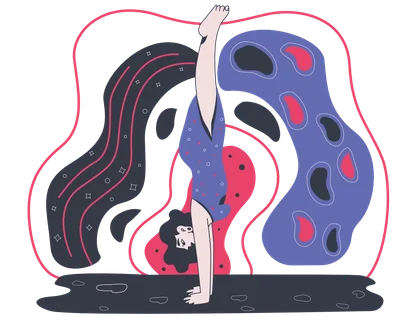
Advanced asanas initially present a clear physical requirement. A handstand demands shoulder stability, an active rotator cuff and an understanding of how you channel force through the wrists into the floor. An inversion, i.e. an upside-down posture, additionally changes the blood flow and challenges your sense of balance anew. Only when this physical basis sits does the mental dimension become palpable: Scorpion, headstand or deep backbend are, philosophically viewed, not trophies, but tools to work on fear and ego attachment. Anyone who practices them actually practices trusting their own nervous system when the head still calls: dangerous, leave it. That's exactly where it gets interesting.
Arm and head stands: Change of perspective as a metaphor
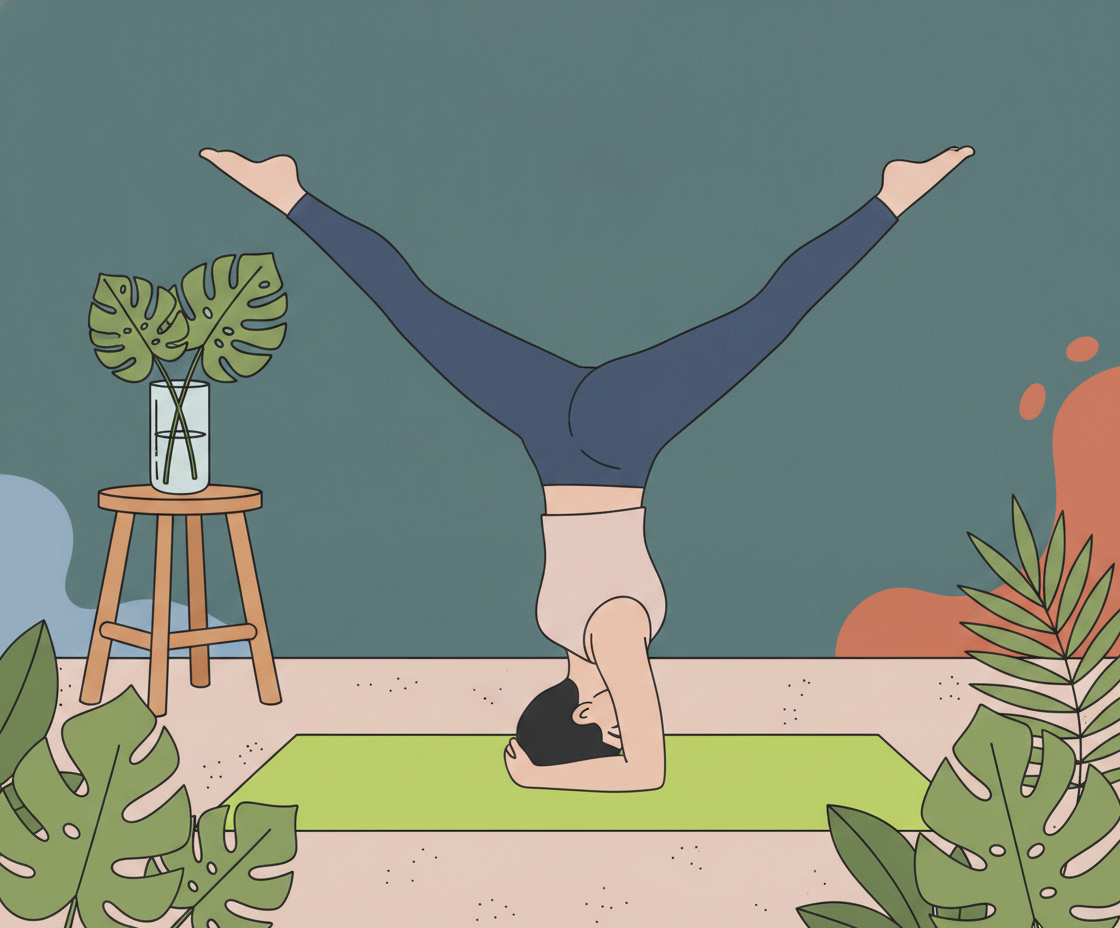
In the headstand you see your space literally differently. The furniture practically hangs from the ceiling, the blood flows elsewhere, your sense of balance has to recalibrate. That is exactly the exercise: inner flexibility is mirrored in the ability to view the world from an unfamiliar position without panicking. Many of my students notice at their first handstand against the wall how much mental noise comes up as soon as the feet leave the floor. That is no coincidence, but the point of the exercise.
Deep forward bends and backbends
Deep bends, no matter in which direction, confront you with limits that shift over years, not over weeks. It is precisely here that you learn patience without frustration. A backbend opens the chest and thereby often also emotional blockages. Everyone who was suddenly and unexpectedly moved after a Camel, Ustrasana, knows this. Forward bends, on the other hand, demand surrender instead of control. Both train you to hear your own inner voice instead of squinting for outer confirmation when the body simply doesn't want to go further on that day.
Floating asanas: The paradox of effortlessness through technique
Advanced inversion asanas require strength, balance and mental focus
A floating transition between two asanas looks effortless, but is the result of the finest proprioception, i.e. the sense of where your body currently is in space. Structured yoga exercises for advanced practitioners build exactly this up systematically: micro-adjustments, balance, timing. The paradox: the more technique you internalize, the lighter the movement looks. Failing is part of it. Every fall out of the crow jump is feedback, not failure.
Building a complete yoga sequence for all levels
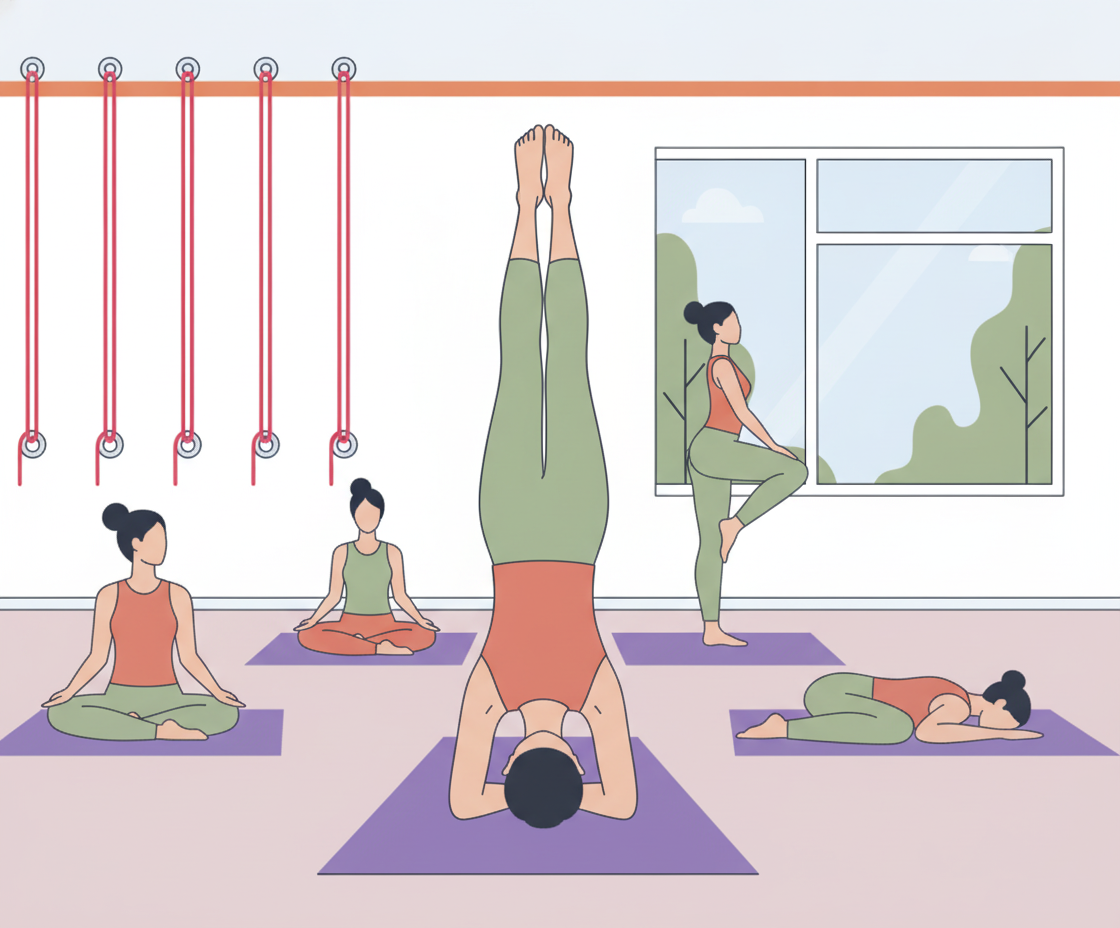
A good yoga class is no random product. Anyone who has ever lain on the mat with me has noticed: there's a blueprint behind it, even if it feels casual. A yoga workout for all levels only works when forward bends, backbends, twists, standing postures and inversions play together, not stand side by side. This structure gives your nervous system safety, you unconsciously know what comes next, and can let yourself fall instead of constantly anticipating.
Warm-up, asanas, retreat phase: The holistic class structure
Every well-thought-out session has three phases. First the warm-up, gentle standing postures and twists that wake up joints and fascia. Then the main part with the more intense asanas, the most important exercises and their effect on strength, mobility and balance, as a study published on PubMed on balanced asana sequences shows. Finally the retreat phase with forward bends and inversions that wind the nervous system down. This dramaturgy is no side matter, it is the actual teaching.
How to change levels without risking injury
Building yoga positions step by step means: you don't change levels in the middle of your breath, but consciously between breaths. If the breath becomes shallow or falters, that is your signal to stay, not to push further. This inner guidance is more reliable than any glance at the neighboring mat. Doing yoga greatly means listening to your own body, not to Instagram role models, who rarely show the years of simple yoga positions from which their practice grew.
Breathwork (pranayama) and meditation as integral parts
Pranayama, the yogic breath control, and meditation belong to the class just as much as the asanas themselves, they are no appendage at the end. Anyone who leaves them out practices gymnastics, not yoga. Especially for advanced yoga exercises, conscious breathwork before the posture is worthwhile, it prepares mind and tissue. In the end it is not the asana difficulty level you reach that counts, but how present you stay while doing it.
To understand pranayama and meditation as equal parts of the practice is exactly the kind of clarity and willingness to learn that the mantra Om Aim Saraswatyai Namaha stands for: knowledge, insight and the patience to truly penetrate things instead of just ticking them off. As a daily reminder of this, there is our Saraswati shirt, so you carry this wisdom with you at all times, even off the mat.
The word yoga comes from "yuj", to unite. Not forehead to knee, but breath to movement, body to mind, attention to moment. That is easily forgotten between yoga beginner positions and the ambitious goals for later. Whether you are just starting out with simple yoga positions or have been fine-tuning advanced variations for years, you are on the same path as everyone else on the mat. No hierarchy, only different stations.
My concrete suggestion in closing: pick a single position that appeals to you, perhaps from the yoga for beginners exercises we discussed here. Practice it five minutes daily, for two weeks. Not in order to eventually "be able to do" it perfectly, but to truly understand it, every millimeter shift, every thought that appears in the meantime. Use it as a door to inner observation, not as proof of performance.
I've taught enough students to know: the deepest insights rarely come from complicated postures, but from patience with the simple. If you feel like digging in further, whether yoga positions step by step or a structured yoga workout for all levels, keep looking around on our website. The path stays the same, only your attention for it becomes sharper.

 AsanaHandstandAdho Mukha VrksasanaTo the asana →