Asanaverse
yogasphere

The Psychology of Addiction: Neurobiology, Behavior and Overcoming It

by Leila NouriAugust 13, 2026 11 min
The Psychology of Addiction: Neurobiology, Behavior and Overcoming It

The psychology of addiction does not begin with weak willpower, but with a brain that does exactly what it was built for: securing survival, seeking reward, avoiding pain. In my courses I have met enough people who were ashamed of their dependency, as if it were a character flaw. It isn't. Addiction is a neurobiological cycle that lodges itself in the pathways of your nervous system, reinforced by stress, by old wounds, by the way your body has learned to deal with being overwhelmed.

Anyone who understands this stops fighting themselves and starts observing themselves. That is precisely the difference between shame and insight. Yoga is no substitute for therapy or medical treatment, I want to make that clear right at the start. But as an accompanying practice it can help to regulate the nervous system and find a different access to one's own body, beyond the constant cycle of craving and control. In this article we look at what really happens in the brain during dependency, which psychological patterns feed it and what a path back to inner freedom can look like, entirely without a moralizing finger.
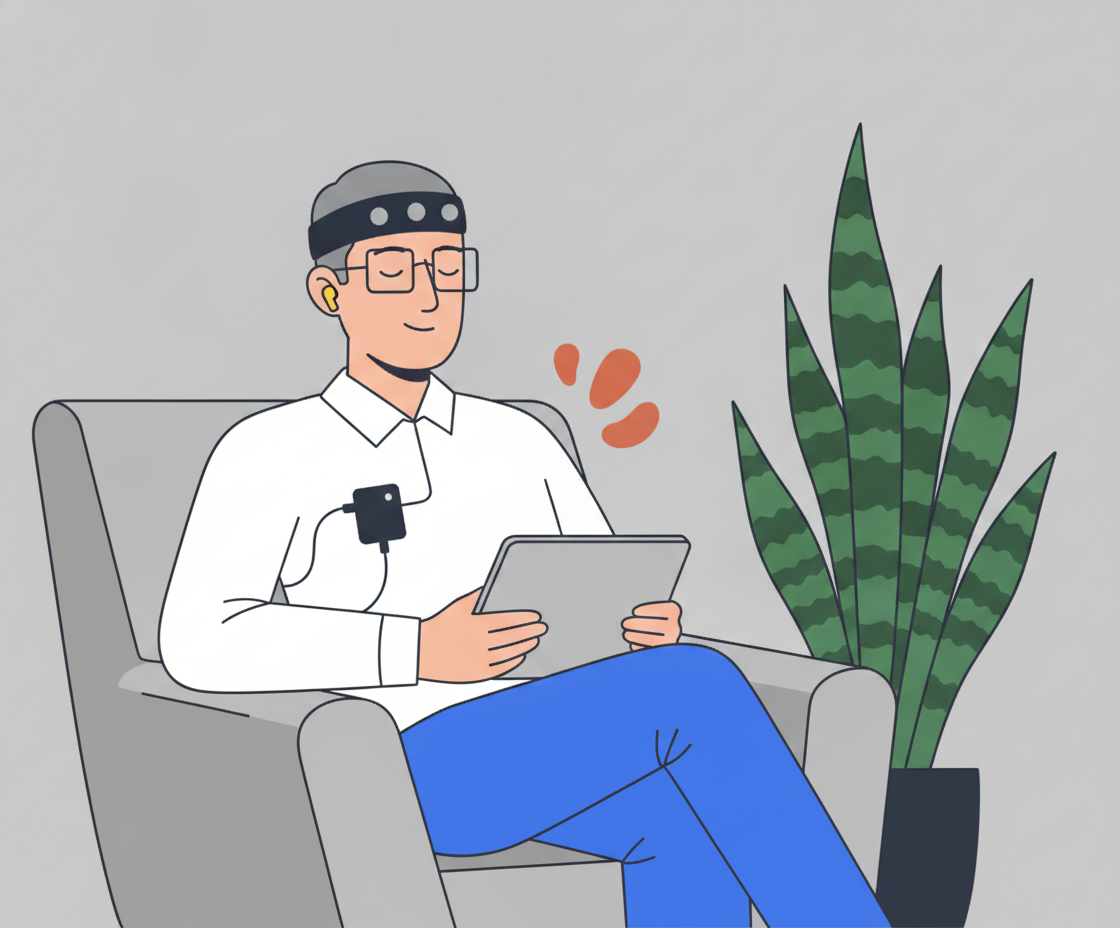
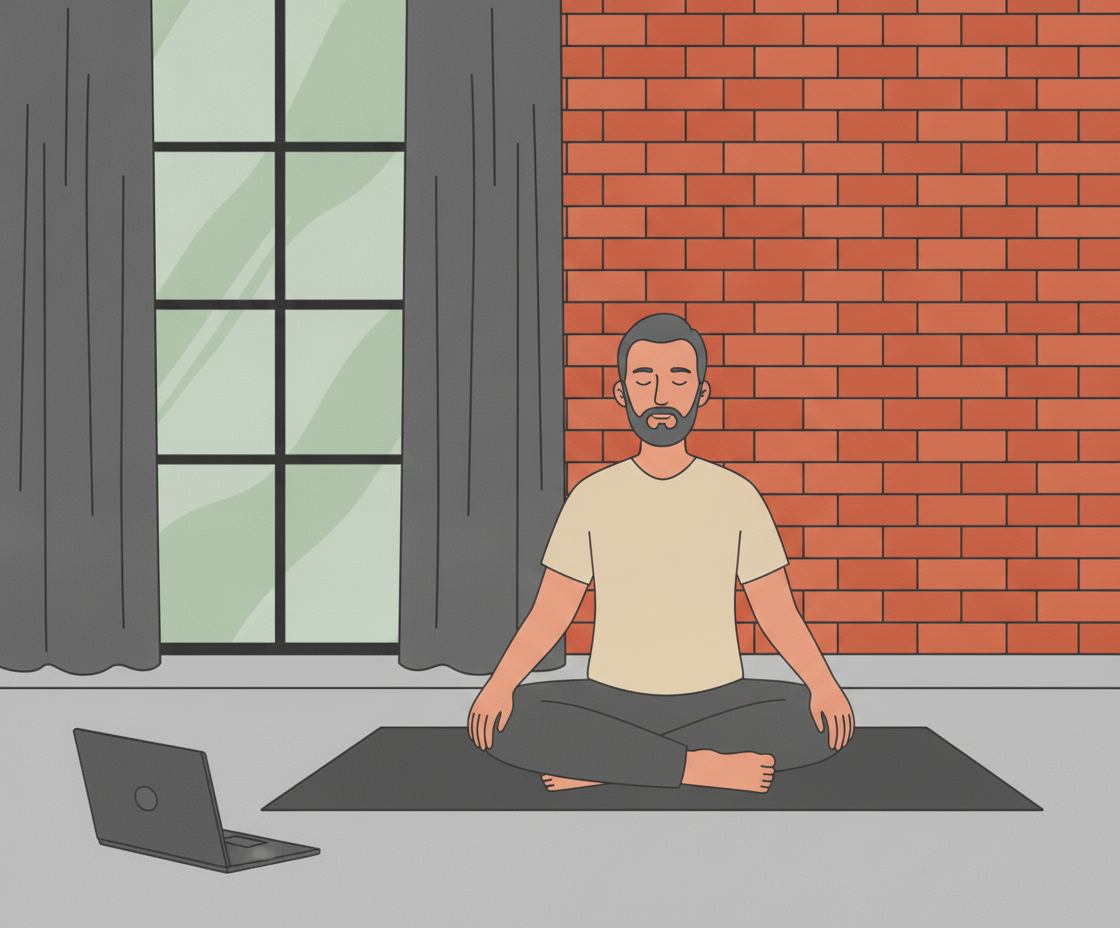
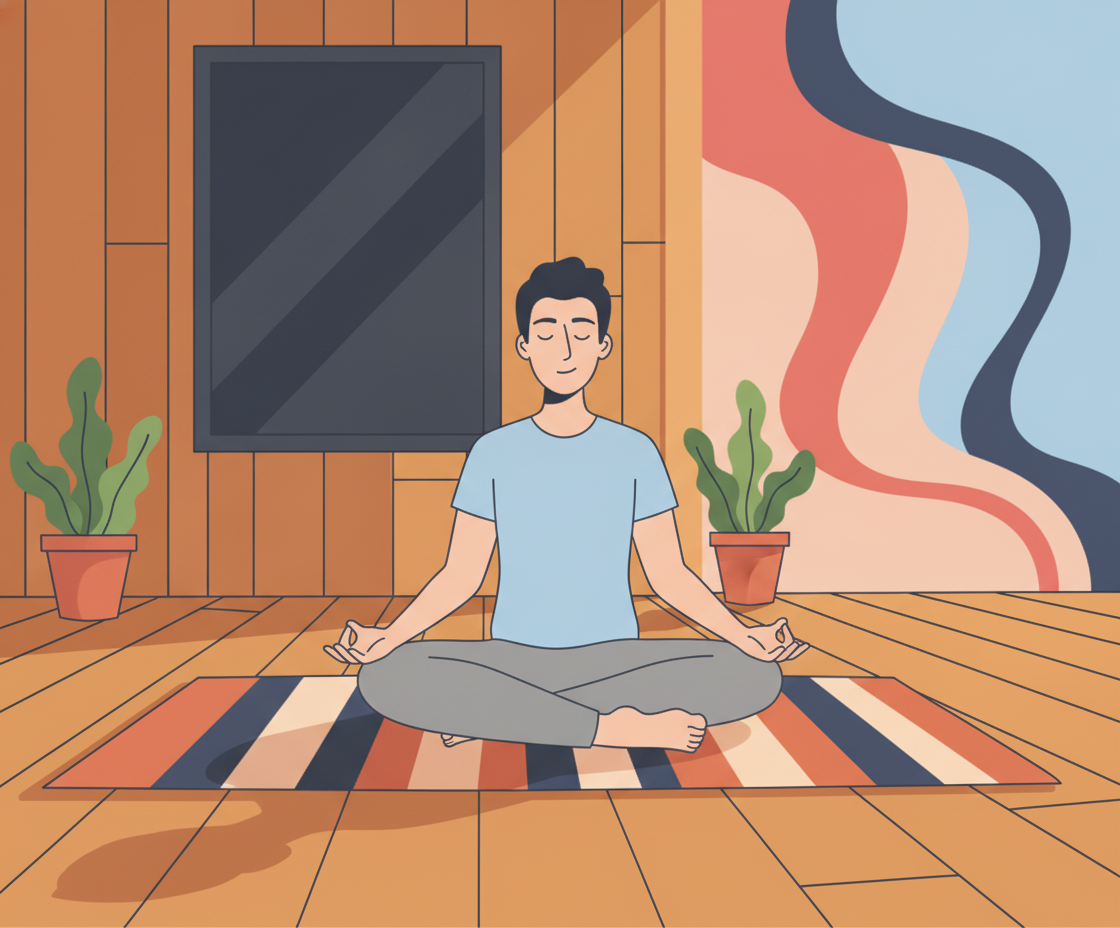
Illustration of a person in a meditative posture with visualized nerve pathways and brain activity
Understanding the reward system in the brain

The Psychology of Addiction: Understanding the Reward System

Your reward system is actually a clever survival mechanism. It releases dopamine when you eat, fall in love or learn something new, and tells your brain: do that again, that was good for you. With substances or certain behaviors this mechanism is hijacked. The dopamine release is so massive that natural stimuli like a good conversation or a sunset suddenly seem bland. This is precisely the core of this process: it is not the consumption itself that is the problem, but the reprogramming of your reward circuits.

Prof. Falk Kiefer of the University of Heidelberg has been dealing with exactly this question for years. He heads the Clinic for Addictive Behavior and researches how the reward system is permanently altered by substances and behaviors. His work shows: addiction is not a moral failure, but a measurable neurobiological change. The Center for Interdisciplinary Addiction Research in Hamburg, ZIS for short, also researches in this direction. There both substance-bound addiction, i.e. alcohol and drugs, and non-substance-bound addiction are studied, such as behaviors like excessive phone use or gambling. This distinction is important, because the underlying mechanisms in the brain often resemble each other more than one thinks.

A study published on PubMed shows that addiction is based on neurobiological changes in the reward system that, through sensitization, lead to a long-term hypersensitivity. In concrete terms this means: over time your brain reacts not more weakly, but more strongly to stimuli associated with the addictive substance, even when the substance has long been out of the body. This is exactly where craving comes from, that physical pull that often appears out of nowhere. I know this from my own experience with less obvious forms of behavioral addiction, reaching for the phone for example. The trigger sits deep, often in situations connected with stress or emptiness. At TU Dresden, too, the Chair of Clinical Psychology and Addiction Research works on exactly these behavioral and neuronal foundations, with an eye on substance use as well as obsessive-compulsive disorders. The insight that can be drawn from this for practice: craving is not a character flaw, but a learned pattern in the nervous system.

Important to understand: habit formation runs largely automatically, in the basal ganglia, far away from the conscious, will-governed part of your brain. That's why pure willpower is not enough. You are not fighting against a weakness of character, you are fighting against a trained neuronal network. The good news: neuroplasticity works in both directions. Just as these mechanisms became ingrained, they can also be rebuilt through new, repeated experiences. This takes patience and the right tools, but it is not a question of character. It is neurobiology, and that can be influenced. In practice this shows, for example, at the MEDIAN Kliniken Dormagen, where integrative addiction and depression therapy is offered with evidence-based behavioral-therapy methods, or at the Fachklinik Alpenland in Bad Aibling, which specializes in medical rehabilitation for alcohol, medication and drug dependency. Both facilities start at exactly this point: building new neuronal patterns, step by step, instead of struggling against a supposed weakness of will.

Psychological Patterns and Emotional Roots of Dependency

What the neurobiological level does not show is the question of why a nervous system starts to seek out this shortcut in the first place. That is where it gets personal. In almost every deeper engagement with the psychology of addiction one comes across the same pattern: the behavior is never the actual issue. It is the surface of a lake, beneath which much more lies. Trauma that was never processed. Fear that had no space to be felt. An emptiness that feels like a hole in the chest that constantly wants to be filled.

In my courses I often see this in people who at first glance have everything under control. The job is going well, the facade is intact. But as soon as it gets quiet, the substance appears, the phone, the food, the next series. This is precisely where the psychology of dependency shows itself most clearly: it is not about the thing itself, but about the flight from a feeling that seems unbearable right now. Loss of control is paradoxical here, because the addictive behavior was often initially intended precisely as an attempt at control. A way to downregulate one's own nervous system when no one else has shown how to do it.

Behavioral addiction, i.e. behaviors like working, gambling or social media, follows the same addiction mechanisms as substance-bound dependencies, just without the substance. This does not make it more harmless, rather harder to recognize, because it is often socially rewarded. Diligence is regarded as a virtue, until it becomes a compulsive act.

Deficits in self-worth, loneliness and the feeling of finding no real meaning in one's own doing are not marginal notes here, but often the core. Anyone who feels empty inside searches outside for fullness. That's why pure symptom-fighting achieves little. Taking away the substance without looking at the wound beneath only leaves a new hole that wants to fill itself again.

Mindfulness and Inner Blockages: The Body as the Key to Transformation

A psychology of addiction that takes place only in the head falls short. The body stores what the mind represses. Grief that was never wept, anger that was never allowed out, sits as tension in the diaphragm, in the hips, in the jaw. This is precisely where yoga psychotherapy comes in: it treats dependency as a psychology that plays out in the tissue, not only in loops of thought. Anyone who really wants to dissolve the addiction mechanisms must therefore also go where the emotion was parked: into the body itself.
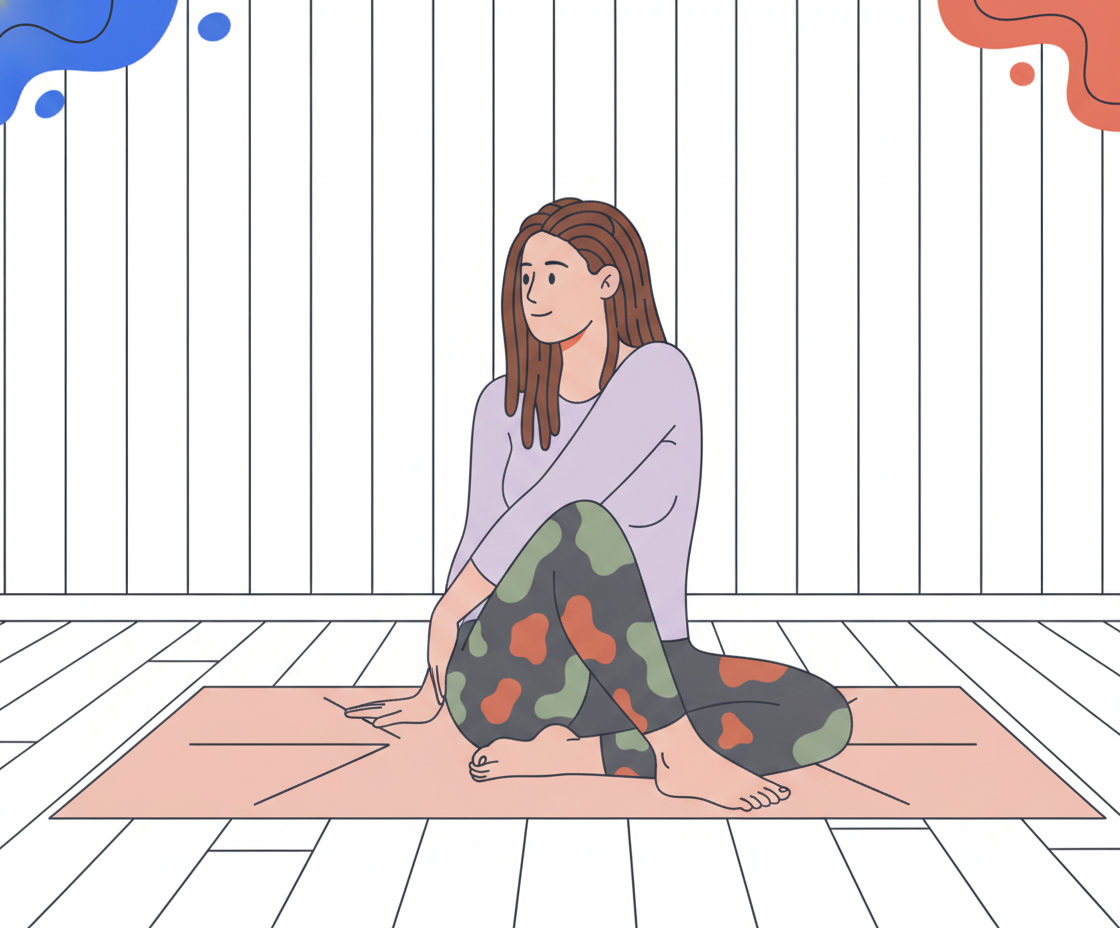

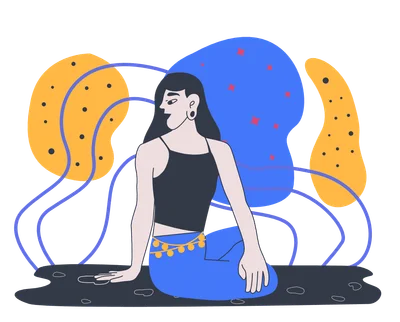
Illustration of a woman in a gentle seated twist (Ardha Matsyendrasana) on a yoga mat
The seated twist as a body-oriented transformation practice

How Yoga Can Calm the Nervous System

Lotuscrafts Meditationsmatte

Lotuscrafts Meditationsmatte

Shop on AmazonPrice: 70

The Seated Twist, Ardha Matsyendrasana, is a nice example of this. The gentle rotation of the spine almost automatically slows the breath, and a slower, deeper breath is considered one of the most reliable ways to bring the nervous system from a state of alert into a calmer state. This can help to release the state in which many people with behavioral addiction remain stuck permanently. Instead of fight or flight, the body comes step by step into a mode of calm, in the literal as well as the figurative sense. Honesty is important here: yoga is no substitute for neurological treatment or therapy, but the practice can support a state of more safety in the body. It is precisely this state that makes it possible in the first place to look inward without panic.

Revolved Easy PoseAsanaRevolved Easy PoseParivrtta SukhasanaTo the asana →

Emotional Release Through Body-Oriented Practice

In the seated twist many of my students suddenly notice a lump in the throat or a trembling in the legs, entirely without having thought about it. This is not imagination, this is the psychology of dependency in action: repressed emotion seeks an exit as soon as the body signals safety. Yoga Vidya describes something similar in the context of psychological yoga therapy: there it says, in essence, that meditation and targeted exercises can support addicts in finding their way back to their inner strength. As I experience again and again in my own courses, mindful body awareness creates exactly this observer distance from the automatic addiction pattern, the moment between stimulus and reaction in which real choice arises. Breath, body sensation and awareness thus grow together into a therapeutic tool that works more deeply than pure willpower, even if it is no substitute for accompanying treatment.

Meditation, Self-Compassion and the Reprogramming of the Reward System

Addiction mechanisms run deep in the nervous system, far below conscious control. That is precisely why insight alone is rarely enough. The nervous system must learn that relaxation is possible even without the old substance or the old behavior. Specialist literature on yoga therapy describes yoga as a supporting element in the treatment of addictive disorders, because it enables exactly this learning process on a physical level, not only on the level of thinking. The approach is no substitute for therapy, but can meaningfully accompany it.

Savasana as a Space for Inner Observation

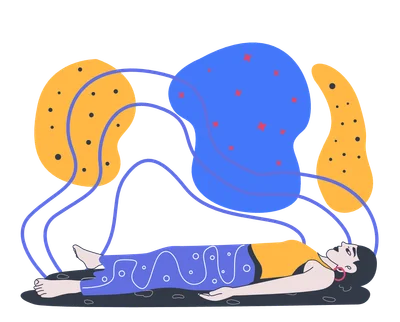
Corpse Pose (Savasana), at the end of every practice, seems inconspicuous and is yet one of the most demanding postures of all. You lie there, do nothing, and that is exactly what makes it so powerful for the reprogramming of the reward system. In my courses I see again and again how restless students become at first in this stillness, the head wants distraction, the body wants movement. If you nevertheless keep lying there, your nervous system learns a new equation: relaxation is also attainable without an external stimulus. In the psychology of addiction this is a central building block. Meditation in this posture does not mean suppressing thoughts, but becoming a witness to your patterns, without immediately judging or fighting them.

Corpse PoseAsanaCorpse PoseSavasanaTo the asana →

Balasana and the Cultivation of Self-Compassion

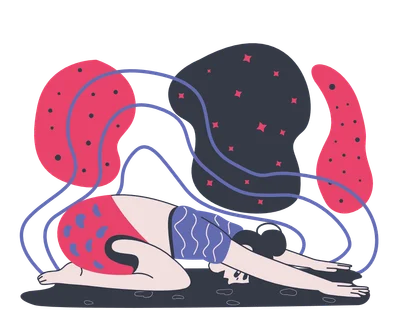
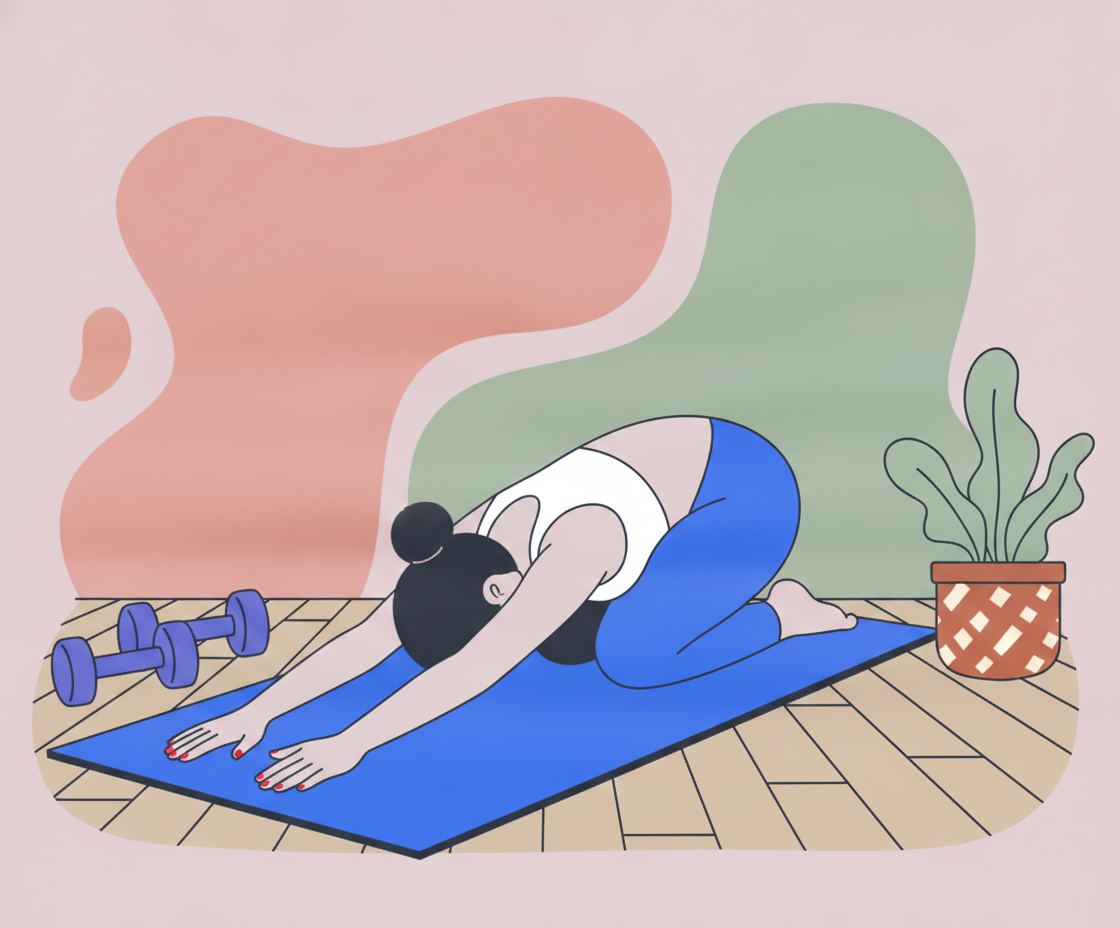
Child's Pose (Balasana) has for me almost a confessional character, without the heaviness. The body folds inward, the forehead sinks toward the floor, everything becomes soft and protected. This very introversion is the psychological counterforce to shame, that feeling that is hard to imagine away from the psychology of addiction. Shame constantly whispers that you are wrong. Balasana answers with stillness and acceptance. Lasting overcoming rarely succeeds through self-criticism, but through forgiveness toward yourself, relapse included. Anyone who learns to really hold themselves in this posture practices self-compassion as a lived bodily experience, not just as a resolution.

Child's PoseAsanaChild's PoseBalasanaTo the asana →
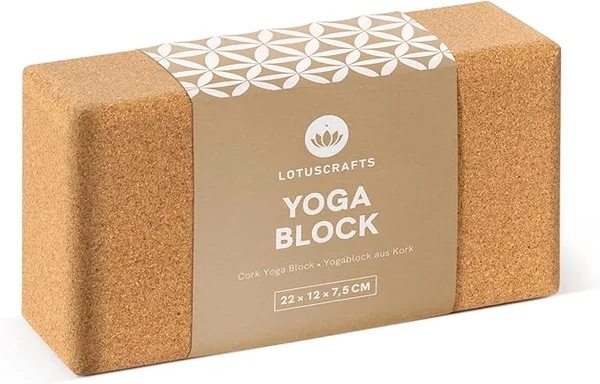
Lotuscrafts Yoga Block

Lotuscrafts Yoga Block

Shop on Amazon
Illustration of a person in Balasana (Child's Pose) with a relaxed facial expression on the mat
Balasana – Child's Pose as a space for self-compassion

From Understanding to Transformation: A Psychological New Beginning

Let's say it once more quite clearly: you are not your addiction. The psychology of addiction shows you in black and white that a surviving nervous system was at work here, not a character flaw. Addiction mechanisms arise from pain, from being overwhelmed, from a brain that searched desperately for relief. This is not an excuse, this is the starting point for real change.

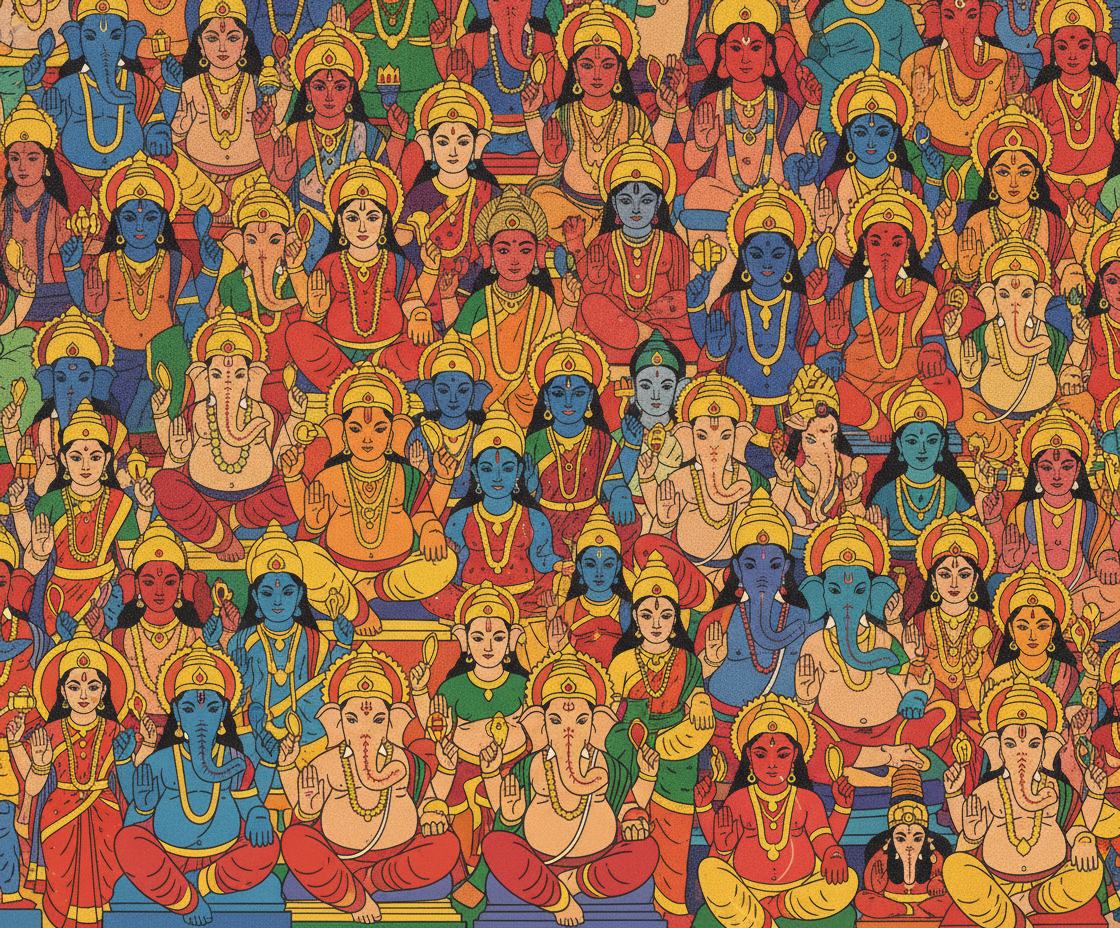
This is exactly where Ganesha comes in, the remover of all obstacles, who reminds you that blockages are there to be walked through, not to define you. The mantra Om Gam Ganapataye Namaha stands for new beginning, trust and the strength to let go of old patterns. As a daily reminder of this, there is our Ganesha shirt, so you carry Ganesha with you at all times, whenever the path gets rocky.

Om Gam Ganapataye Namaha - The Path Opens (BLACK)

Om Gam Ganapataye Namaha - The Path Opens (BLACK)

T-Shirt aus der Ganesha-Kollektion. Mantra: Om Gam Ganapataye Namaha. Hindernisse überwinden und Neubeginn — der Weg öffnet sich mit dem ersten Schritt.

View nowPrice: 35

But understanding alone is not enough. I have taught enough people who cognitively knew everything about the psychology of dependency and still ran in circles. Transformation needs integration: neurobiological knowledge in the head, finally allowing unfelt emotions in the heart, and reprogramming the body through new experiences. On the mat you practice exactly that, a little bit every day.

So, what now concretely? Start small with a regular yoga practice, even just ten minutes of breathwork in the morning changes your nervous system over the weeks. Talk to a therapist or an addiction counseling service, professional support is no sign of weakness, but of clarity. And practice self-compassion every single day, not as a nice thought, but as a practice: a hand on the heart, a deep breath, when the old shame rises.

The psychology of addiction may have told you for a long time that you are broken. That is not true. Your nervous system learned to survive, now it may learn to live. Every breath on the mat, every honest conversation, every gesture of kindness toward yourself is a step out of old addiction mechanisms. The path is not straight, but it is walkable. You do not walk it alone, and you walk it exactly right.

Sources & further links

Community

Your Experiences

Share your experiences with the community.

Comments are reviewed before publication.