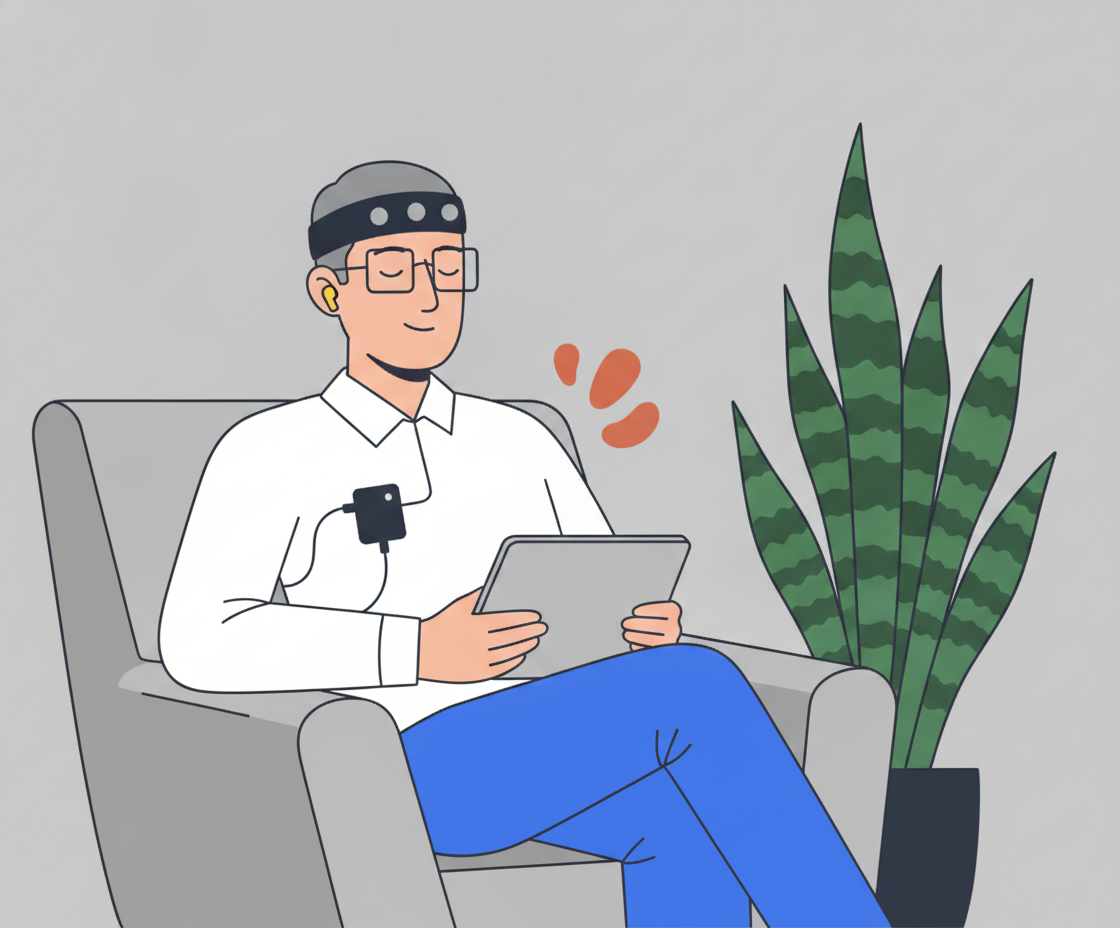
The first time I really got the Kapalabhati exercise right, I remember sitting there afterward with my ears ringing slightly and my whole chest feeling scrubbed clean from the inside. That's the thing about this practice: it's not just another breathing pattern to check off your Pranayama list. Kapalabhati means "shining skull," and yes, that name sounds dramatic, but it points to something real. This is classified as a Kriya, a cleansing technique, not just a breath control exercise. Short, forceful exhales through the nose paired with passive inhales create a pumping rhythm that clears out stale air, wakes up sluggish energy, and settles the mind before you even sit down to meditate properly. It's fire in the body and quiet in the head at the same time. Stick with me here, because this one rewards patience more than most.
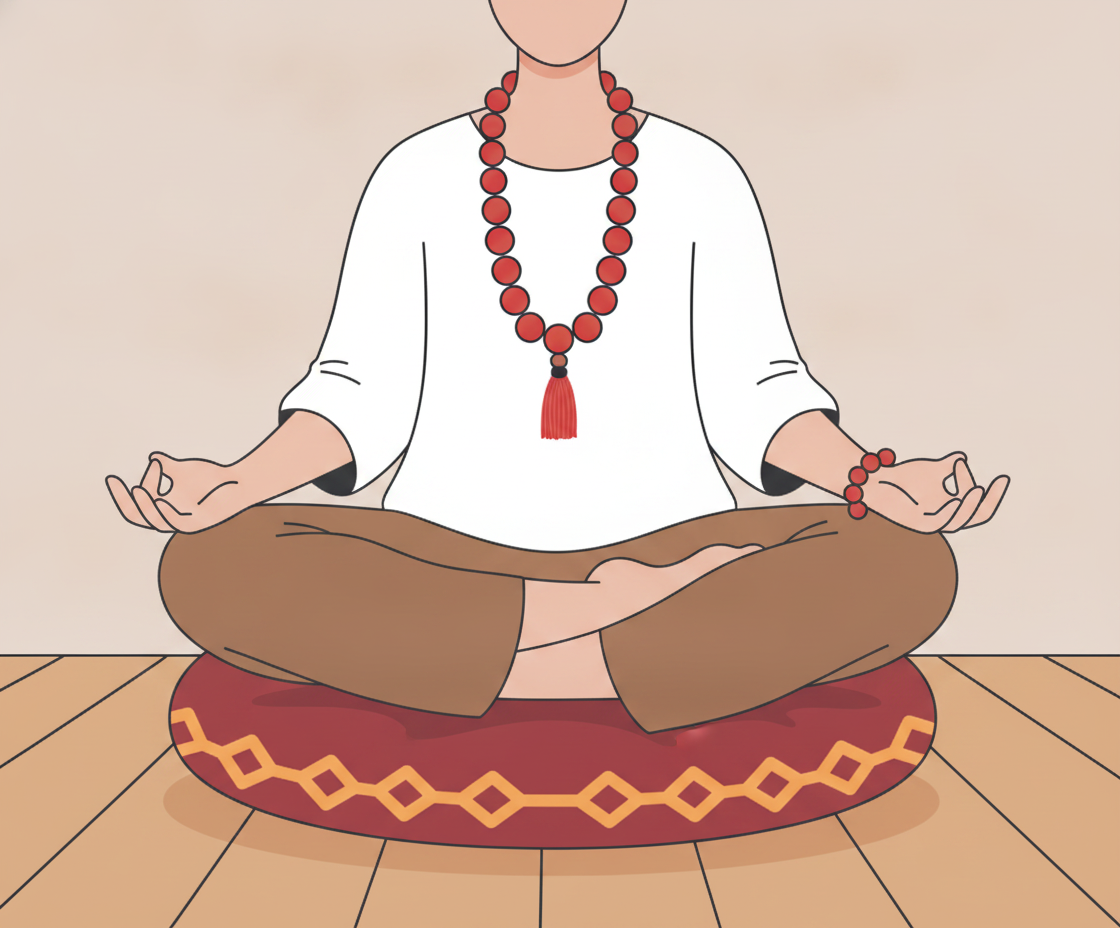
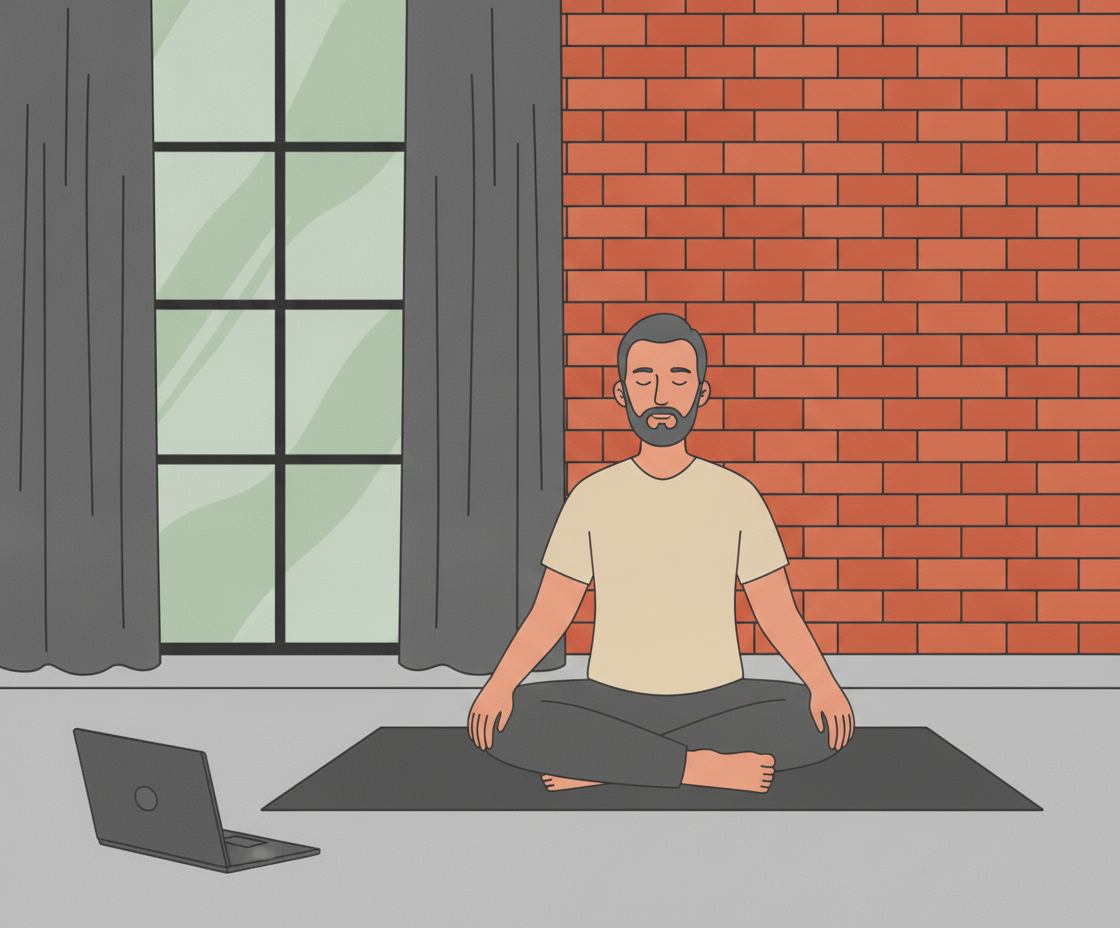
Eine Person praktiziert Kapalabhati mit konzentriertem Atemrhythmus in aufrechter Sitzhaltung
Die Kapalabhati Übung: Ursprünge und Definition
Kapalabhati as a Kriya in Classical Yoga
Kapalabhati literally means "shining skull", and that name isn't poetic fluff. In the old texts it's listed among the six or eight Kriyas, the cleansing techniques designed to clear out the physical body before deeper Pranayama and meditation even become possible. It's not classified as a breathing exercise in the strict sense. It's a purification practice that happens to use breath as its tool. That distinction matters more than people think when they first try a kapalabhati anleitung online and wonder why it feels so different from slow, calming breathwork.
Fire Breath in Kundalini Yoga
In Kundalini yoga this same technique gets called Feueratem, fire breath, and the name fits the sensation exactly. You're generating heat fast, activating the lower belly, waking up the nervous system through short, forceful exhales while the inhale just happens on its own, passive and automatic. This is the core mechanic of the kapalabhati atemtechnik: you push the breath out, you don't pull the next one in. The body does that part for you. Most students fight this at first, trying to control the inhale too, and that's exactly where the exercise stops working.
Historical and Philosophical Foundations
Kapalabhati pranayama shows up as one of the classical Kriyas, sitting alongside practices for cleansing the nose, gut, and eyes. The logic behind it is refreshingly simple: the yogis believed physical residue, stagnant air, sluggish digestion, dull energy, blocks the mind just as much as it blocks the body. Clear the channel and thought clears with it. You don't need to buy into ancient physiology to notice something real here. Psychologically, this rapid, rhythmic breath forces you out of rumination fast. You can't spiral in anxious thought while you're counting sharp exhales. That's the kapalabhati wirkung worth paying attention to.
What's genuinely interesting is that modern research is starting to look at this old claim from the other direction, through the body rather than the mind. JIPMER, the Jawaharlal Institute of Postgraduate Medical Education and Research, ran a 12-week study tracking how regular Kapalabhati training changes cardiorespiratory parameters in young, healthy participants. Researchers at the National Center for Biotechnology Information have published studies measuring heart rate variability, a marker of how well your autonomic nervous system shifts between activation and calm, during and after Kapalabhati sessions. A 2025 systematic review of randomized controlled trials went further, looking at whether the practice supports neuroplasticity and attentional control, the kind of sharp, settled focus many students describe after a round. And a review published in a Yogic Studies journal on Sage Journals found a consistent pattern across multiple studies: Kapalabhati appears to improve lung function, possibly through mechanical stimulation of the stretch receptors lining the lungs. None of this proves the old texts right in a literal sense. But it does suggest the felt sense of lightness and clarity in the head after a round, what some teachers call kapalabhati schädelhirn effects, isn't just imagination. Something measurable is happening in the breath, the heart, and the brain.
Anatomie und Physiologie: Wie Kapalabhati Körper und Nervensystem beeinflusst
Let's get into what's actually happening under the hood, because this practice isn't just some breathing trick. It's a pretty precise physiological event. Every short, forceful exhale you push out through the nose sends a signal straight to your nervous system. That's the real engine behind kapalabhati, and once you understand it, the technique stops feeling mysterious and starts feeling logical.
Aktivierung des sympathischen Nervensystems
Neuroscience research on pranayama shows that this breathing method physiologically stimulates the sympathetic nervous system, the branch responsible for alertness and mobilization. Each sharp exhale acts like a small jolt, nudging your body out of a sleepy, sluggish state. That's why a solid round of skull shining breath can wake you up faster than a cup of chai. It's not hype, it's your fight or flight circuitry getting a brief, controlled activation, then settling back down once you stop.
Lungenkapazität und Atemmuskulatur
Here's the part most people skip when they first learn this exercise: the work happens on the exhale, not the inhale. Your diaphragm and lower abdominal muscles contract hard and fast, snapping the belly in and pushing air out forcefully. The inhale, by contrast, is completely passive. Your diaphragm just releases and air rushes back in on its own, no effort needed. Training this rhythm repeatedly strengthens your respiratory muscles and, over time, improves lung ventilation and elasticity.
Detox-Mechanismus durch aktive Ausatmung
Traditional texts describe this practice as the shining skull breath, one of the most effective cleansing techniques because active exhalation clears the entire respiratory system. From a physiological angle, this checks out: forceful, repeated exhales flush out more stale air and carbon dioxide than normal breathing does, improving overall gas exchange. Understanding this effect helps you see the method less as a mystical cleanse and more as an efficient upgrade to how your lungs actually work.
Anatomische Darstellung der Lungenaktivierung während der Kapalabhati-Pratik
Schritt-für-Schritt Kapalabhati Anleitung: Die richtige Technik
Körperhaltung und Basis-Asanas
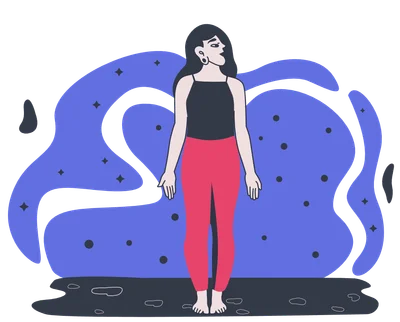
Your spine is the foundation of this kapalabhati atemtechnik, so pick your seat with intention rather than habit. Sukhasana, the easy cross-legged pose, is where most people should start. It creates an upright, relaxed sitting posture where the diaphragm can move freely, without the hips fighting the lower back for stability. You want the spine long but not rigid, like a bamboo stalk that bends slightly with the wind but never collapses. If your knees or hips feel stiff and Sukhasana pulls you into a slouch after a minute, switch to Vajrasana, the kneeling thunderbolt pose. It gives the pelvis a firmer, more grounded base and tends to keep beginners more alert, which matters for a practice that asks so much of the nervous system. I often recommend Vajrasana after meals too, since the kneeling position naturally supports digestion alongside the breathing itself. Standing practitioners sometimes begin in Tadasana, mountain pose, to feel the grounding through the feet before sitting down for the actual rounds, but this is optional. What matters more than the specific asana is this: choose the seat where your belly can move without obstruction and your spine can stay tall without strain for at least a few minutes.
Here's the core of any solid kapalabhati anleitung: the exhale is everything. Snap your navel toward your spine, pushing air out through the nose in a short, sharp burst. The inhale just happens on its own as your belly releases, no effort needed there. Beginners should start with three rounds of about ten breaths, resting between each round to let the nervous system catch up. Over weeks, you can build toward thirty breaths per round. Don't rush this progression. I've taught plenty of students who tried thirty on day one and ended up dizzy on the mat instead of energized.
Häufige Fehler und Korrekturen
The most common mistake in this feueratmung yoga practice is turning it into a shoulder and chest exercise. Watch for tension creeping into the neck and jaw, and consciously let those muscles soften. Another trap is forcing the inhale, which defeats the whole rhythm. Let it stay passive and quick. Pay attention to what's happening inside you: a rising warmth in the belly, a slight tingling in the fingertips, and then something students often describe as a skull-clarity experience, a sudden brightening behind the eyes, as if a window just opened in a stuffy room. That's the real feedback loop, not a stopwatch. If you feel lightheaded, stop and breathe naturally. This isn't about mechanical repetition, it's about staying curious about how the practice opens this mental brightness, sensing how the breath actually clears and wakes up the mind rather than just performing a technique for its own sake.
Kapalabhati Wirkung: Energetisierung, Reinigung und mentale Klarheit
Sofortige Energetisierung and Vitalität
The first thing you notice with kapalabhati pranayama is how fast it works. Within a minute or two of active exhales, the sympathetic nervous system kicks into gear, heat rises through the chest, the mind sharpens, and that foggy morning heaviness just lifts. This isn't caffeine-jitters energy. It's cleaner, more grounded, closer to what you feel after a good run but without the exhaustion afterward. Many students tell me they finally understand why it's called the feueratmung yoga practice: it genuinely lights something up inside.
Psychische Reinigung and emotionale Balance
Kapalabhati wirkung goes beyond the physical. The forceful exhale doesn't just push out stale air, it seems to push out stagnant emotional residue too. Old frustration, low-grade anxiety, that heavy stuck feeling in the chest you can't quite name. The ancient texts call this a cleansing kriya, and traditionally, the term Kapalabhati, das Schädelleuchten, describes exactly that: a shining, cleared skull. One resource on pranayama, referring to Kapalabhati as das Schädelleuchten, points out it's one of the most effective detox breathing techniques, actively purifying the whole body through the exhale. I've watched students cry mid-round, then laugh right after. That's stagnant emotion finally moving.
Vorbereitung auf Meditation and Achtsamkeit
Here's the part people underestimate. This kapalabhati atemtechnik isn't just a standalone energizer, it's a doorway. Once the breath work settles the nervous system and clears the mental static, sitting still afterward feels almost effortless. The mind that was scattered ten minutes ago now has fewer places to hide. That's the real psychological shift: conscious breath work as a deliberate act of transformation, not just a technique you perform but a practice that reorganizes your inner state before you ever close your eyes to meditate.
Kontraindikationen und Sicherheit: Wann Kapalabhati nicht geeignet ist
Gesundheitliche Ausschlusskriterien
Here's the honest truth: Kapalabhati is powerful precisely because it changes pressure and rhythm fast, and that's exactly why it's not for everyone. If you have high blood pressure, any heart condition, or a history of stroke, skip it. The rapid pumping raises intra-abdominal and intracranial pressure, which is risky if you've got glaucoma, detached retina, or other eye conditions. Pregnant women should avoid it entirely, same with anyone dealing with a hernia, recent abdominal surgery, or a slipped disc. If you're epileptic, this is a hard no too.
Tipps zur sicheren Anpassung
You don't need to force the classic Kapalabhati pranayama to get something out of this practice. Slow the tempo way down, or try just gentle diaphragmatic breathing with a soft emphasis on the exhale. That already stimulates similar pathways without the intensity. Beginners often do better with three short rounds of ten breaths rather than one long marathon. And please, always check with your doctor first if you're managing any of the conditions above. That conversation costs you five minutes and saves you a lot of trouble.
Wie man Überanstrengung vermeidet
This is where the psychosomatic piece matters. Kapalabhati stirs up the nervous system, and if you push past your capacity chasing some idea of a perfect feuration yoga session, you'll trigger anxiety symptoms instead of clarity. Dizziness, tingling in the fingers, a racing heart: that's your body telling you to stop, not push harder. I've taught plenty of students who treated this like a competition, and it never ends well. Real practice means listening to your own feedback over ego. Slow down, breathe normally between rounds, and let the kapalabhati wirkung unfold gradually instead of forcing it.
Eine Person strahlt inneren Glanz nach der Kapalabhati-Praxis aus, verbunden mit der Natur beim Sonnenaufgang
Fazit: Kapalabhati als tägliche Praxis für inneren Glanz
Here's the truth about kapalabhati pranayama: it's not a party trick, it's a daily relationship you build with your own breath. Every round you practice teaches your nervous system something new about steadiness under pressure. The heat you generate in your belly, the clarity that follows in your head, that's not magic. That's your body remembering what it's capable of when you stop numbing it with shallow, distracted breathing.
This daily relationship with your breath is exactly what the mantra Om Namah Shivaya points to: honesty with yourself, steady transformation, and the quiet clarity that comes after the noise settles. As a daily reminder there is our Shiva shirt, so you carry that same steadiness with you long after the practice ends.
Three to five minutes a day, right before you sit for meditation, that's the sweet spot. Not an hour of forced kapalabhati atemtechnik, just enough rounds to burn through mental fog and settle into stillness. Do it consistently rather than intensely. Your body keeps score of consistency far better than it keeps score of one dramatic session followed by two weeks of nothing. Notice how your seated practice shifts afterward: sharper focus, quieter mind, less fidgeting.
Nächste Schritte und Vertiefung
Once kapalabhati feels familiar in your body, start pairing it with other pranayama techniques like Nadi Shodhana or Bhramari. The contrast teaches you even more about your own rhythm. If you're serious about going deeper, find a qualified yoga class where a teacher can watch your technique and adjust it live, no video tutorial replaces that kind of feedback. This feuer atmung practice rewards patience. Show up daily, stay curious about what you feel, and let the transformation happen on its own timeline, not yours.