There's a moment in savasana, right at the end of practice, when you stop doing anything at all. No fixing, no achieving, no reaching for the next pose. That moment is aparigraha, simply being, in its purest form. This is what Aparigraha, simply being, actually asks of us: to let go of the grasping mind and rest in what is already here. As the fifth Yama, one of yoga's ethical restraints described in the Yoga Sutras, aparigraha means non-attachment or non-grasping. Most people hear that and think minimalism, fewer clothes, less clutter. I get it, but that's the shallow end of the pool. I've taught students who owned nothing and still gripped their identities, opinions, and outcomes like a drowning person holds a rope. Real aparigraha is psychological. It's the courage to let your hands stay open, energetically and mentally, in a world that keeps whispering that you need one more thing to finally feel complete.
Aparigraha breaks down into "a" (not) and "parigraha" (grasping, seizing, hoarding). Parigraha itself comes from a root meaning to grab hold of something all around you, to accumulate it into your orbit and defend it as yours. So aparigraha, the fifth Yama in Patanjali's ethical code, literally means non-grasping. Not "give everything away", just don't clutch.
In the Yoga Sutras, verse 2.39 states that when non-possessiveness is firmly established, a deep understanding of the how and why of one's existence arises. That's a big claim for such a quiet-sounding Yama. But it tracks with what I've felt on my mat and off it: the tighter I grip an outcome, a relationship, a version of myself I need to protect, the less I can actually see what's happening. Aparigraha isn't a rule against owning things. It's the recognition that grasping, whether at objects, at control, or at a fixed identity story, is what fragments your attention in the first place.
Beyond Material Minimalism
People hear aparigraha and think minimalism, empty shelves, a monk's robe. That's only the shallow end. Aparigraha bedeutung goes deeper than décor choices. It's about releasing the psychological grip on how things should turn out, on needing people to see you a certain way, on the mental ballast of old stories you keep replaying to feel like yourself. That's the loslassen yoga asks of you: not deprivation, but honest alignment with what actually nourishes you versus what you're just hoarding out of fear.
This is also where aparigraha and asceticism part ways. Asceticism says less is inherently virtuous. Aparigraha as yama aparigraha says something more precise: hold only what serves your growth right now, and notice when "holding" has quietly become "hiding". You see this echoed in nicht-anhaftung buddhismus too, where clinging, not the object itself, is named as the root of suffering. Same insight, different language. The aparigraha prinzip isn't about having nothing. It's about needing nothing to feel whole, which frees up an enormous amount of energy you didn't know you were spending.
The Psychology of Holding On: How Grasping Fragments the Mind
Here's what I ask students to notice instead of trying to explain the nervous system to them: check your breath the next moment you want something badly. Not later, right in the wanting. Nine times out of ten it's shallow, held slightly high in the chest, almost paused. That's not a metaphor, that's the body's grip showing up in real time. Wanting has a felt shape. It tightens the throat a little, it pulls the shoulders up toward the ears, it narrows attention until the desired thing is the only object in the room. This is the psychology of holding on: every attachment quietly recruits your attention and keeps a low hum of urgency running in the background, even when you're sitting still on your mat pretending to breathe deeply.
Attachment as Mental Conditioning
Nobody's born grasping. We learn it, one reward at a time, the same way any habit gets grooved in. You get something, you feel relief, your brain files that away as a solution. Do that enough times with enough objects, relationships, and identities, and grasping becomes your default operating mode. This is exactly what non-attachment in Buddhism and the yama Aparigraha are pointing at from different traditions: the object was never really the problem. The conditioning is. Once you see grasping as a learned loop rather than a personality trait, letting go on the mat stops feeling like deprivation and starts feeling like debugging.
The Energy Cost of Accumulation
Consumerism is basically a machine built to keep that gap open forever. New thing arrives, a little spike of pleasure, novelty fades, gap reopens, repeat. YogaEasy.de puts the Aparigraha principle plainly: it asks you not to burn your mental and physical energy accumulating possessions, but to live consciously instead. That's not poetic, it's practical. Every object you cling to needs maintenance: worry about loss, comparison, upkeep. Multiply that across a closet, a career, an identity, and you understand why Aparigraha isn't anti-stuff, it's pro-bandwidth. Notice the tension in your jaw or shoulders next time you want something badly. That's the mind's grip showing up in tissue. Release one, and the other tends to follow.
Die Last der Anhäufung – wie Besitz Energie bindet
Aparigraha in Daily Life: Conscious Simplicity and Authentic Presence
So what does aparigraha actually look like on a Tuesday afternoon? It's not a rule against owning things. It's a filter. Before buying, before saying yes to another commitment, ask yourself: does this add something real, or am I just filling a gap out of habit? A YogaEasy.de piece on aparigraha puts it well: the practice isn't about deprivation, it's about not wasting your mental and physical energy chasing accumulation, and redirecting that energy toward living consciously instead. Your time, your money, your attention, all of it becomes currency you can spend on presence rather than status.
Letting Go of Mental and Physical Ballast
Aparigraha bedeutung, its real meaning, shows up as much in your closet as in your head. Physical clutter and mental clutter feed each other. The drawer of unused cables mirrors the pile of unresolved grudges you're still hauling around. Loslassen yoga, the practice of letting go, starts small: clear one shelf, delete one old argument you keep replaying. I ask new students in my beginner workshops to do a simple homework assignment between sessions: pick one drawer, one shelf, or one folder on your phone and clear it without buying a storage solution first. Almost everyone comes back surprised, not by how much lighter the shelf feels, but by how much lighter their head feels. That's aparigraha working through the body before the mind catches on. Fewer things to manage means less exploitation of resources upstream and less waste downstream. Nicht-anhaftung buddhismus traditions point to the same truth: grasping creates suffering, release creates space.
Living with Intention, Not Compulsion
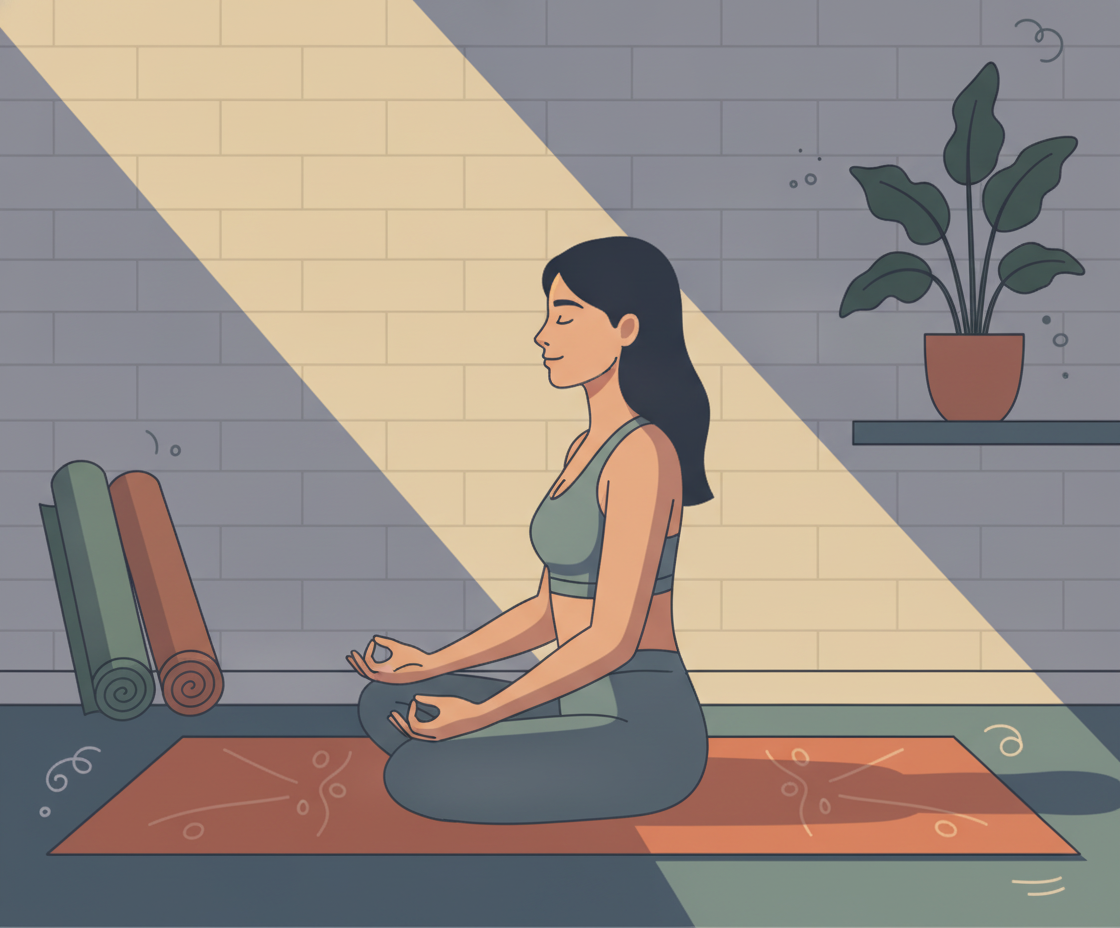
Here's the paradox nobody warns you about. The less you grip, the more satisfied you feel. That's not a slogan, it's something you notice in your own body once you try it. Sukhasana, Easy Pose, is the plainest sitting posture in the whole practice, no fancy bind, no achievement to display. Sit in it for meditation and you're embodying the aparigraha prinzip directly: nothing to strive for, nothing to acquire, just you, breath, and floor. That simplicity is the whole teaching in miniature. Living with intention means choosing purchases, relationships, and habits because they genuinely serve your life, not because compulsion or comparison pushed you there. Yama aparigraha isn't asking you to renounce joy. It's asking you to stop mistaking accumulation for it.
Try this now, wherever you're reading. Lie down on your back. Let your feet fall open, palms turn up, and stop adjusting. Don't fix your shirt, don't correct the angle of your head, don't scan your body for tension to release on purpose. Just stop. That stopping is Savasana, and it looks like doing nothing because that's exactly the point. You're not achieving a shape here. You're practicing the total release of effort, agenda, and the subtle grasping toward the next thing on your mental list. Aparigraha, non-attachment, means freeing yourself even from the need to hold onto something, and Savasana is that teaching translated into flesh and breath. Nothing to grip, nowhere to go.
I once had a student, a lawyer who came to class straight from depositions, who told me after months of practice that Corpse Pose was the hardest thing I'd ever asked her to do. Not because her body resisted lying still, but because her mind kept drafting emails. One evening she finally stopped drafting. She said afterward it felt like putting down a suitcase she hadn't noticed she was carrying for years. That's the shift aparigraha points to. Not achieving relaxation, but noticing what you've been gripping.
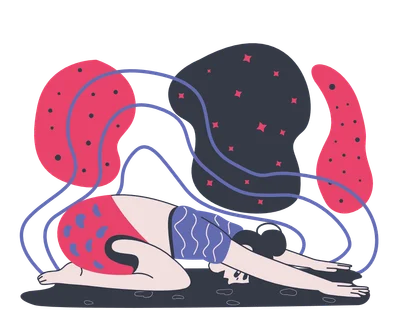
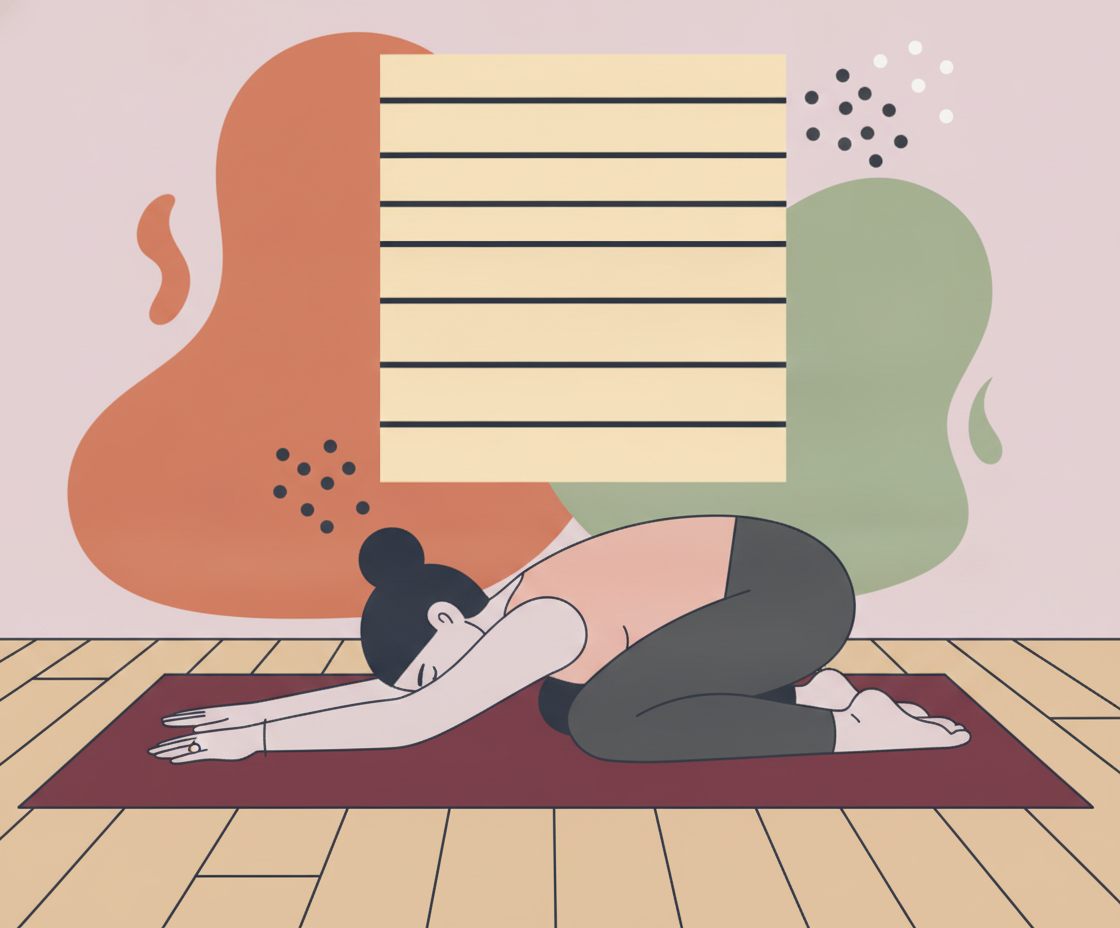
Balasana works the same territory through the body's architecture rather than through stillness. Fold forward from a kneeling position, forehead toward the earth, arms softening beside or in front of you. Anatomically, this pose flexes the hips and spine while gravity does the work your muscles usually insist on doing themselves. The lower back, the shoulders, even the jaw often carry a low hum of bracing most of the day, a readiness to control posture, breath, and outcome. In Balasana, that bracing has nowhere useful to go, so it starts to unwind on its own. Many students I've taught curl into this pose and feel something in the lower back finally let go, not because they stretched harder, but because they stopped managing themselves for a moment. That's non-attachment in miniature: humility replacing control.
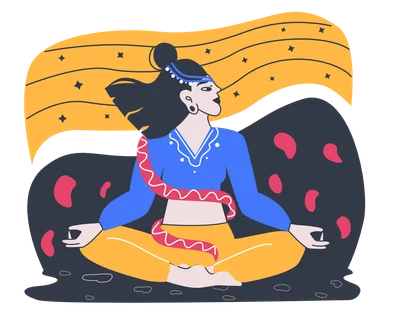
Sukhasana, the easy seated pose, quietly dismantles a myth: that stillness requires strain. Sit there long enough and you notice meditation doesn't arrive through gripping the spine straight or forcing the mind blank. It arrives when effort softens into ease, which is the aparigraha principle applied to your own nervous system. Letting go through yoga isn't passive collapse, it's alert non-grasping, the same quality non-attachment in Buddhist thought describes as freedom from clinging to outcomes.
Your body learns this before your mind does. Muscles that release without collapsing, breath that slows without being controlled, these are somatic rehearsals for what aparigraha means off the mat. When you stop grasping at the pose, at the moment, at yourself, you land somewhere unexpected: fully present, undefended, simply here.
Aparigraha and the Illusory Self: Freedom Beyond Identity
Here's where aparigraha stops being about stuff and starts being about you, or rather, the version of you that thinks it needs stuff. Most grasping isn't really about the object. It's about a self that feels incomplete reaching for something to fill the gap. Patanjali's Yoga Sutra 2.39 frames aparigraha as the yama of non-grasping, and teachers in contemplative circles from Berlin to anywhere else describe it as freeing yourself from the very need to hold on. Not just to things. To identity itself.
Dissolving the Ego's Narrative
Your ego runs on story. I'm the disciplined one, the busy one, the spiritual one, the one who's always behind. These roles feel like bedrock, but they're just accumulation, mental grasping dressed up as personality. Aparigraha yoga asks you to notice how tightly you cling to your own narrative, the same way you'd cling to a possession. Loslassen yoga, letting go on the mat, is practice for letting go of the story that tells you who you're allowed to be. When the narrative loosens, something quieter and more honest shows up underneath.
Shiva's Stillness and Non-Attachment
In yogic philosophy, Shiva represents pure witnessing consciousness, still, complete, needing nothing from the outside to feel whole. That's the aparigraha prinzip in its fullest form. Not indifference, but a completeness that doesn't require applause, achievement, or accumulation to feel real. This echoes nicht-anhaftung buddhismus teachings too: the separate, needy self is the illusion, and clinging is just fear wearing a disguise. Yama aparigraha, practiced deeply, dissolves that fear-based grasping and reveals what was already whole. This is the doorway to moksha, liberation, not by adding anything, but by finally releasing what never belonged to you in the first place.
This is exactly what the mantra Om Namah Shivaya carries: stillness over grasping, wholeness over accumulation, presence over the endless chase for more. As a daily reminder there is our Shiva shirt, so you carry Shiva with you at all times, even on the days your hands want to grab hold of something.
Einfach sitzen – Präsenz ohne Anstrengung in Sukhasana
Begin Your Practice: From Theory to Transformation
Concrete Steps to Embody Aparigraha
Theory is nice, but aparigraha yoga lives in your hands, your calendar, your nervous system. Patanjali named this yama in Sutra 2.39 of his Yoga Sutras, one of the foundational texts of yoga philosophy, and he kept it simple: non-grasping, non-hoarding. He didn't write a productivity manual. He pointed at a direction and left the walking to us. Start with an honest audit. Walk through your closet, your inbox, your relationships, even your opinions, and ask what you're gripping out of fear rather than actual need. This isn't about minimalism as aesthetic, though the Imagine Podcast from Imagine Yoga Academy actually frames aparigraha exactly that way, as the minimalism of yoga, stripping down to what's essential and letting the rest go. It's a useful lens. But underneath the decluttering, it's really about noticing the grip itself.
Then bring it to the mat. Every Savasana is a rehearsal in non-grasping. Your body lies down, your muscles stop working, and for a few minutes you practice letting the floor hold you instead of holding yourself. I've watched students who white-knuckle their whole practice finally soften in those final minutes, and something shifts. Jivamukti Yoga, one of the schools that has shaped how aparigraha is taught in the West, describes it as freedom from greed, not hoarding, and loosening the grip of rigid thought patterns. That last part is the one people miss. It's not just about stuff. It's about the mental fist you make around your own opinions and stories.
Pick one habitual acquisition behavior, the extra purchase, the need to be right, the reflexive scrolling, and redirect that exact energy toward presence or small acts of service. This is the aparigraha prinzip in motion: not suppression, but redirection. The Arshan Yoga Institute, in its teacher training material, frames this well: aparigraha isn't only a mat concept, it's a practical guide for how you move through your day, off the mat as much as on it.
Your Next Move
Loslassen yoga isn't a weekend workshop you finish and check off. It's a spiral you keep walking, layer after layer, for the rest of your life. Some weeks you'll grip harder than others, and that's fine. The nicht-anhaftung buddhismus traditions call this the long unfolding, not a finish line but a direction. Interestingly, the German-language Yoga Wiki from Yoga-Vidya adds a nuance often lost in translation: aparigraha also means not accepting gifts that create obligation, staying incorruptible. It's non-attachment applied to influence and favor, not just objects.
Notice what opens up when holding stops eating your energy. Suddenly there's room for real connection, for creativity that isn't performing for approval, for stillness that doesn't need to be filled. That's aparigraha einfach nur sein: no accumulation required, just presence.
So here's your move. Give yourself seven days. No unnecessary buying, and one honest asana practice daily built around conscious letting go, hips, jaw, grip, breath. Watch what clarity shows up when your hands and your mind finally stop clutching.


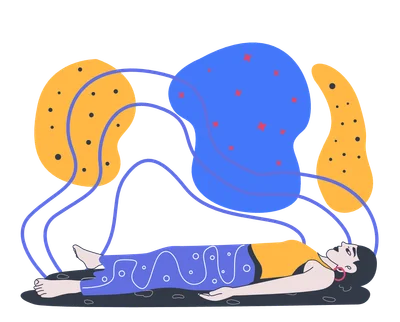 AsanaTotenstellungSavasanaZur Asana →
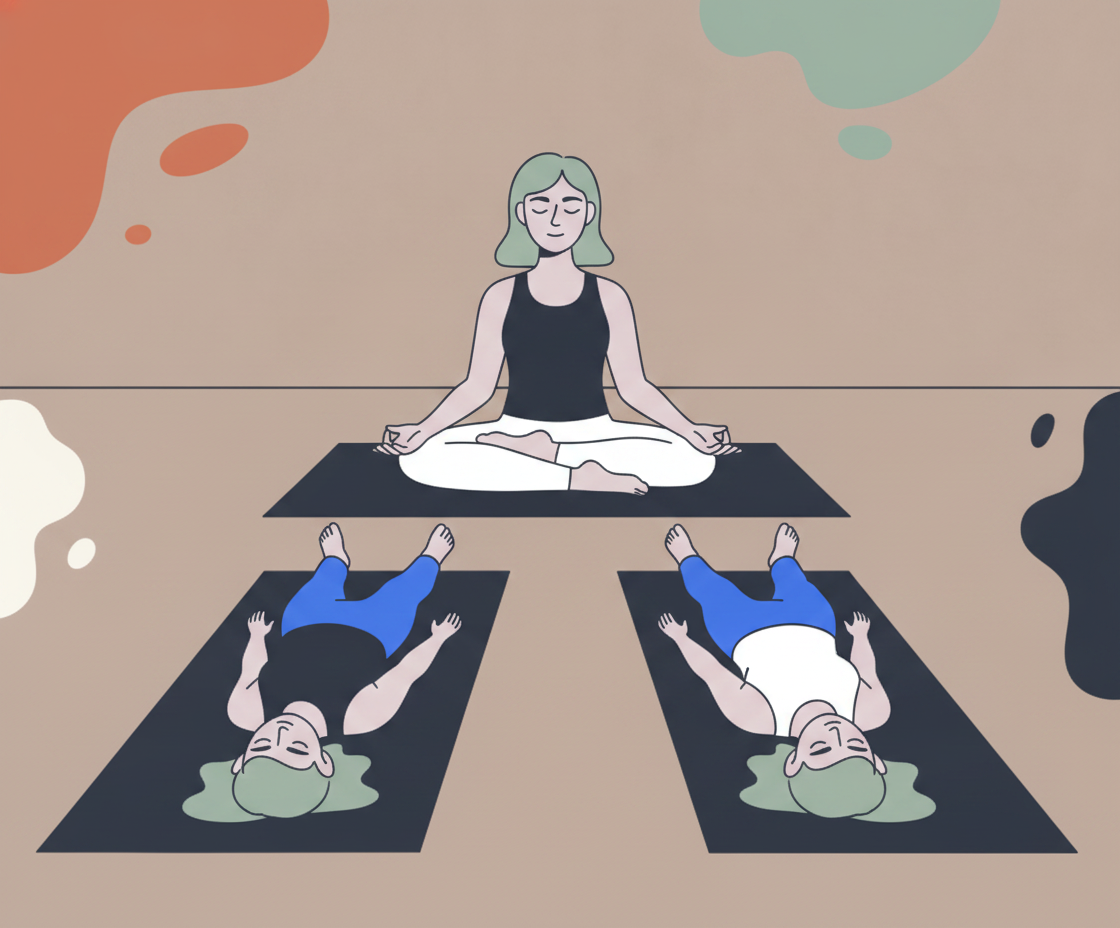
 AsanaSchneidersitzSukhasanaZur Asana →